If you've lived here long enough, you remember the historic drought of 2007 and 2008.
It cost North Carolina's agriculture industry more than half-a-billion dollars in damages. Nearly 80% of water customers faced restrictions, too.
Other WRAL Top Stories
How does our current drought compare?
At the moment, it doesn't. And we hope that continues.
2007-2008 drought vs. now
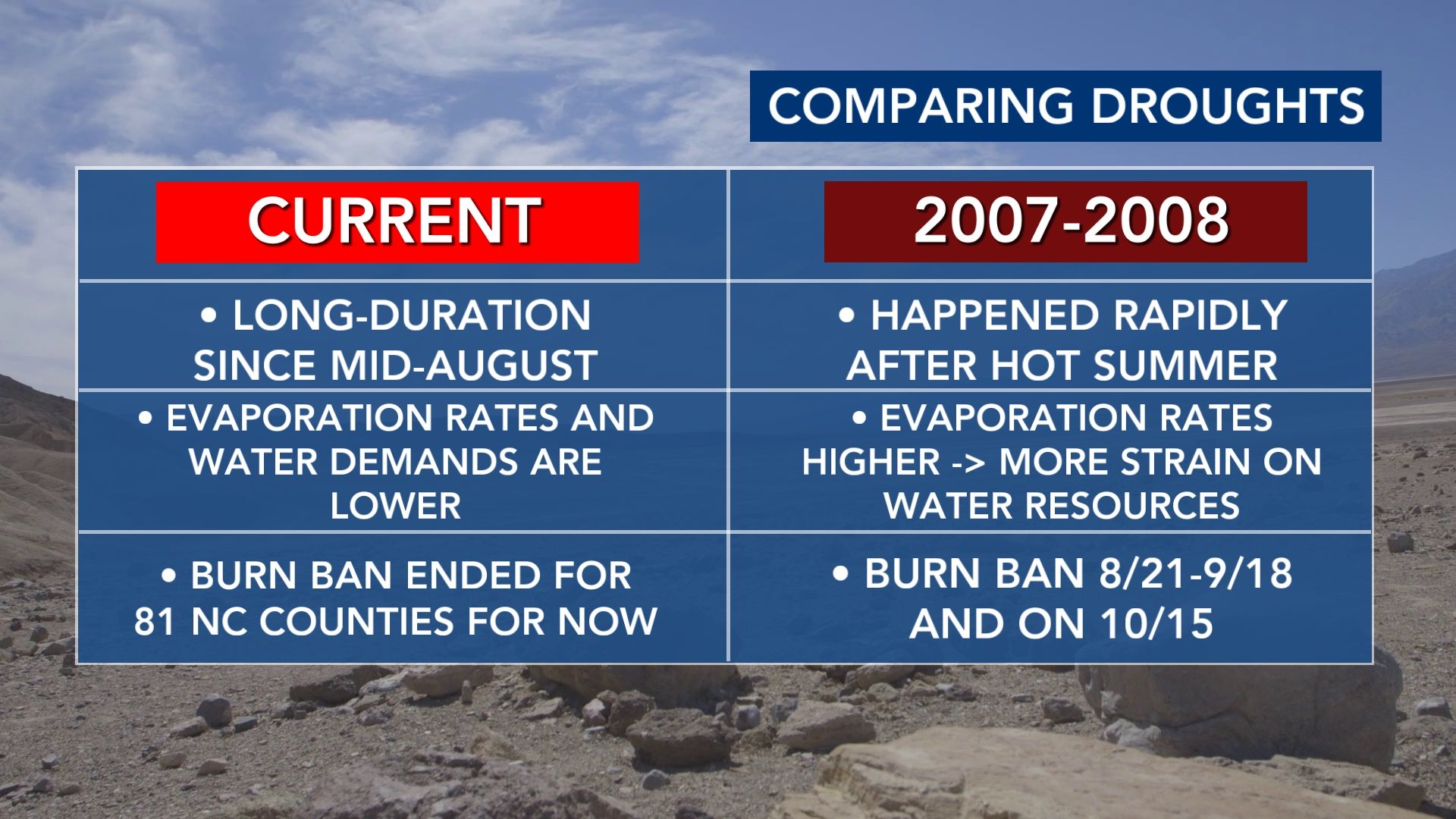
There are significant differences between the drought of record and what we're currently experiencing.
What we're seeing now has been a slow burn - months in the making.
Rainfall deficits extend back to September, when it seemed as though the faucet was just shut off.
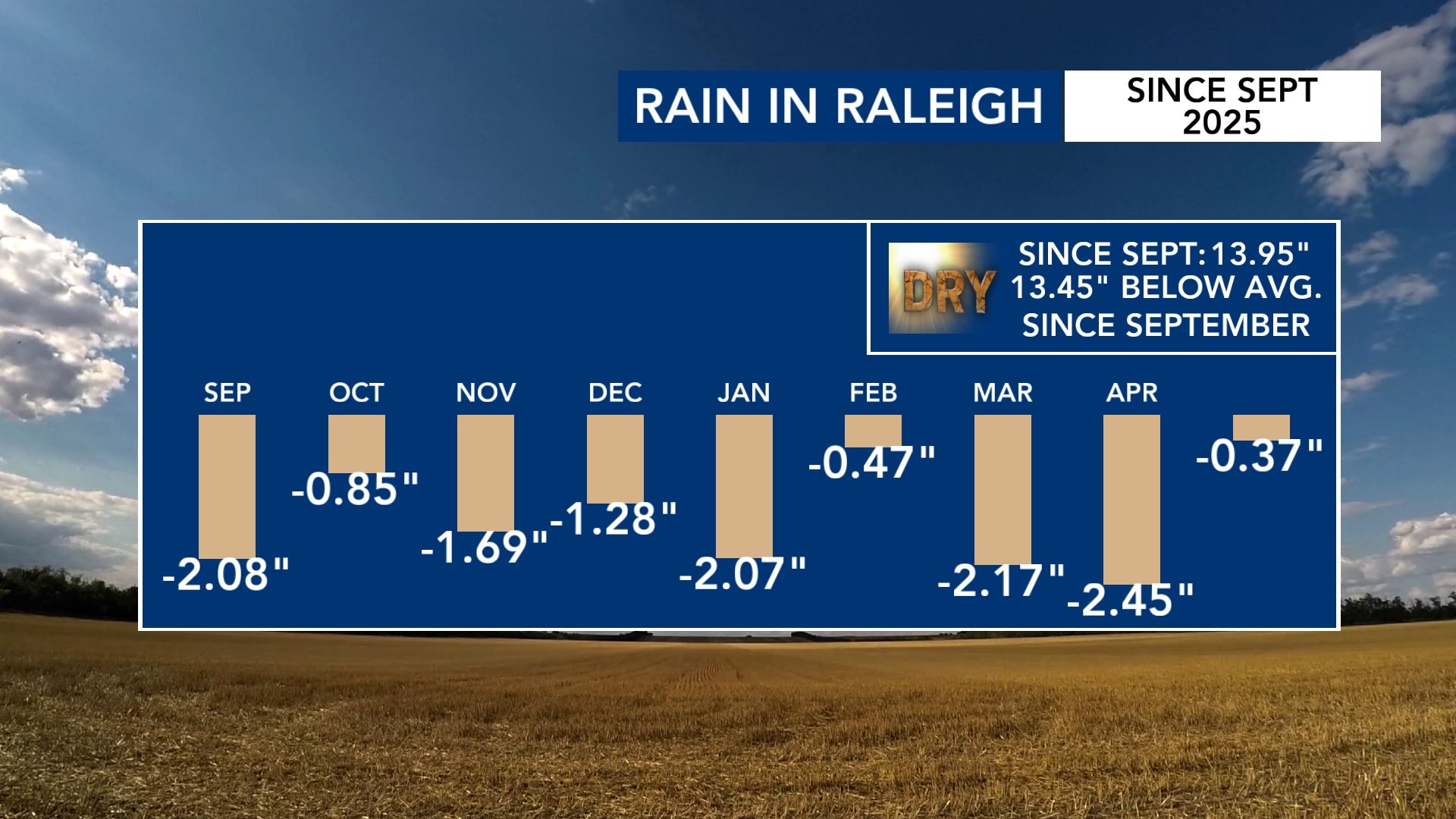
Since September 1, Raleigh is more than 12 inches behind on rainfall.
In the drought of 2007-2008, it happened quickly.
The rapid onset of the drought was brought on by an exceptionally hot, dry summer.
Evaporation rates in the summer are much higher, which led to long-lasting burn bans, devastating agricultural impacts and widespread water restrictions.
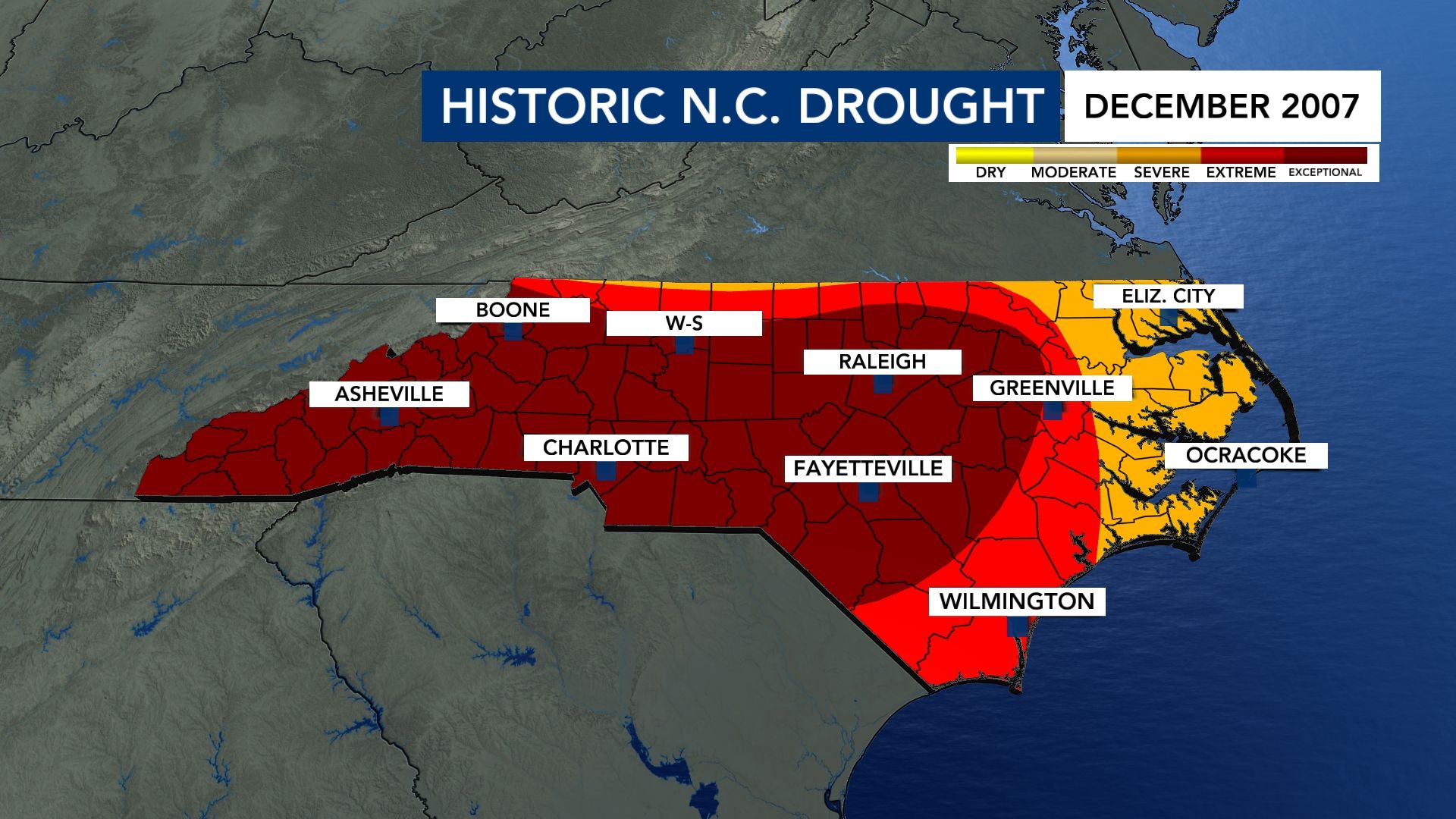
The majority of North Carolina was in an exceptional drought - the highest level on the drought monitor.
During an exceptional drought, you typically see "widespread crop/pasture losses, shortages of water in reservoirs, streams, and wells creating water emergencies."
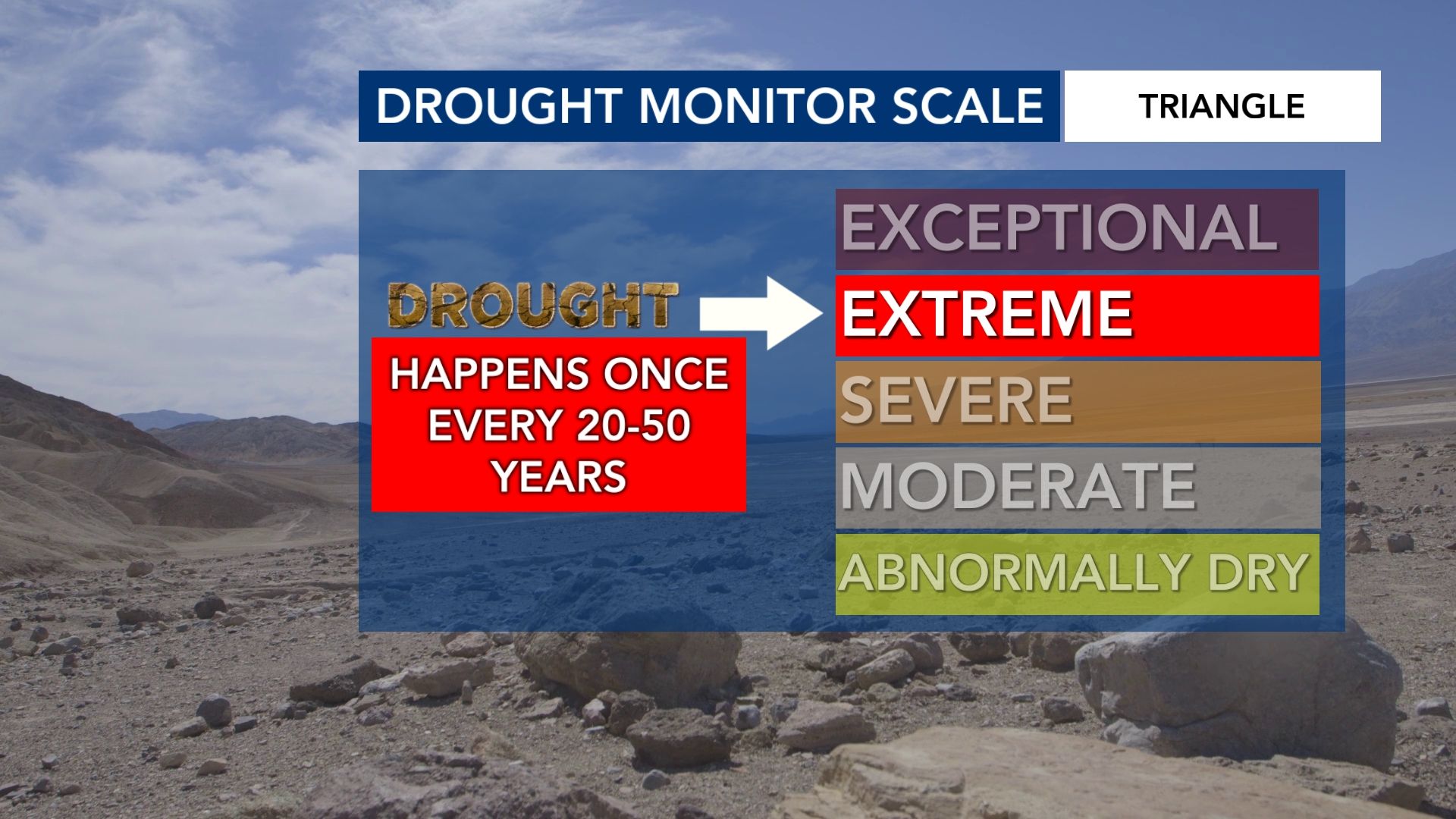
Currently, 1% of North Carolina is in an exceptional drought, while 55% is in an extreme drought (see below).
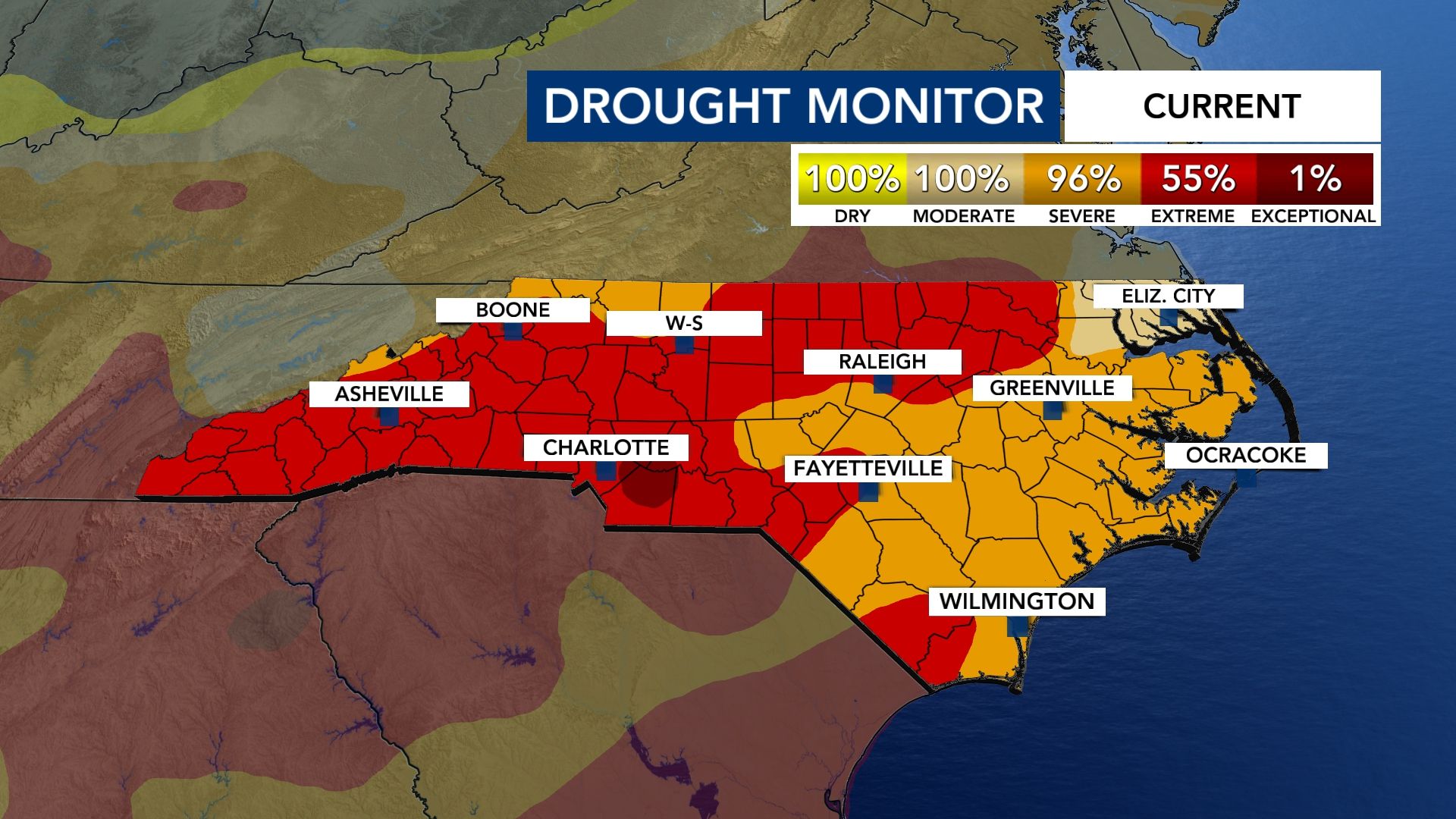
During an extreme drought, you start to see "major crop/pasture losses [and] widespread water shortages or restrictions."
What's driving the current drought?
There are two main drivers behind our current months-long deficit.
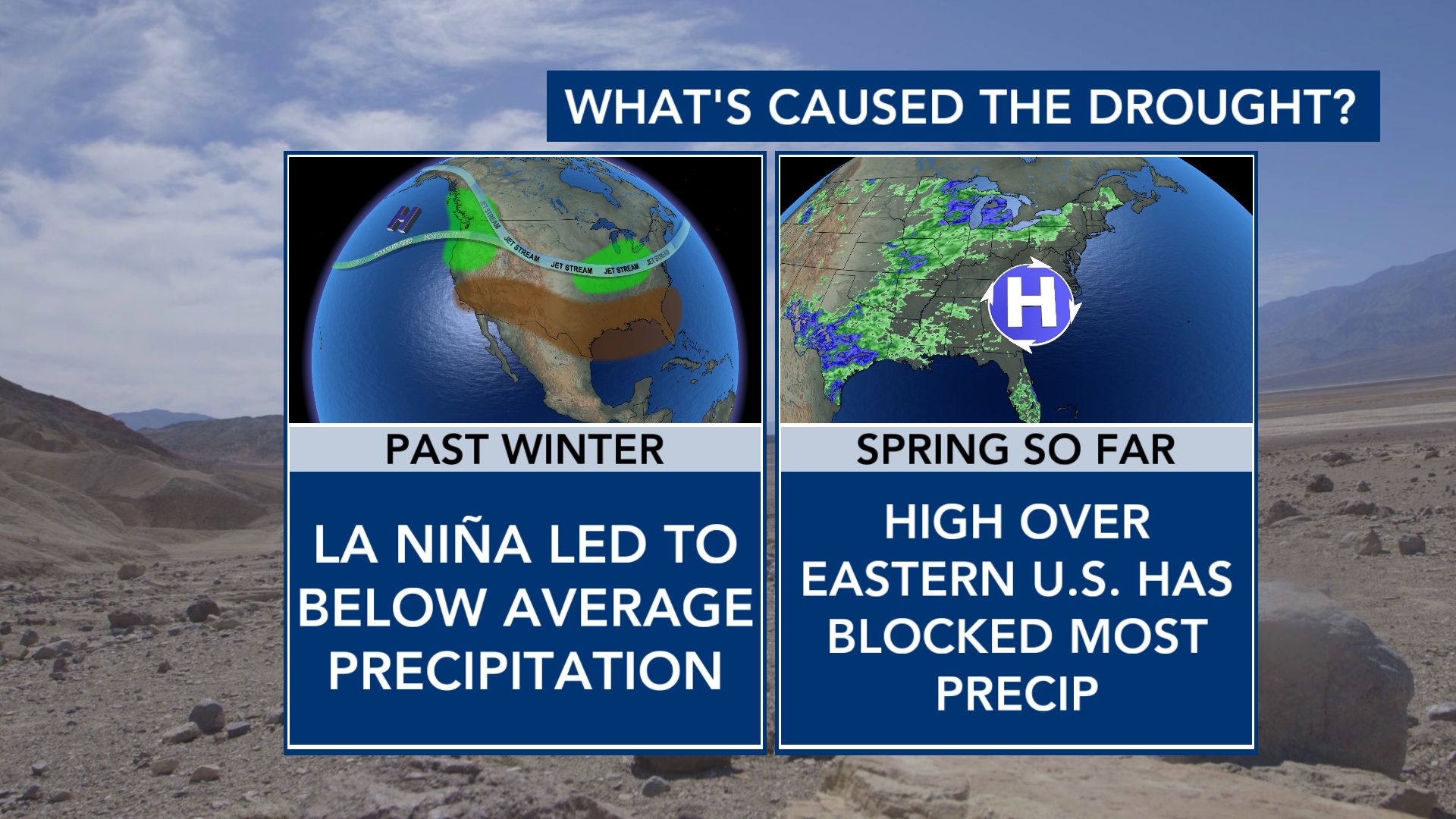
1. La Niña during the winter. While we saw a couple winter weather events, the overall liquid precipitation was lacking. La Niña made for a less-active storm track in the Eastern U.S., contributing to a winter deficit of nearly three inches (of liquid precipitation equivalent).
2. Persistent high pressure. So far this spring, high pressure has been a dominant feature over/near the East Coast. This has essentially blocked any beneficial storm system from reaching here, leaving us void of anything substantial.
This has landed more than half the state in an extreme drought, which only happens once every 20 to 50 years.
Where do we go from here?
We at least have some rain chances in the immediate future.
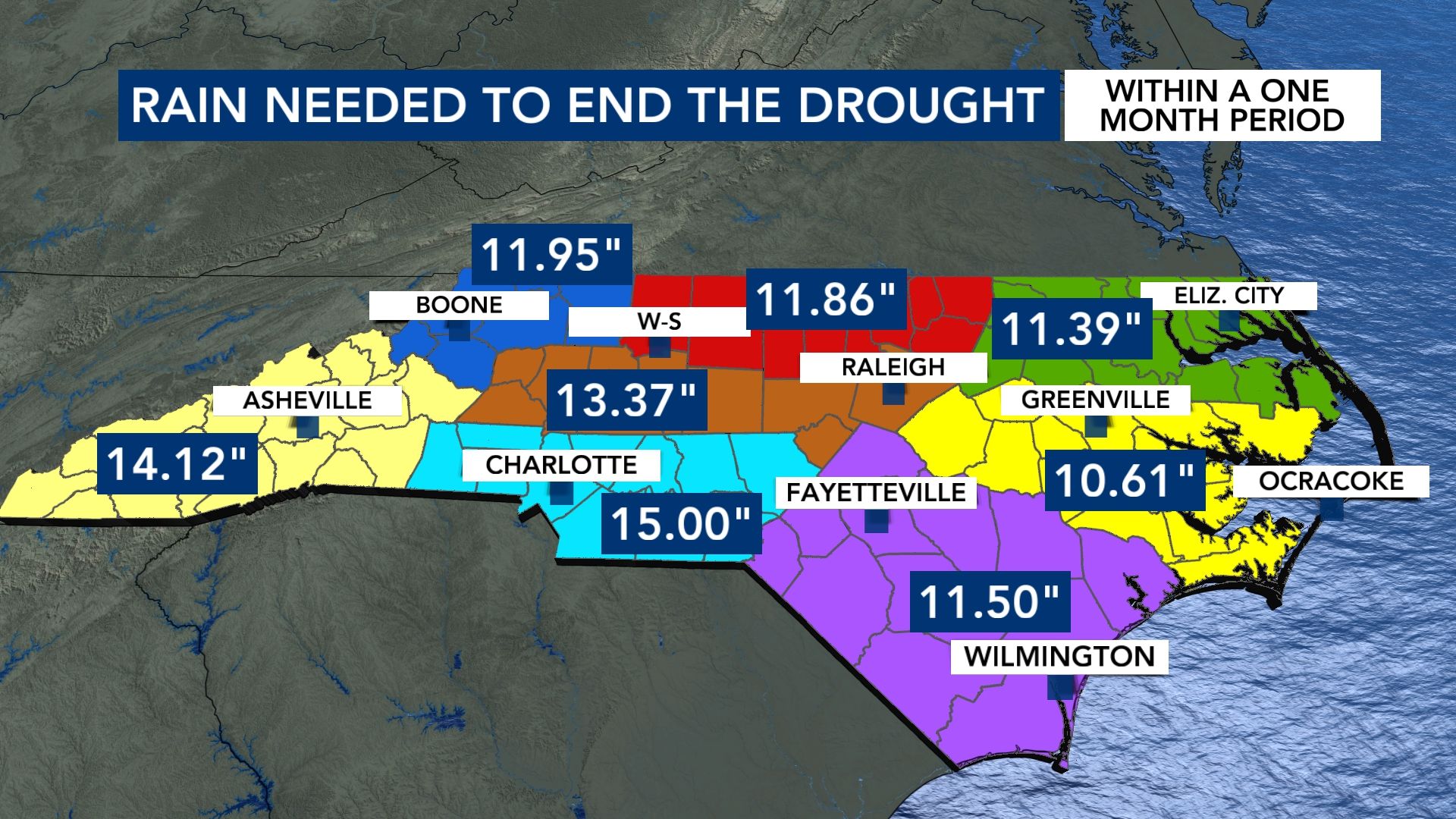
We need 10 to 15 inches of rain within four weeks to completely eliminate the drought. The thing is...you don't want that all at once.
A burn ban has been lifted for 81 of North Carolina's 100 counties.
In the drought of 2007-2008, there was a ban from August 21 to September 18 that was then reinstated in mid-October.
Several localities have issued water restrictions too.
We hope to chip away at this drought with several rain chances between now and the summer. We root against destructive tropical systems.
Preliminary forecasts indicate average activity in the Atlantic this season.