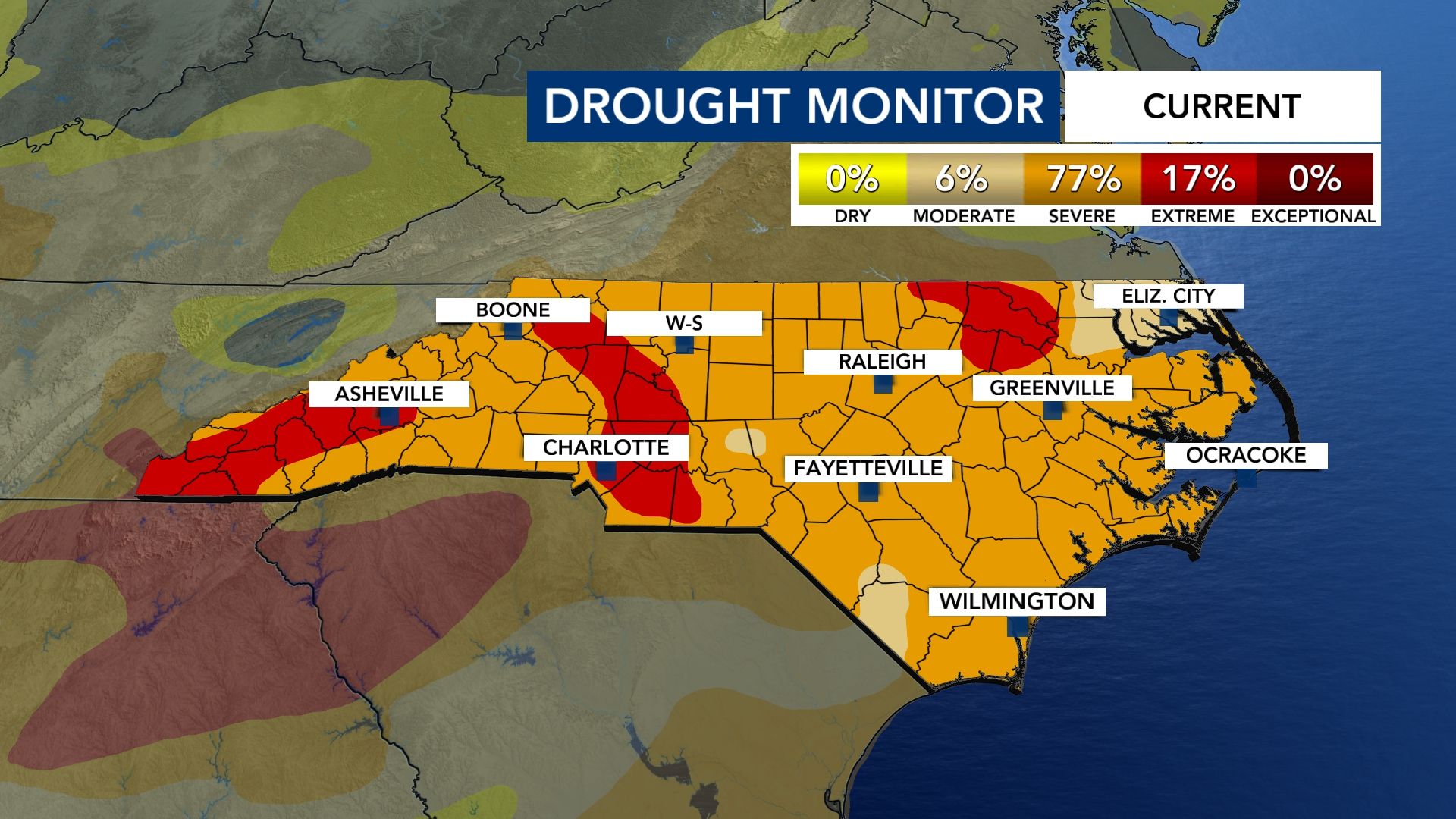
The entire state of North Carolina is in a drought, and the outlook is bleak for at least the next one-to-two weeks.
Click here for the latest drought coverage
Other WRAL Top Stories
The Drought Monitor is an official product issued by the University of Nebraska-Lincoln as a collaborative effort with NOAA, NASA and the USDA.
There are five different categories: abnormally dry, moderate, severe, extreme, and exceptional.
In the drought of 2007, 37% of North Carolina was in an exceptional drought.
As of Wednesday, April 15, 2026, 77% of North Carolina is in a severe drought, and 17% of the state is in an extreme drought.
The Drought Monitor is released every Thursday morning around 9:00.
How is drought determined?
There are several factors that go into determining drought and its severity.
Obviously, rain (or lack thereof in this case) plays a big role in drought conditions. As many of you know, it's been like pulling teeth trying to get a good rain around here.
And that's been months in the making.
Every month since September has seen a rainfall deficit in the Triangle (and beyond). It's been the driest start to the year on record in the Triangle, too.
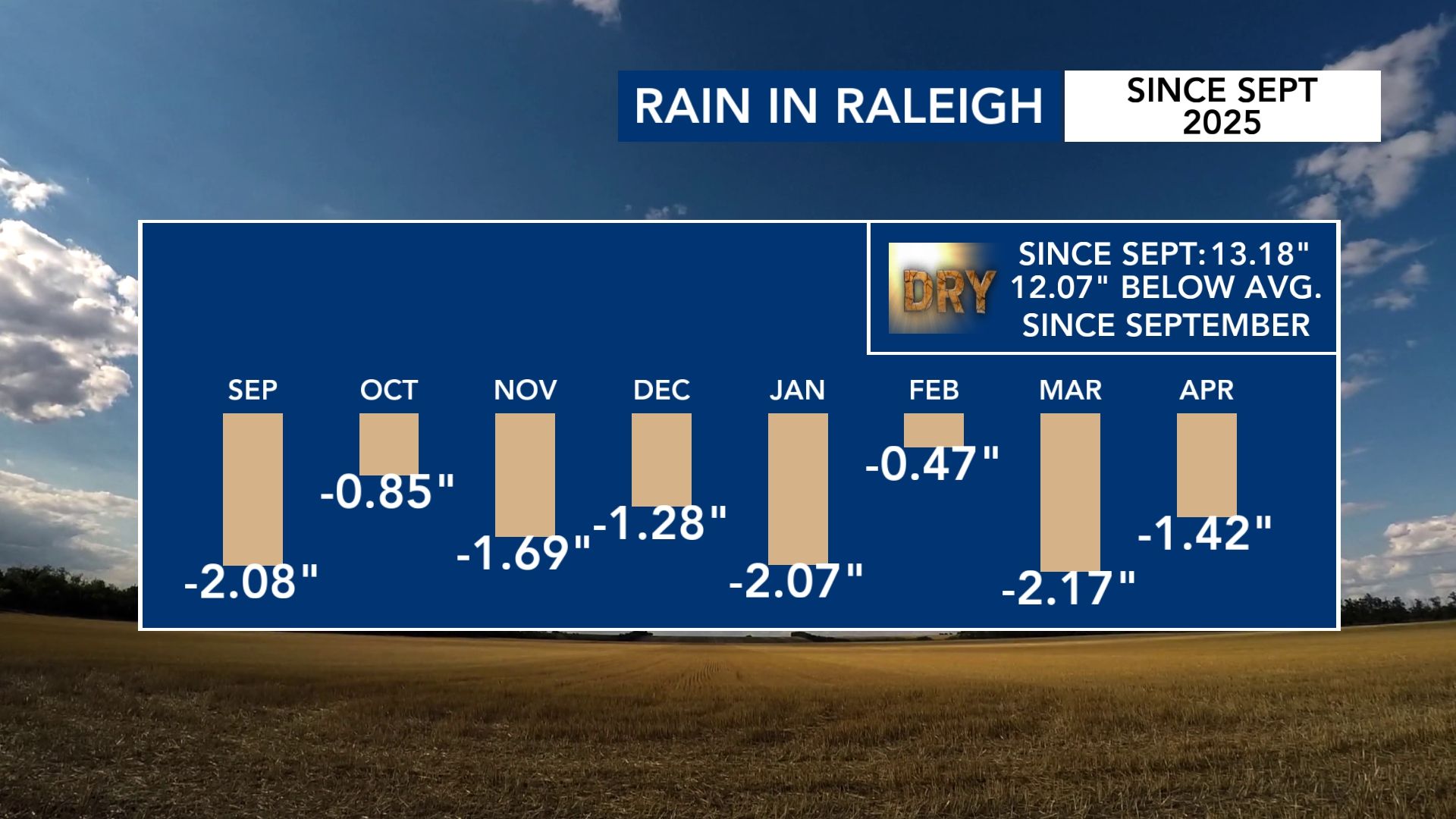
We'd need eight to ten inches of rain within a four-week span to completely get rid of the drought.
In addition to rainfall, there are several hydrologic factors. Lake levels, streamflow, soil moisture, ground water, snowpack and vegetation health all play a role in drought.
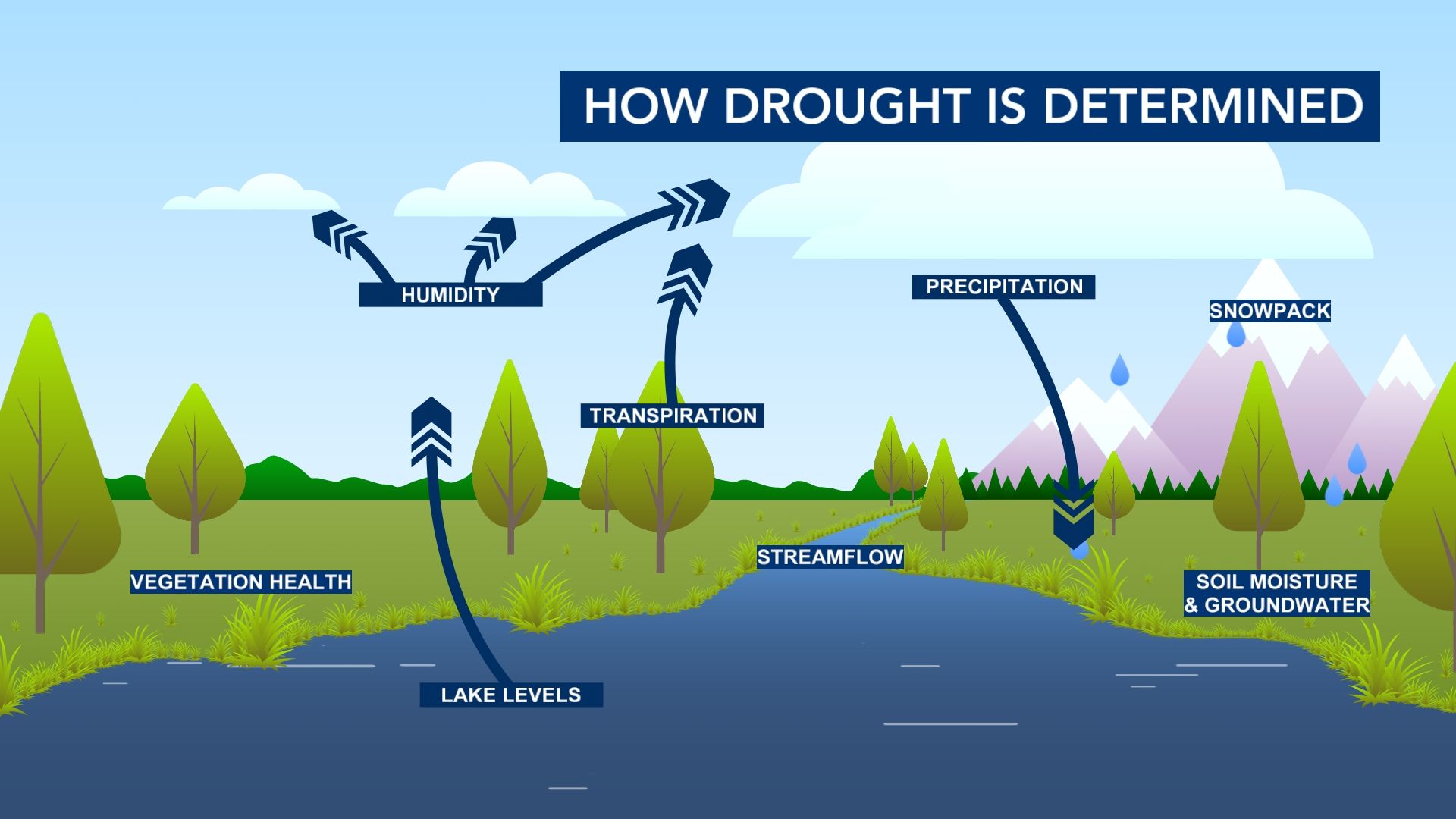
Obviously, there are certain places where things like snowpack don't apply (ie. central North Carolina).
What does the severe and extreme drought mean for us?
Although impacts vary from place to place, we typically see a couple things happen when placed under a severe or extreme drought.
- We typically see damage or loss of crops. WRAL interviewed a farmer earlier in the week to see how drought was impacting him.
- Water restrictions and/or shortages may start to happen, too. Raleigh leadership tells WRAL it may impose water restrictions in the coming weeks.
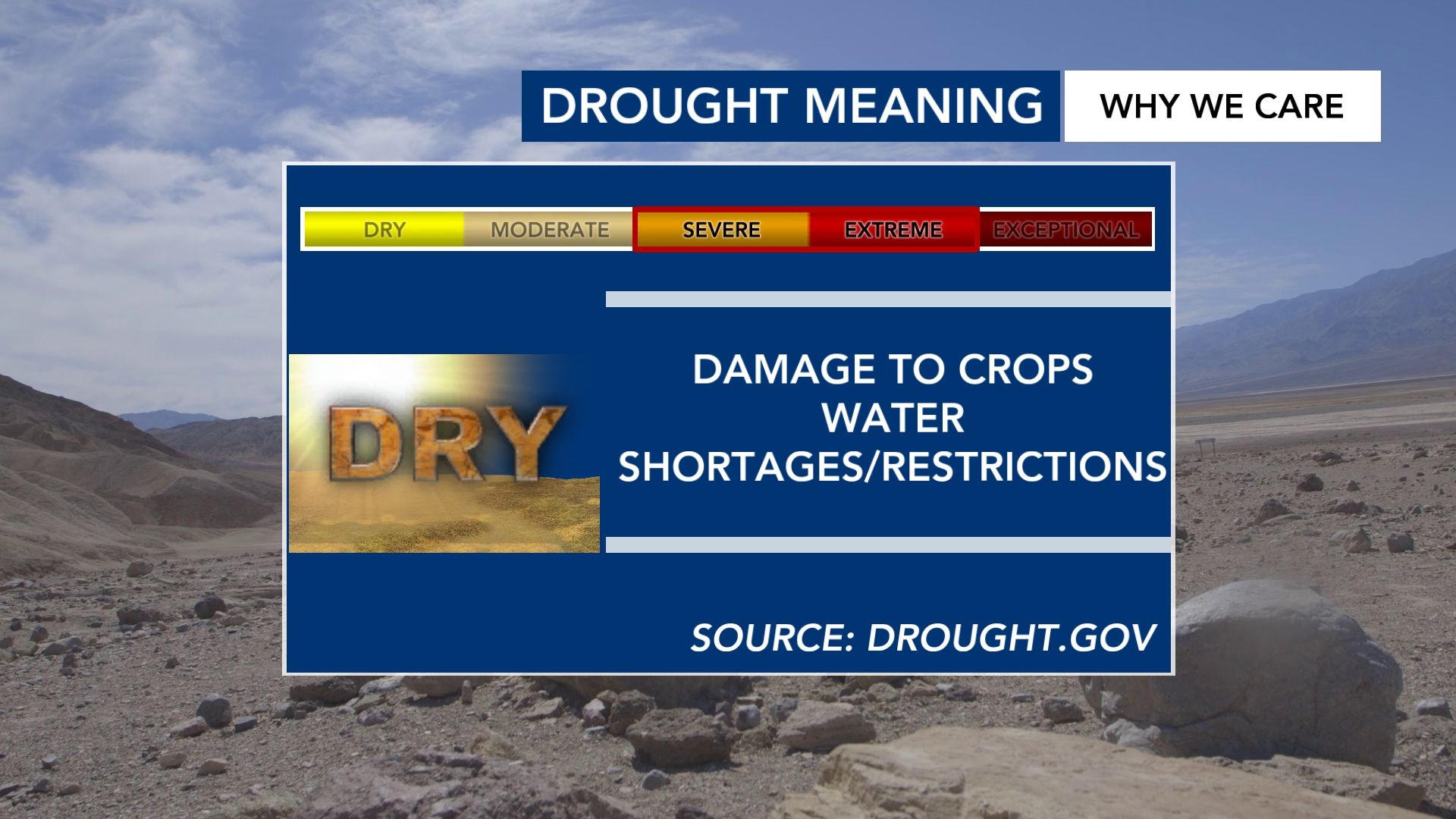
I already received a notice from Aqua regarding water conservation efforts.
I spoke with WRAL digital producer Jaylin Jones on our YouTube channel about what we can start doing now to get ahead of any restrictions.