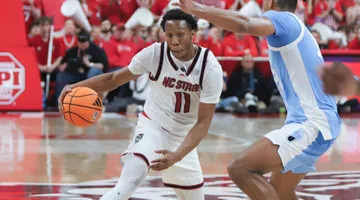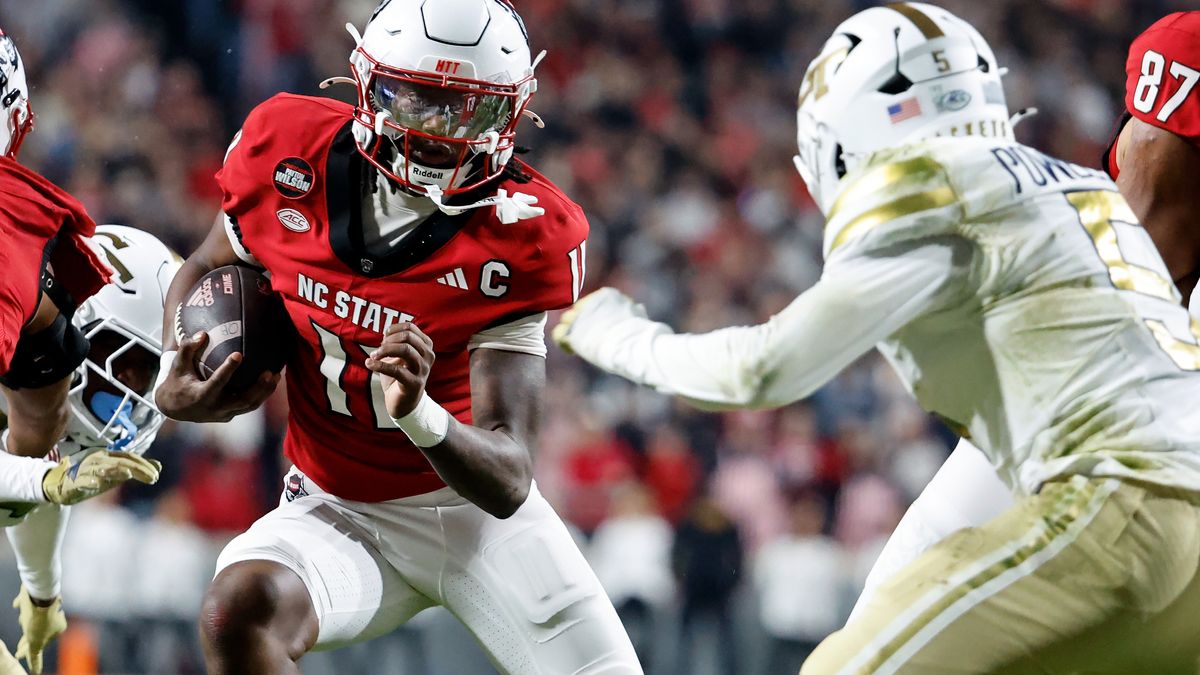
RALEIGH — Revenue-sharing contracts between athletes and North Carolina public colleges and universities would be exempt from the state’s public records laws under a new legislation making its way through the legislature. Supporters say it could help keep star athletes in state schools, but critics say it would deny the public information about how money is being spent by taxpayer-supported universities.
Schools can pay athletes more than $20 million annually as of the 2025-26 academic year, a vast departure from previous NCAA rules. State lawmakers last year exempted name, image and likeness (NIL) contracts from public records laws.
Other WRAL Top Stories
The new bill, pushed by the state’s five public school Football Bowl Subdivision members, passed a House committee Wednesday morning and could receive a vote in the House as soon as Thursday. There wasn’t a recorded vote in committee, and there were some no votes.
Rep. Wyatt Gable, R-Onslow, pitched the bill as a competitive necessity, especially as schools from higher-revenue leagues compete for players.
“Our schools have a lot of money when it comes to college sports, but whenever a Big Ten or SEC school comes in, there’s no way we can compete with them in terms of finances,” Gable told the committee, referencing the two conferences that generate the most revenue at the highest level of intercollegiate athletics.
Athletes are allowed to transfer each year, increasing competition among schools for players and driving payments higher and higher.
“Say we’re giving $100,000 to an athlete, that’s pocket change to Texas or Tennessee,” Gable said. “They just come in and offer $300,000. This way, they have no way of knowing, sort of protecting our universities so we can keep our talent here in North Carolina.”
The information, however, is not secret to agents or athletes’ representatives and there is nothing that forbids them from sharing that information with another program looking to recruit an athlete at a North Carolina university.
Under the rewritten Senate Bill 229, UNC System schools would be exempt from providing information about their overall revenue sharing budget, revenue sharing by team or program and revenue sharing to individual athletes.
North Carolina and NC State have denied public records requests related to revenue sharing with individual athletes, though they have disclosed how much they are sharing with certain programs. UNC, for example, distributed $13 million to its football program, $7 million to its men’s basketball program and $250,000 each to women’s basketball and baseball for revenue sharing with athletes. NC State gave its football program $13.5 million, men’s basketball $4 million and women’s basketball $1 million.
Some individual salaries have been reported by the media.
Former UNC quarterback Gio Lopez, for example, was reported to have signed a two-year contract worth $4 million. Former Duke quarterback Darian Mensah was reported to have signed a two-year, $8 million contract, making him the highest-paid college quarterback in the country. Duke sued Mensah when he attempted to transfer to Miami. The sides reached a settlement, which allowed him to transfer.
The top salary for quarterbacks has climbed even higher this year.
“It could be soon that the highest-paid people on the campuses are going to be student-athletes,” John Bussian, a lobbyist for the North Carolina Press Association, told the committee. “We don’t have any exemptions for coaches’ contracts. They’ve been open in North Carolina, just as one example, forever.”
He said there is no exemption under federal statutes for athlete revenue sharing contracts, either.
“It’s a sea change in the public’s right to know about something this important,” Bussian said.
South Carolina, Wisconsin, Louisiana, Colorado and Utah have passed or considered similar measures to exempt revenue-sharing contracts from public disclosure. Some states have considered legislation to exempt athletes’ NIL money or revenue-sharing money from state taxes.
“Other states have already been doing this for quite a while, so we’re trying to catch up and help give our universities the best advantage,” Gable said.
Said Senate leader Phil Berger, R-Rockingham: "We want to avoid putting North Carolina and North Carolina's universities as a competitive disadvantage with reference to that. It's bad enough that we have trouble on the field, we don't want to create situations off the field that create problems."
The state's five public school FBS members are North Carolina, NC State, App State, Charlotte and East Carolina.
Contact Murphy at bmurphy@wral.com or follow him on X and Instagram @murphsturph.