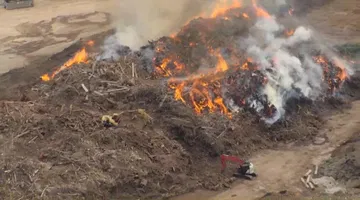
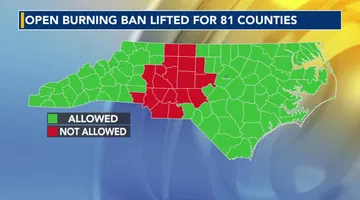
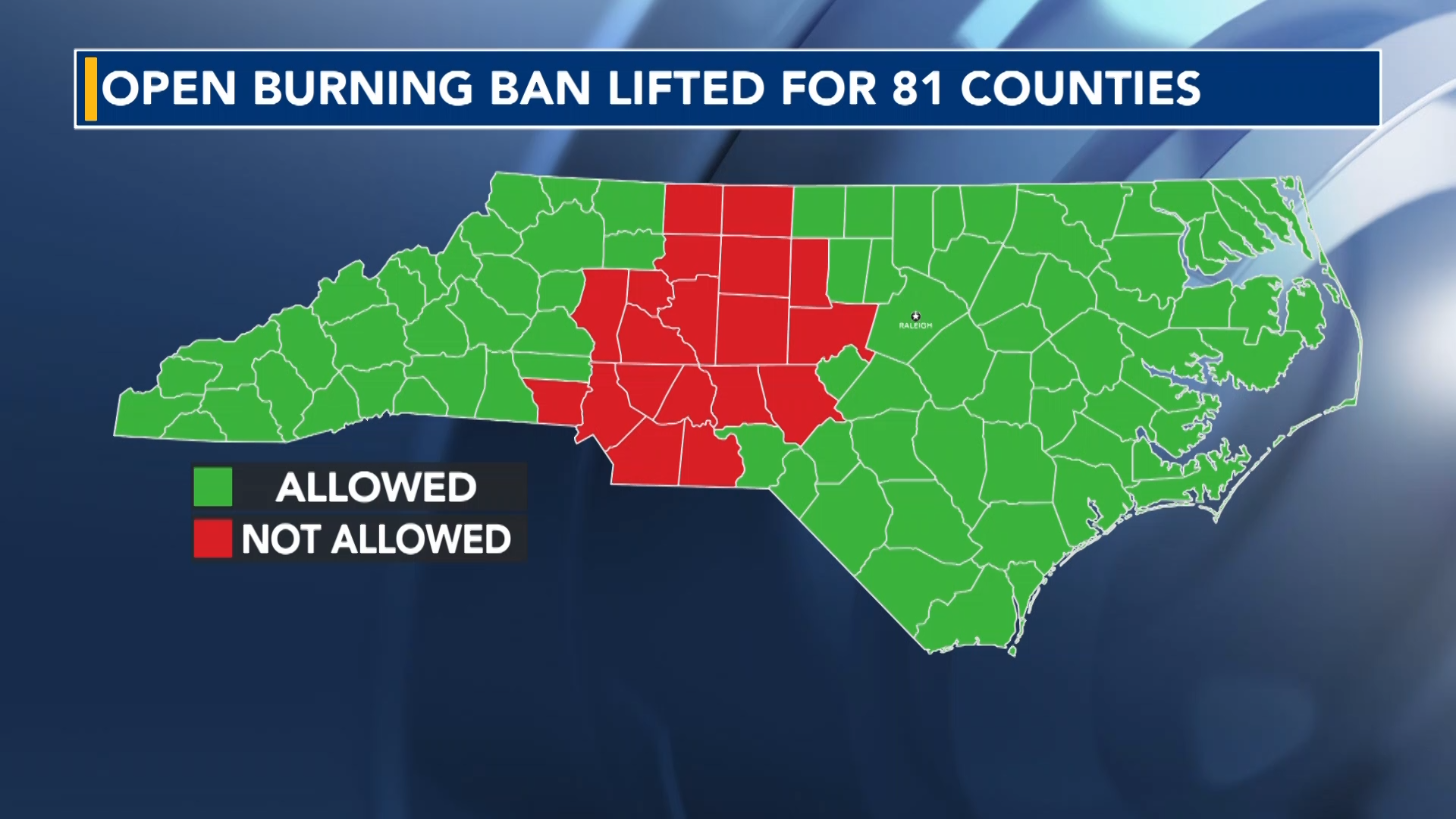
A burn ban was recently lifted for 81 counties in North Carolina.
Even when we're not in a burn ban, some outdoor burning (or open burning) is prohibited, according to the state Department of Environmental Quality (DEQ), which enforces the state's open burning rules.
Other WRAL Top Stories
North Carolina law prohibits burning trash and non-vegetative materials. Yard waste, including leaves, branches and other plant growth, can be burned under certain conditions.
According to the N.C. Forest Service, careless burning is the leading cause of wildfires in North Carolina. Violators can be fined up to $25,000.
What NC counties are still under a burn ban?
The ban is still in place for Alamance, Anson, Cabarrus, Chatham, Davidson, Davie, Forsyth, Gaston, Guilford, Iredell, Mecklenburg, Montgomery, Moore, Randolph, Rowan, Rockingham, Stanly, Stokes and Union counties.
Even in counties where the ban is lifted, some outdoor burning rules apply (see below).
When is outdoor burning not allowed?
Outdoor burning is not allowed for the counties included in North Carolina's burn ban (see above).
Residents in areas that are not in a burn ban can have campfires at home anytime.
However, residential yard waste burning in North Carolina can only occur between 8 a.m. and 6 p.m.
Burning is only allowed when the air quality forecast is Code Green or Code Yellow. Burning on Code Orange, Red or Purple days is prohibited. Check the air quality here.
What you can burn in North Carolina
The following natural items can be burned in North Carolina as long as a burn ban isn't in place, according to the DEQ:
- Leaves
- Limbs
- Brush
- Firewood
- Natural vegetation from your own yard
- Logs, stumps, limbs and other natural vegetation as part of land clearing
- Untreated clean wood
Note: Burning yard waste is only allowed if public pickup isn't available, but there are some exceptions. Check your local municipality if unsure.
What you can't burn in North Carolina
It is illegal to burn trash or anything man-made and non-vegetative, including paper, in North Carolina. Remember this: If it doesn't grow, don't burn it.
Do not burn the following items:
- Trash
- Metal, including wire
- Plastic
- Newspaper, cardboard or paper
- Treated or coated wood
- Tires and other rubber products
- Heavy oils
- Asphalt shingles
- Paints and household or agricultural chemicals
- Buildings, including outbuildings and mobile homes
- Any man-made, artificial or synthetic items
When do I need a burn permit?
Burn permits are required before certain fires are lit in protected areas, which may impact people who are burning debris.
Philip Jackson, a spokesperson from the N.C. Forest Service, explains burn permits are required when burning debris within 500 feet of woodland or when burning outside a 100-foot radius of your home. Burn permits are available through the N.C. Forest Service’s online application at ncforestservice.gov/burnpermit or by contacting a local N.C. Forest Service county office.
"Before choosing to burn, it’s important to check local burning laws as some communities allow burning only during specified hours while others forbid it entirely," Jackson said. "Local county fire marshals, municipalities and cities may have their own requirements for burning within those limits."
Are outdoor fires allowed in your yard?
Yes, campfires, outdoor cooking fires and bonfires are allowed in counties where the burn ban is no longer in effect. Only vegetation, such as firewood, should be burned. Fires must be controlled and never left unattended.
Portable outdoor fireplaces should not be operated within 15 feet of a structure or combustible material.
What about camping?
Yes, campfires are allowed for the parks located in counties where the burn ban is no longer in effect.
However, the following parks continue to operate under burn ban restrictions:
- Crowders Mountain State Park
- Hanging Rock State Park
- Haw River State Park
- Jordan Lake State Recreation Area
- Lake Norman State Park
- Mayo River State Park
- Morrow Mountain State Park
- Weymouth Woods Sandhills Nature Preserve
Bonfires should not be started within 50 feet of a structure or combustibble material unless the fire is contained in a barbecue put.
Recreational fires should not be started within 25 feet of a structure or combustible material.