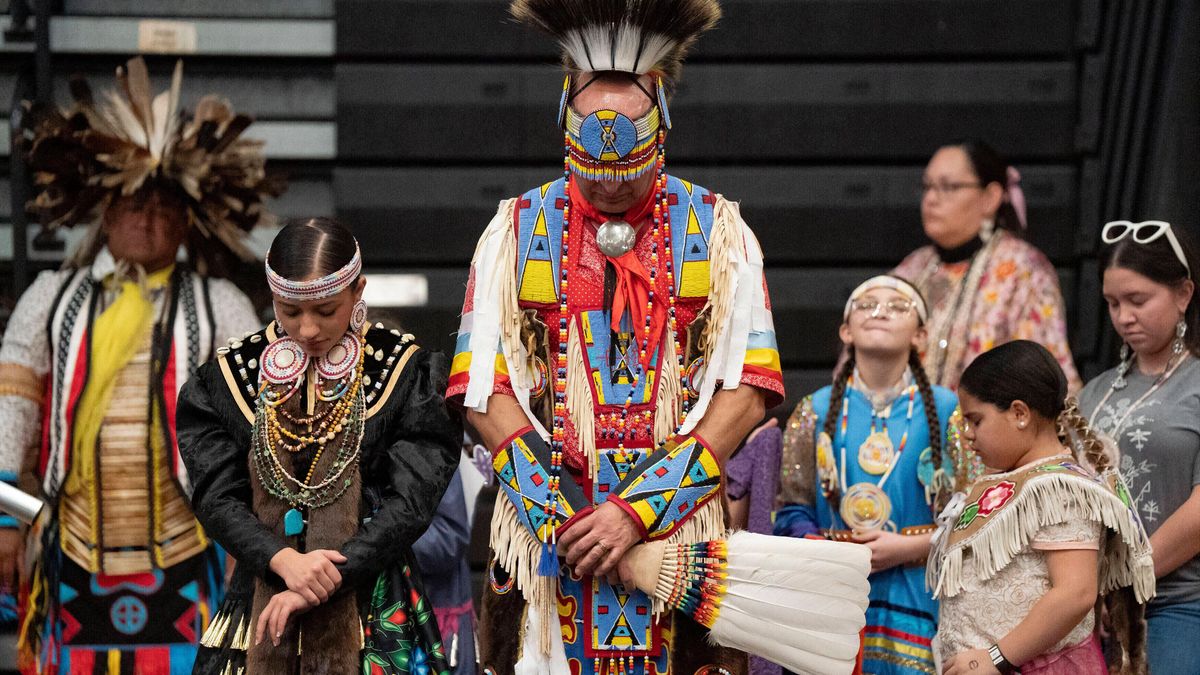
Federal recognition of the Lumbee Tribe, a long-sought goal by members of the southeastern North Carolina tribe, moved one step closer to becoming reality Wednesday evening when the U.S. House of Representatives voted to approve it as part of a must-pass defense spending bill.
If the measure is approved by the U.S. Senate and signed into law by President Donald Trump, it could lead to an economic boom in southeastern North Carolina, one of the most impoverished parts of the state. The House passed the bill with bipartisan support.
Other WRAL Top Stories
The Lumbee Tribe is concentrated in and around Robeson County, and federal recognition would bring vast federal investments for health care, education and other services to the area — plus the authority to build a casino.
Tribal chairman John Lowery, who is also a Republican state lawmaker from Robeson County, traveled to Washington over the weekend to help hammer out the deal, WRAL reported earlier this week. The Lumbee Tribe of North Carolina issued a statement thanking Trump, House Speaker Mike Johnson and the state's congressional delegation, which includes Republicans and Democrats.
"When that vote came through, all I could think about was our ancestors, our families, and every Lumbee who has fought for fairness and recognition. We are closer than ever," Lowery said on social media.
Lumbee recognition has failed, for decades, even despite support from Trump, a Republican, and former Democratic Presidents Joe Biden and Barack Obama. Other native tribes heavily oppose Lumbee recognition for a number of reasons: concern about casino competition, concern about seeing their own federal aid diminish and skepticism about whether the Lumbee are a legitimate tribe in the first place. Opponents argue the Lumbee are a mix of various tribes and other non-native groups.
With 55,000 members, the Lumbee would be the largest federally recognized tribe east of the Mississippi River.
While opposition from other tribes has been enough to kill Lumbee recognition in standalone votes in the past, that’s not how the legislation is proceeding in Washington this year. Instead, Congress has shoehorned it into an unrelated bill — the National Defense Authorization Act — to fund the U.S. military and tweak the nation’s strategic defense priorities. The bill is stuffed with unrelated items.
“We have used every tool at our disposal to secure recognition in this year’s NDAA,” U.S. Rep. Mark Harris, a Republican who represents Robeson County in Congress, wrote on social media this week, celebrating that strategic victory to tie Lumbee recognition to the broader Pentagon bill.
Since the $900-billion annual defense bill is considered a must-pass measure, the ability of North Carolina’s congressional delegation to get Lumbee recognition tied to it has raised the ire of tribes including the Eastern Band of Cherokee Indians, based in the Qualla Boundary in western North Carolina.
Cherokee Principal Chief Michell Hicks said he was "deeply disappointed and alarmed" at the tactics being used, warning it risked politicizing all tribal recognitions.
“"Once recognition is granted without an evidentiary review, the standing of all federally acknowledged tribal nations becomes more vulnerable to political shifts rather than being anchored in history and law," he said.
The Lumbees, who are recognized by the state, have sought federal recognition for decades. In recent years, several measures have passed the House of Representatives but failed in the Senate, despite support from North Carolina Sens. Thom Tillis and Ted Budd and, previously, Richard Burr. Senators from western states, often with large tribal populations, have blocked the measures.
The Lumbee Act of 1956, a federal law signed by President Dwight Eisenhower, gave partial recognition to the tribe, but denied the tribe federal services and benefits.
The defense bill includes pay raises for all service members, cuts Pentagon diversity efforts and demands more accountability over the Trump administration's campaign against Latin American drug cartels, according to The Associated Press. It also includes aid for Ukraine and keeps U.S. troops in Europe and Korea.