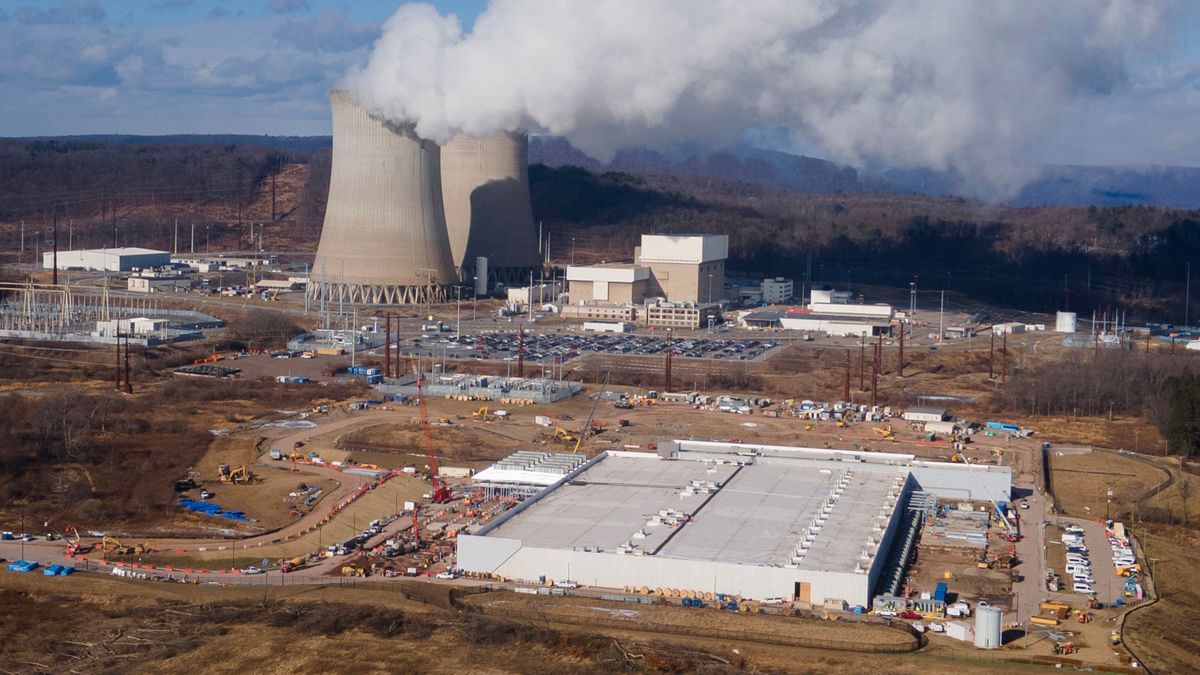
A special tax exemption for data centers needs to be reduced or eliminated, Gov. Josh Stein said Wednesday, predicting that if left in place the state could soon lose out on billions of dollars.
Stein made the pitch in Raleigh during a meeting of his new Energy Policy Task Force — a bipartisan group of state lawmakers and experts in business, energy and the environment.
Other WRAL Top Stories
Stein said his proposal to cut their tax subsidies isn’t an effort to drive data centers away from North Carolina, but rather to ensure the people of the state aren’t unnecessarily subsidizing Big Tech companies’ artificial-intelligence ambitions.
“AI will be part of our future, and we want to keep innovation central to this state's economic development strategy,” Stein said. “But we cannot be blind to the impact these data centers are having on our state. They need to pay their way, so that our residential consumers don't have to bear the cost.”
The AI boom has led to the construction of billions of dollars worth of new data centers across the country. North Carolina is already home to several massive data centers, and many more are attempting to set up shop in the state.
A 300-megawatt data center can use as much electricity as roughly 200,000 North Carolina homes running nonstop, based on U.S. Energy Information Administration household consumption data. For comparison, there are 219,000 households in the Raleigh-Cary metro area.
New data centers’ electricity demand is partially to blame, Stein said, for rising energy prices in North Carolina. He questioned why taxpayers should pay millions subsidizing the same companies driving up their bills.
“Do we really want to subsidize data centers’ consumption of energy and electricity, when they make everyone else's power bills go up?” Stein said. “It doesn't make much sense to me.”
An April poll from Elon University found broad public opposition to data centers, with just 24% of North Carolinians saying they’d approve of one being built in their community.
Stein needs legislature’s help
It’s unclear if Republican state lawmakers will go along with the Democratic governor’s plan, which would require repealing or re-writing state laws.
Stein sought to appeal to GOP sensibilities Wednesday, noting that Republican President Donald Trump has also called for consumer protections related to new data centers. “If we don't act thoughtfully, folks’ electricity bills are going to mushroom even more than they already are today,” Stein said. “The Trump administration is in agreement.”
Rep. Kyle Hall, R-Stokes, is chairman of the Energy Committee in the state House of Representatives and also serves on Stein’s task force. He told WRAL after the meeting Wednesday he wasn’t sure exactly how the idea would be received in the legislature.
Another member of the committee, Sen. Julie Mayfield, D-Buncombe, said she thought it was worthy of a serious look. The legislature has eliminated a number of tax credits and other loopholes recently, she said, so there’s precedent for what Stein wants.
“The General Assembly has, over the last several years, eliminated a number of exemptions and incentives in the energy world — primarily in the clean energy world — that I’m aware of,” she said. “So call it fairness, call it consistency, call it whatever you want. I do think we should put this on the table for consideration.”
Losses in the billions?
North Carolina is an attractive location for data centers due to factors including weather, the availability and relatively low cost of land, state and local incentives, and other benefits — including the tax breaks the companies behind the data centers get when buying energy or new equipment.
Tax breaks and other incentives are often used to lure businesses to North Carolina. But Stein said he doesn’t believe reducing or eliminating these tax breaks will stop companies from wanting to build data centers in North Carolina.
“Given the trillions of dollars of capital that is flowing freely into data center construction, they simply do not need economic incentives to occur,” he said. “The market is already delivering the incentives. … We should spend taxpayer dollars, and forego revenue, only when there is a clear, direct value to the people of this state.”
The actual amount the companies claim in tax credits is secret, Stein said, so he had analysts at the state Department of Commerce use public data to estimate how much the state is probably giving out in those tax breaks.
That analysis showed that North Carolina is probably already losing out on an estimated $50 million every year due to the data center tax exemptions — a figure that could balloon if all the data centers that have been proposed in North Carolina end up being built. Under that scenario, he said, the state would lose out on an expected $2.3 billion in one-time tax exemptions plus an additional $450 million annually.
He’s asking his task force to recommend reducing or fully eliminating the tax breaks, a policy change that would ultimately be up to the General Assembly to vote on. Stein said that as Republican leaders in the state legislature are looking to keep services funded without having to give up the income tax cuts they’ve pushed for, this could be one way to find new revenue.
The tax breaks were first created 20 years ago, Stein said, long before the AI boom took off and drove the data center expansion of the last few years. Many of the wealthiest companies in the world — NVIDIA, Microsoft, Google, Amazon and Meta, among others — are driving the AI and data center arms race, and Stein questioned why the state government should be subsidizing them.
Microsoft has spent billions of dollars on data centers and other infrastructure required to develop artificial intelligence technology across the country. Microsoft President Brad Smith has been meeting with federal lawmakers this year to examine ways for industry, not taxpayers, to pay the full costs of data centers.
Data center developers are increasingly running into hostility and facing rejection from municipal boards that oversee zoning applications or construction permits. In Person County, clean-water advocates have already raised skepticism about Microsoft’s plans for a new data center. Microsoft, however, has promised to minimize water use and replenishing what it uses, the county has said.
A lobbyist for Microsoft who attended Stein’s meeting Wednesday declined to comment on his proposal to eliminate the tax breaks.