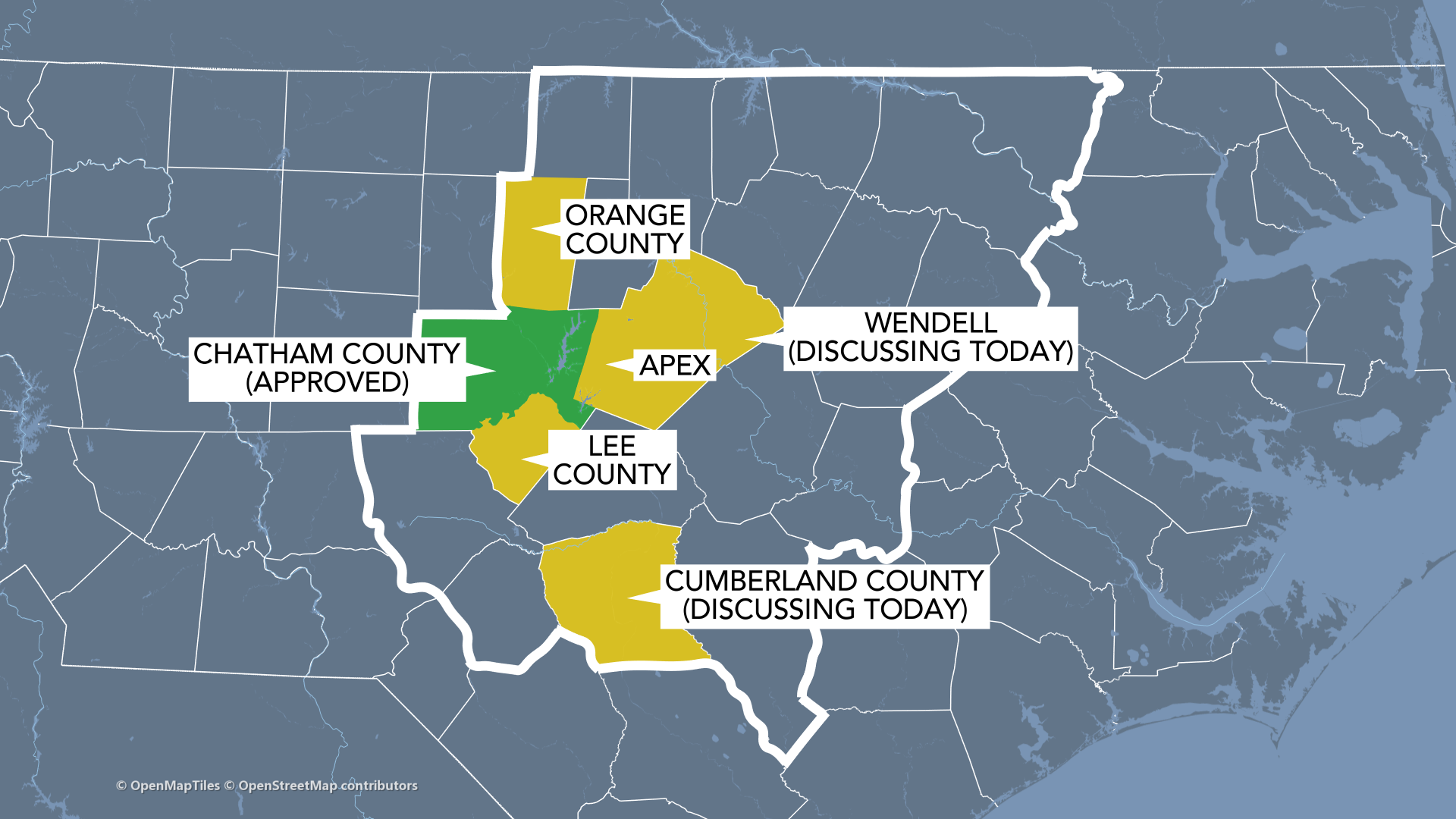
The town of Wendell Board of Commissioners on Monday set up a town hall to discuss the future of data centers in the Wake County town.
Leaders in the town told WRAL News that while there currently aren’t any plans to build a data center, they want to get a head of what’s expected to be rapidly growing facilities in the state.
Other WRAL Top Stories
Several counties and municipalities in central North Carolina have already decided against building facilities until they can get more information. In Apex, residents successfully pushed back against a planned data center that would have been built a short distance away from the Shearon Harris Nuclear Plant.
“[There’s] a lot of things that we didn’t know or understand, and still don’t,” said Apex Mayor Jacques Gilbert.
Gilbert added, “This one-year moratorium is something that we could use to pause any type of proposal in our town until we can do more research.”
The massive computer facilities that power AI require large amounts of electricity, and often operate around the clock with little tolerance for outages, leaving many around the state to ask who could pay for them.
Many critics of the facilities have highlighted the environmental impacts of the sites. Industry estimates that a 250-megawatt data center can use up to a billion gallons of water each year, or 2.7 million gallons a day.
Chatham County leaders in February announced a year-long moratorium on the construction of data centers until county leaders can get an in-depth look at the benefits and the costs of the facilities. Similar proposals are under consideration in Orange, Lee and Cumberland counties.
One area that has already approved the construction of a data center is Person County. In February, the county said Microsoft plans to begin the permitting process this year for a data center that is expected to grow the tax base and create jobs for the county.
Research from Duke University could also help those in favor of building data centers move forward. In February, the university released a study suggesting the flexibility from the new data centers could actually lower rising power costs.
The report found that if large data centers shifted a portion of their computing to times when the grid is less stressed, the United States could avoid up to $150 billion in power plant, fuel and transmission costs over the next decade. Much of the deferred investment would otherwise go toward natural gas facilities.
Wake County residents against the construction of data centers, like Sarav Arunachalam of Protect Wake County, said they want the town, as well as county commissioners, to consider the negative impacts, too, before making decisions on any new facility.
“This level of pause is good, only so that everybody can be well informed, and we challenge, as well as encourage, developers,” Arunachalam said.
The Board of Commissioners said the public hearing will happen on April 13 at town hall.
WRAL climate change reporter Liz McLaughlin contributed to this report.