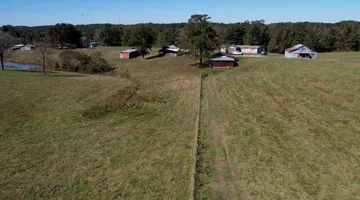
The developers of a proposed data center in Apex are killing the project, Natelli Investments announced Thursday.
Natelli Investments said the developer is withdrawing its annexation and rezoning applications for property adjacent to Duke Energy's Shearon Harris Nuclear Plant. The proposed 250-megawatt facility was going to be called the "New Hill Digital Campus."
Other WRAL Top Stories
“The town continues its deliberations over zoning ordinance changes necessary to permit data center development within the town limits,” Natelli Investments wrote in an email to WRAL News.
Natelli Investments added it would, “Determine an appropriate course of action, if in the future, the town of Apex ultimately approves a comprehensive zoning text amendment allowing data centers as an approved use within the town's limits.”
The project would have included six 70-foot buildings and about 80 3-megawatt generators on 189 acres of Shearon Harris Road, not far from Duke Energy's Harris Nuclear Plant. As for cooling, the plant would use water from treated wastewater, and the data center would draw power from Duke Energy’s power grid.
In August, some New Hill residents pushed back against the proposed data facility. Melissa Ripper, who first met WRAL News when she was protesting against the data center months earlier, said she was surprised by the decision.
"We thought we had, probably, another six [or] eight months of trying to push back," Ripper said.
Ripper and others created the Protect Wake County Coalition, a volunteer-led movement that advocates for "the responsible growth protecting the health, character and future" of communities like New Hill and Apex. Ripper said that while she's enjoying the victory, there's more work to be done.
"We definitely weren't giving up," Ripper said. "Even now, with the information we have, it's a small victory."
On Thursday, WRAL News left a voicemail with Mayor Jacques Gilbert but did not immediately hear back.
Town Council Member Terry Mahaffey posted a video on Thursday about Natelli Investments’ decision.
“I want to start by saying thank you to all of the residents, all of the experts, all of the advocates who’ve been coming to our council meetings these past few months and have worked so hard and done the research to help educate the council as we have worked to get up to speed on what this complex use means and the impacts of it on our area,” Mahaffey said.
Residents wanted to know who would end up paying for the center and who would pay for infrastructure improvements, adding that they were also worried about the amount of water that may be used and the possible health effects from diesel fumes.
Mahaffey said he planned to forward a motion on Tuesday, March 10 to set a one-year moratorium on any further applications, permits or construction of data centers in Apex.
“This will give us the time we need to finish the work that we started, to update the UDO [unified development ordinance], to put firm rules in place to ensure that any future applicants not harm the health, the well-being or the quality of life of any existing Apex resident,” Mahaffey said.
The moratorium, if approved, woudn't be the first proposed against data center construction this year in central NC. In February, Chatham County leaders approved a one-year moratorium that banned construction of data centers and cryptocurrency mining for a year in the county. The county said the moratorium would give them more time to research the impacts of data center on the environment.
In late February, U.S. Rep. Valerie Foushee, D-North Carolina, posted a video to social media, announcing that she opposed the proposed data center in New Hill.
“Plainly, I don’t support a new data center in the heart of our district,” she said.
Foushee held off Durham County Commissioner Nida Allam in this week's primary election. Allam said she stands with residents who oppose the project.
“The oligarchs and out-of-state development companies who are proposing to build an AI data center in our community call it construction — but we see right through it,” Allam said. “We know its destruction of jobs, our environment and our communities themselves.”