You don’t have to step inside the Wake County Jail to see the strain it’s under right now. The numbers alone paint a clear picture.
According to Wake County District Attorney Lorrin Freeman, for years, the jail population remained relatively stable.
Other WRAL Top Stories
"It has only in the last 18 months or so now kind of really ballooned up," Freeman said.
Since 2021, the inmate population has increased by more than 400 people. The facility now houses 1,664 inmates, nearly 100 over its intended capacity.
To manage the overflow, staff members are using temporary beds known as “EZ bunks,” which are placed in open dorm areas to accommodate additional inmates. The sheriff’s office is also working closely with the Department of Adult Correction to speed up the transfer of inmates who are awaiting placement in state facilities.
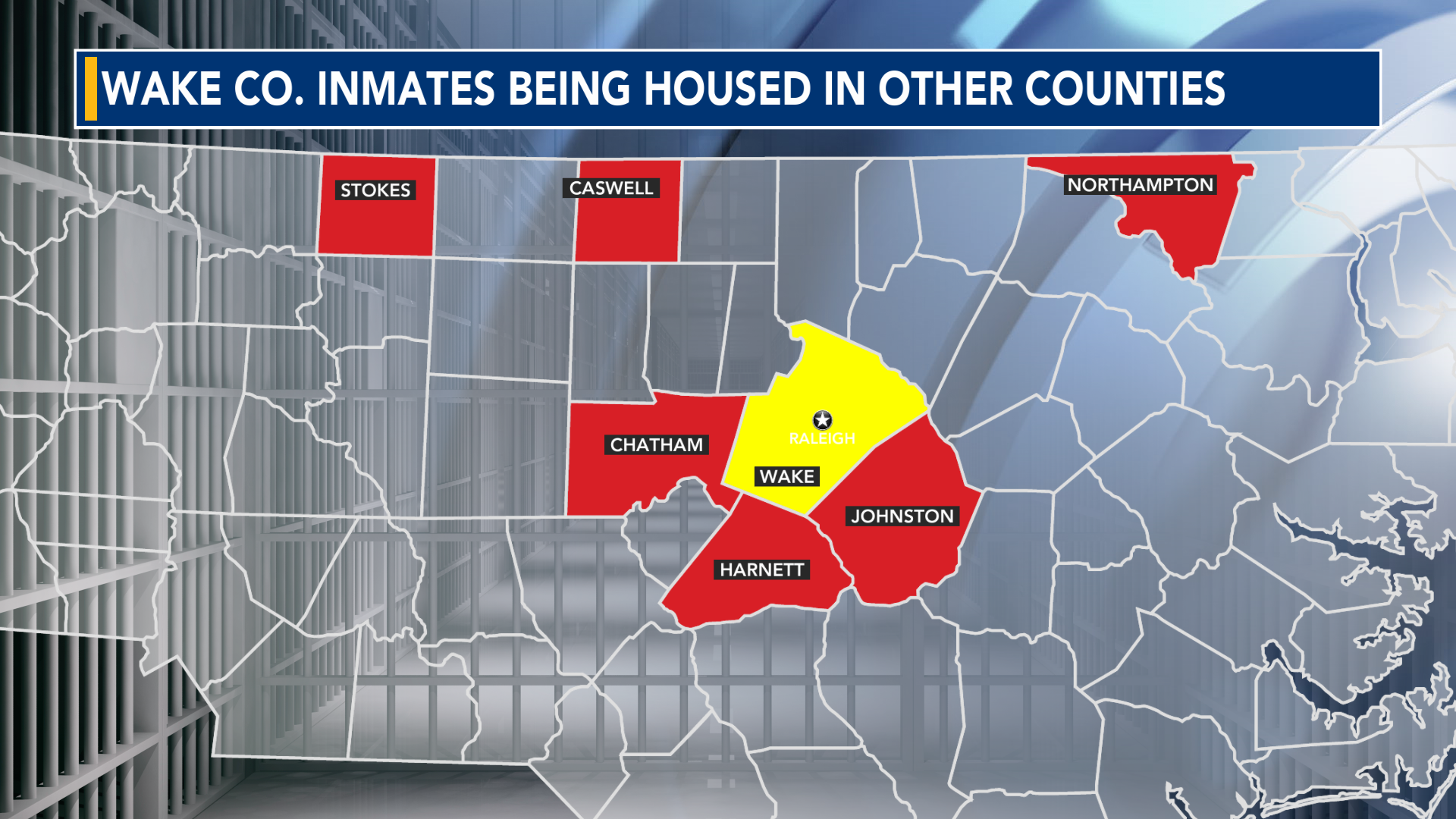
Outside the facility, six neighboring counties have stepped in, temporarily housing inmates from Wake County. It includes Caswell, Chatham, Harnett, Johnston, Northampton and Stokes counties. However, Freeman warns this is only a short-term fix for a growing, systemic issue.
According to Freeman, the situation is being intensified by a relatively new state law that took effect on Dec. 1, 2025.
"A lot of times, what you see is a law is passed. It may be an overcorrection," Freeman said.
The legislation, known as Iryna's Law, was enacted in December 2025 after a deadly stabbing on a Charlotte light rail train. The law tightens pretrial release rules, particularly for individuals accused of violent crimes.
"It's natural that people want to come together and say, 'How can we prevent that from happening? You know, we don't want to have those kinds of things happening in our community,'" Freeman said.
While the law was designed to improve public safety, Freeman said it may be having unintended consequences, especially for already crowded jails.
In a statement, the Wake County Sheriff’s Office said it has not yet observed a measurable impact from the law. However, officials noted they are continuing to review “unaddressed challenges directly related to the law that may arise.”
At the same time, local agencies are working together to find longer-term solutions. The sheriff’s office says it is in ongoing discussions with Wake County Government, the District Attorney’s Office, the Department of Adult Correction and the court system to address the strain.
One potential step forward is the reopening of the old detention annex at 3400 Hammond Road. Officials are currently working with county commissioners on that plan, which would add an estimated 240 beds in a separate building across from the current detention center.
Freeman believes the issue extends beyond Wake County and is calling for lawmakers to revisit the legislation as the General Assembly reconvenes.
"I don't think Wake County is alone in this," Freeman said. "I think this is more of a statewide issue that we need to maybe look at that law and figure out, are there things that should be tweaked in it?"
