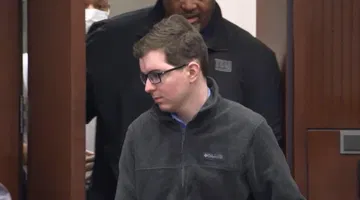
The prosecution wrapped up Friday the presentation of evidence against Austin Thompson, who has pleaded guilty to an October 2022 mass shooting in Raleigh.
Next week, the judge's attention will turn to Thompson's defense team, who will present their own evidence and testimony before a decision is made about his punishment.
Other WRAL Top Stories
Judge Paul Ridgeway will eventually make that decision. Thompson faces a minimum of 25 years in prison -- one life sentence with the possibility of parole -- for killing five people in Raleigh's Hedingham neighborhood. The maximum sentence would be five life sentences plus an additional 1,634 months in prison.
The death penalty is not an option, because Thompson was under 18 at the time of the crimes.
Over the course of four days of testimony this week, the defense tried their best to find holes in the case presented by the state, notably in the evidence of Thompson's search history in the months before his shooting rampage.
Friday began with a continued line of questioning for Sgt. Robert Pike, who was the lead investigator into Thompson's search histories on his personal phone and laptop. While the majority of the digital evidence was presented Thursday — It mentioned over 1,300 search results for guns, assaults, rapes and bomb-making materials — Thompson's defense team went straight in to finding gaps in why these searches could appear on the devices of a then-12 to 15-year-old boy.
At one point during their cross-examining questions for Pike, one of Thompson's lawyers stood beside Pike, while he was sitting on the stand, to break down the actual percentages of Thompson's history that contained violent searches compared to the rest of his history.
They determined that less than .5% of his overall search history was related to assaults and shootings.
The state came back to argue that everything searched on Thompson's devices was viewed within a two-year span of the shooting, since Thompson received a phone less than two years before the crime was committed.
Trying to understand the violent behaviors
The state then brought up its last witness, after a defense objection that she did not have a personal connection to the Thompson case. Dr. Karie Gibson, a behavioral analyst with the FBI, was brought up as an expert specializing in the background, influences and emotional progression of mass shooters.
Ridgeway allowed Gibson to testify but acknowledged her distance from this case.
In her research of other mass shooters, Gibson testified she found the majority feel they can't find non-violent options to feel better.
She says, "They focus on violent ideation, so that could be suicidal, homicidal, consumption of violent content online, consuming violent imagery — but [overall] marinates in violence on that step of the pathway."
Gibson also testified that in the many cases of mass shooters that she has studied, it is common that when they have knowledge and access to weapons, it accelerates their violent plan.
This week, multiple witnesses, including his Thompson's parents, testified that Thompson spent hours of each day playing a first-person shooter game. He also had experience hunting and had access to multiple firearms in his home, which were seen in crime scene photos in amount categorized by a Raleigh police officer as "not normal."
Gibson then went into detail about the definition of predatory violence: where someone considers, plans and prepares before committing violent acts.
Without naming Thompson and keeping the descriptions of these acts general, Gibson explained some key identifiers in someone who commits targeted violence: violent ideation, the researching and planning stages and the position of bystanders and family members.
While her answers were not directed toward Thompson's crimes, some aligned with what the state argues led up to the violent crimes committed by someone so young.
"[The violent pathway] is incredibly individualized for that person," Gibson explained. "They're in that space where they have a problem, trying to figure out how to solve it and it progresses to the next step."
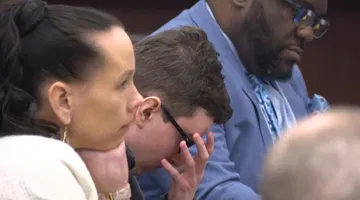
Friday was a short day of testimony in an expected weeks-long sentencing hearing, and it concluded the prosecution's presentation after days of emotional testimonies from the victims' spouses and even from Thompson's parents.
It's not clear what evidence his defense plans to present, and while Thompson will have the opportunity to speak, there has been no indication yet whether he will or not.
Tune into the hearings live on WRAL.com and on WRAL's YouTube, and check back when court resumes at 9:30 a.m. on Tuesday, when we'll hear the defense's arguments and presentation in full for the first time.
Confession note found in Thompson's house
Years-long questions around why Austin Thompson murdered five people in a mass shooting in Raleigh, including his brother, got some clarity on Thursday.
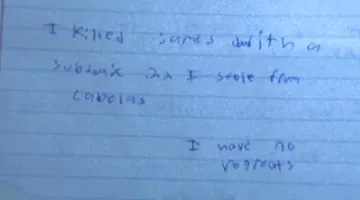
In court during his sentencing hearing, prosecutors read a note that then-15-year-old Thompson left behind. Inside the two-page note, the words "I did this because I hate humans" were listed near the top of a loose-leaf piece of paper.
There was also an extensive breakdown of Thompson's search history leading up to the shooting. His Google search history showed queries that ranged from school shootings to photos of Knightdale High School, where he attended.
He searched, "Can juveniles get the death penalty" just a month and a half before the Oct. 13, 2022, shooting, according to the database provided by investigators.
Civil case still playing out
In 2024, the victims' families sued Thompson's parents and the Hedingham homeowners' association. They accuse all of them of knowing that Thompson was a threat and not doing enough to stop him.
Thompson's father pleaded guilty to a misdemeanor charge related to the shooting. He didn't lock a gun box, which had a handgun that police found in his son's possession with when they arrested the teenager.
Alan Thompson was given a year of probation.
Repeatedly during their testimony, Thompson's parents said they never saw any warning signs from their son that would lead them to believe he was capable of something so violent.