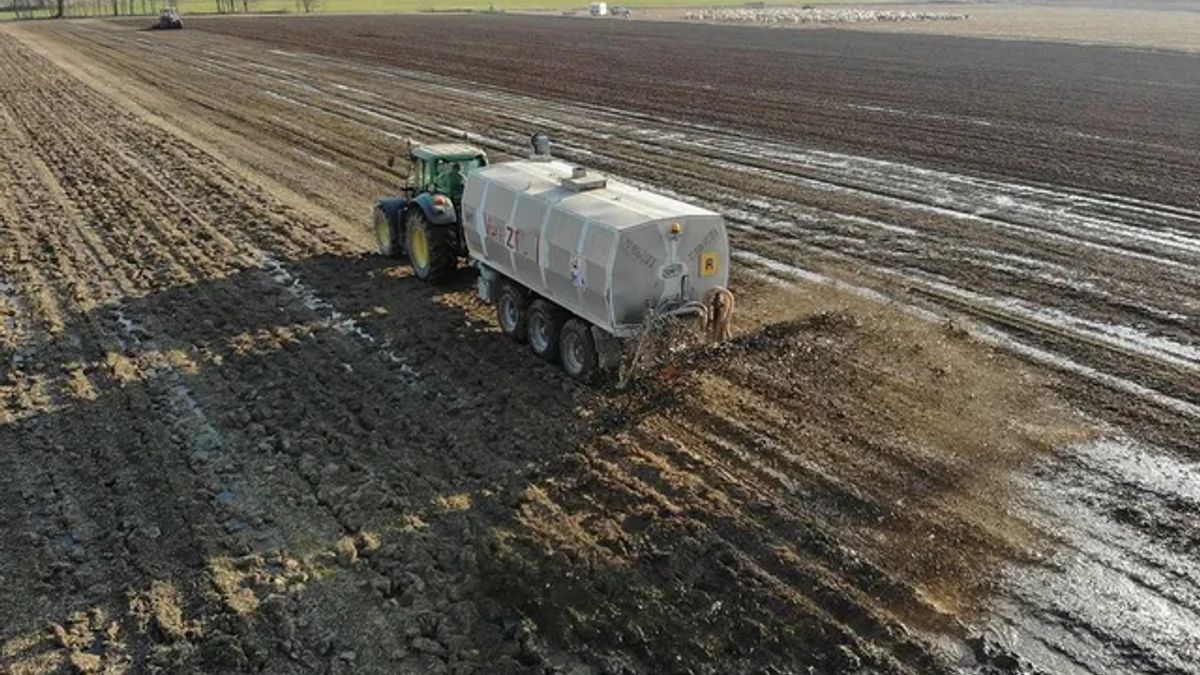
A state study found “forever chemicals” in sewage sludge, soil and wastewater across North Carolina, raising fresh concerns about a widely used farming practice that remains largely unregulated.
Researchers with the North Carolina Department of Environmental Quality detected PFAS — a class of man-made chemicals linked to cancer and other health risks — at every stage of the wastewater process, including in fields where treated sludge has been applied for years.
Other WRAL Top Stories
“PFAS compounds were found in the influent, effluent, biosolids and soil samples,” Julie Grzyb, deputy director of the Division of Water Resources, told lawmakers Wednesday.
The findings were presented to the House Agriculture and Environment Committee as part of a 2023–2024 state study examining how PFAS move through wastewater systems and into biosolids — the treated sewage sludge often used as fertilizer.
PFAS found in all soil samples tested
The study analyzed 37 wastewater treatment plants and 19 land application sites across the state.
Grzyb said PFOS, one of the most studied PFAS compounds, was found in 85% of biosolids samples and in every soil sample collected from fields where sludge had been repeatedly applied.
Many of those fields had received sludge applications for more than a decade.
Widespread practice across North Carolina
The findings come as more than half of the biosolids generated in North Carolina are spread on land, covering roughly 56,000 acres across nearly 3,000 permitted fields.
Biosolids are a byproduct of wastewater treatment, created when sewage from homes, businesses and industries is processed and the solid material is separated out. The material is often applied to farmland because it contains nutrients that can help crops grow.
Some of those fields are owned by farmers, while others are managed by municipalities.
No limits or required testing for PFAS
Despite the widespread use, there are currently no federal or state regulations limiting PFAS in biosolids, and no requirement to test sludge or soil for the chemicals before land application.
At least 11 states have adopted monitoring requirements and some have set limits or guidance levels for PFAS in sludge, according to the presentation.
Most PFAS leaves in water, but some remain in sludge
The study found the majority of PFAS, between 87% and 98%, leaves treatment plants in treated wastewater discharged into rivers and streams.
A smaller portion, about 2% to 13%, remains in biosolids.
Even so, researchers say that portion can build up over time when sludge is repeatedly applied to the same fields.
DEQ officials also told lawmakers that drinking water in some areas of the state has already been impacted by past land application practices, including Chapel Hill.
Regulation remains limited to monitoring
State regulators are currently proposing rules that would require monitoring and encourage industries to reduce PFAS entering wastewater systems.
But those rules would not set enforceable limits or penalties.
“There are no limits in these rules,” Grzyb said. “The purpose is to monitor and then to minimize as best they can.”
Some lawmakers expressed concern that the approach would not substantially limit pollution.
“If you’re talking about minimization only, isn’t that just a self-policing situation?” one lawmaker asked.
“That’s correct,” Grzyb responded.
A growing issue without clear answers
PFAS, or per- and polyfluoroalkyl substances, are often called “forever chemicals” because they do not break down easily in the environment. They are used in a wide range of products, from nonstick cookware to firefighting foam.
Once they enter wastewater systems, they are difficult and costly to remove — leaving utilities, farmers and regulators grappling with how to manage the contamination.
Grzyb said the state is continuing to study the issue and work with communities where contamination has been identified.
But for now, North Carolina remains without clear standards for PFAS in biosolids — even as the chemicals are detected in soils across the state.