A proposed plan to address toxic PFAS and 1,4-dioxane pollution in North Carolina is drawing growing backlash from environmental advocates who say it lacks enforcement and could leave communities paying the price.
The proposal, under consideration by the North Carolina Environmental Management Commission, would require certain industries and wastewater utilities to monitor discharges and develop plans to reduce contamination.
Other WRAL Top Stories
But critics say it stops short of requiring actual reductions.
“We’re not holding the polluters accountable,” said Emily Donovan, co-founder of Clean Cape Fear. “The burden should not fall on the communities to clean this up. It should fall on the polluters.”
A petition opposing the proposal has gathered more than 1,600 signatures Thursday. Organizers are urging regulators to reject the plan and start over with stricter, health-based standards.
What the proposal would do
Under the proposal, certain industrial facilities and wastewater treatment plants would be required to test for three PFAS compounds — PFOA, PFOS and GenX — and report those results to the state.
Facilities that exceed certain screening levels would then be required to develop “minimization plans” outlining how they could reduce discharges. Those plans could include best practices, timelines and estimated reductions.
However, the proposal does not set numeric limits on how much PFAS can be discharged into waterways. It also does not require specific reductions or include penalties if pollution levels remain the same.
During commission meetings, members acknowledged that industry representatives helped shape the proposal.
Reid Wilson, secretary of the North Carolina Department of Environmental Quality, said the agency is working to protect drinking water as new federal standards for PFAS, often called “forever chemicals,” approach.
“Everybody deserves healthy, safe water when they turn on the tap,” Wilson said. “About a third of the people in our state drink water out of the tap that will not meet the EPA standards that will go into effect in a few years.”
Wilson said the department believes pollution should be reduced at the source before it reaches drinking water systems.
But he said the final rules are set by the Environmental Management Commission, not the agency.
“They’re the ones who set the rules,” Wilson said. “The Department believes that we really need to reduce pollution at the source. The commission, as it’s currently constituted, has a different view.”
What critics say is missing
Advocates argue the proposal relies too heavily on voluntary action and does not include enforceable discharge limits, deadlines or penalties.
“This basically gives the appearance of doing something, but all it does is allow voluntary documentation, voluntary control methods,” Donovan said.
Gov. Josh Stein also criticized the proposal, pointing to the lack of enforceable limits.
“People deserve to have confidence that when they turn on their taps, their water is healthy and safe to drink,” Stein said in a statement. “Yet, the current proposals … including the lack of enforceable limits on cancer-causing chemicals, put us all at risk.”
Stein also raised concerns about recent changes to how the commission is appointed. A 2023 law shifted appointment power away from the governor and gave more control to the legislature and agriculture commissioner, leading to new members and changes in leadership.
“The legislature's power grab of the EMC is making it harder to set strong, independent, and health-based standards,” Stein said.
PFAS are a class of synthetic chemicals used in products such as nonstick cookware and firefighting foam. They have been linked to cancer, immune system damage and other health problems. 1,4-dioxane is another industrial chemical considered a likely human carcinogen. A WRAL documentary investigates the contamination in North Carolina.
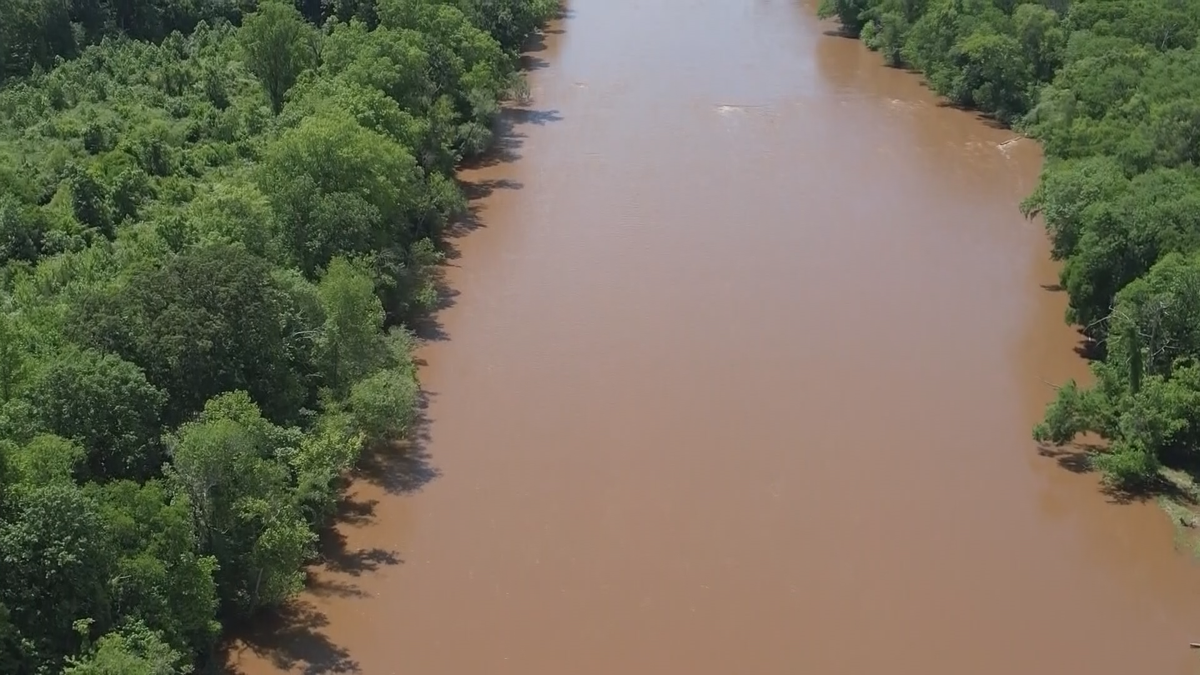
Communities along the Cape Fear River, including Wilmington, have dealt with contamination for years. That has led to costly filtration upgrades and ongoing concerns about long-term health impacts.
“When we don’t control the releases at the source, it then becomes the burden of everybody that is downstream,” Donovan said. “Water bills have gone up … people have been self paying for filtration.”
She described those costs as “almost a hidden tax” on residents.
For some communities, those costs are steep.
“When we first initially found out we had PFAS, we needed almost a $2 million system with 400 customers,” said Schumata Brown, town manager of Maysville. “And you know, that's not fair to the customers that didn't put it there.”
“We took the burden of it, but we didn't produce that chemical,” Brown said. “But we were left with eliminating that chemical out of our water system.”
Broader questions
The debate highlights a larger question about how aggressively North Carolina should regulate industrial pollution and who should bear the cost of cleanup.
Advocates point to other states, including New Jersey, which secured a $2 billion settlement from companies, including DuPont and Chemours, over PFAS contamination.
The debate also comes as federal PFAS policy shifts. The Trump administration has delayed enforcement of certain drinking water standards and is reconsidering others, drawing criticism from environmental advocates who say the moves weaken protections.
EPA Administrator Lee Zeldin has acknowledged that the current system often leaves water systems — and their customers — paying for contamination.
“You're essentially paying to clean up PFAS contamination from your own water supply,” Zeldin said. “That's not right.”
Zeldin has said Congress should address that issue, rather than outlining new federal requirements to limit pollution at its source.
As federal standards face delays and uncertainty, advocates say the responsibility is increasingly falling on states — raising the stakes for decisions like the one now before North Carolina regulators.
In North Carolina, a separate legal fight could shape future accountability. The North Carolina Supreme Court is reviewing whether the state attorney general has the authority to continue a lawsuit against Chemours and DuPont.
Advocates say they plan to continue pushing for stricter standards.
Two public hearings on the proposed plan scheduled to begin in April, giving residents an opportunity to weigh in before the commission makes a final decision.
“We need to let the Environmental Management Commission know that we don’t want this,” Donovan said.
Public Hearing Details:
Sign-in and speaker registration will begin at 5 p.m. at all meetings.
PFAS:
- Asheville: 6 p.m., April 7, 2026 at Ferguson Auditorium, AB-Tech Community College, 19 Tech Drive, Asheville, N.C., 28801
- Raleigh: 6 p.m., April 20, 2026 at Archdale Building, Ground Floor Hearing Room, 512 N. Salisbury Street, Raleigh, N.C., 27604 Parking information: Public parking will be available after 5 p.m. at Parking Deck 64, which is located across North Salisbury Street from the Archdale Building.
- Wilmington: 6 p.m., April 23, 2026 at Wilmington City Hall at Skyline Center, 1st Floor Conference Center, 929 North Front St., Wilmington, 28401 Parking information: Attendees should park in the South lot, using the Brunswick Street entrance. Those requiring American with Disabilities Act access should use the visitor lot.
- Written comments: Submit by email to publiccomments@deq.nc.gov with the subject title “PFAS minimization” through June 15.
1,4-dioxane:
- Hickory: 6 p.m., April 9, 2026 at Catawba County St. Stephens Branch Library, 3225 Springs Road, Hickory, N.C., 28601 Register: Sign-in and speaker registration will begin at 5 p.m. Note: This program is neither sponsored nor endorsed by the Catawba County Library or Catawba County Government.
- Fayetteville: 6 p.m., April 14, 2026 at Fayetteville Technology Community College, Tony Rand Student Center multipurpose room, 2220 Hull Rd. Fayetteville, N.C., 28303
- Jamestown: 6 p.m., May 12, 2026 at Percy H. Sears Applied Technologies Building Auditorium, Guilford Technical Community College, 1201 Bonner Dr., Jamestown, N.C., 27282
- Written comments: Submit by email to publiccomments@deq.nc.gov with the subject heading “1,4-dioxane minimization” through June 15.
The Environmental Management meeting is scheduled on May 13 and 14 in the Ground Floor Hearing Room of the Archdale Building at 512 N. Salisbury St, Raleigh, NC.