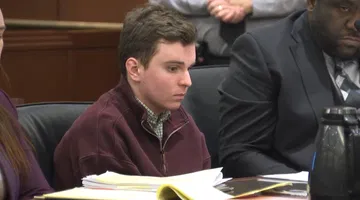
Closing arguments wrapped up in the Austin Thompson sentencing hearing on Thursday afternoon.
A judge is expected to decide on Friday if the mass shooter, who was just 15 at the time of the crimes, will have a chance at parole. Thursday was the seventh day of the proceedings.
Other WRAL Top Stories
For the better part of three hours, both sides had their last-ditch efforts to convince Judge Paul Ridgeway of what choice to make.
Thompson faces a mandatory minimum sentence of life with the possibility of parole after 25 years. The maximum possible sentence for Thompson would be five life sentences plus an additional 1,634 months in prison.
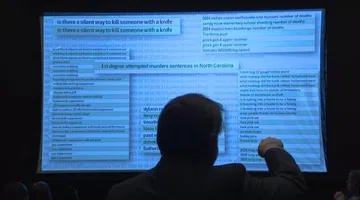
In their closing argument, the state focused on Thompson's internet search history in the two years leading up to the shooting, arguing that even without the knowledge that he'd shot seven people, Thompson's search history would be concerning. Some of the queries made the summer before the shooting were: "how fast do officers respond to active shooters," "is their [sp] a silent way to kill someone with a knife" and "worst school massacre in the world."
"Desensitization ramping up for someone who clearly has a predilection and interest in these types of things that we know then goes and acts upon them," prosecuting attorney Joseph Latour said
They also highlighted why they believe Thompson's acne medication played a role in his actions -- as the defense team claims.
"This is the Hail Mary they’re hanging their hat on -- that it wasn’t his fault," Latour said. "He’s accepting responsibility but give him this mitigation because it wasn’t his fault because it was the drug that made him do it. Seems incongruent to me."
"This is not the transient properties of youth manifesting themselves," Latour continued. "This is the defendant showing who he was at that time and acting upon it. What that requires is you to sentence him to every day he can possibly serve in the Department of Adult Correction."
Thompson's attorney Kellie Mannette gave an explanation of an "Austin 2.0," saying that the head injury he suffered when he shot himself inside a shed with police bearing down on him, changed him. Mannette argued that the version of Austin Thompson who pulled the trigger on Oct. 13, 2022, was not the same person sitting in the courtroom on Thursday.
She also questioned the state's argument that he was on a pathway to violence. She said he does not fit the stereotypical mold of a mass shooter, instead placing blame on his adverse reaction to medication.
"Austin had no grievance, no cause, no extremism, no preoccupation, no escalating marinating in violence," Manette said. "The State wants you to believe this was well planned and he fits mold of a typical mass shooter."
"I also know that Austin is different from almost every case I’ve been involved in, where a child has expressed or exuded fear," Manette said. "That’s not what I get from Austin -- a lot of emotion but not fear. He’s fully and totally accepted whatever the outcome is. That’s exactly what makes him redeemable."
Mannette described the possibility of parole as, "a crack in the door." It's not something guaranteed.
Thompson faces a mandatory minimum sentence of life with the possibility of parole after 25 years. The maximum possible sentence for Thompson would be five life sentences plus an additional 1,634 months in prison.
It's a decision that Judge Paul Ridgeway will mull over Thursday evening.
Ridgeway said he expects to have a judgment by the time court takes place tomorrow morning at 9:30. You can watch the judge's ruling on WRAL.com and the WRAL YouTube page.