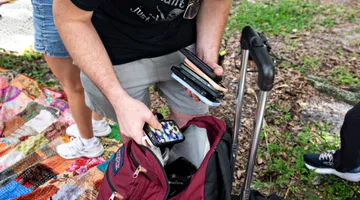
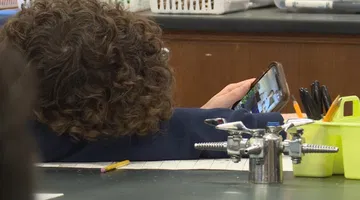
Cellphones will need to be turned off -- and not simply silenced -- under a revision to the Wake school board's cellphone policy approved on Tuesday.
The board approved, without opposition, that and a few changes to ensure its policy complies with a new state law requiring all school boards to have certain cellphone-use restrictions in place by Jan. 1.
Other WRAL Top Stories
The revisions voted on Tuesday include a requirement that students disable the smart features of smart glasses.
Students will now be responsible for turning off their cell phones and storing them throughout the school day. WRAL asked Wake County School Board Policy Chair Lynn Edmonds how teachers can enforce the policy.
“Encourage students to comply with the policy and follow the policy. Give firm reminders," said Edmonds. "We don’t want to over police students. It’s still new and we know that cell phones are just a part of our lives now.”
The policy previously required disabling the smart features of only smartwatches and required only that cellphones be "put away."
The revisions also include clarity that it does not apply to laptops, including personal laptops.
School system officials say there's been confusion around whether personal laptops are allowed, prompting the change. Students can still bring their personal laptop to school.
Earlier this year, the school board approved a standalone cellphone policy that drastically restricted their use, after years of schools establishing their own rules and enforcing them differently.
WRAL News reported earlier this year that different approaches to enforcement yielded some or no success.
This summer, state lawmakers passed House Bill 959, which requires school boards across the state to approve policies restricting the use of cellphones and other communication devices and to establish consequences for people who violate those policies. It also requires schools to pass policies that place restrictions on social media use, if they don't already. The Wake school board is still deliberating those changes.
The push came as states and schools across the country were responding to concerns about device addiction among young people and concerns that devices were disrupting learning.
Some research has suggested that some policies can effectively curb device use. One recent study found modest academic gains two years after schools implemented a strict policy, but saw more students suspended when policies were strictest.