Nina King spent the second half of Duke University’s most important men’s basketball game of the season huddled in the Alamodome concourse.
As the top-ranked Blue Devils tried to hold off Houston for a spot in the NCAA Tournament national title game, King — the school’s athletics director — tried to decipher a social media post from U.S. Secretary of State Marco Rubio.
Other WRAL Top Stories
“I am taking actions to revoke all visas held by South Sudanese passport holders and to restrict any further issuance to prevent entry into the United States, effective immediately, due to the failure of South Sudan's transitional government to accept the return of its repatriated citizens in a timely manner,” Rubio said on X about three hours before the Blue Devils were set to tip off in the Final Four.
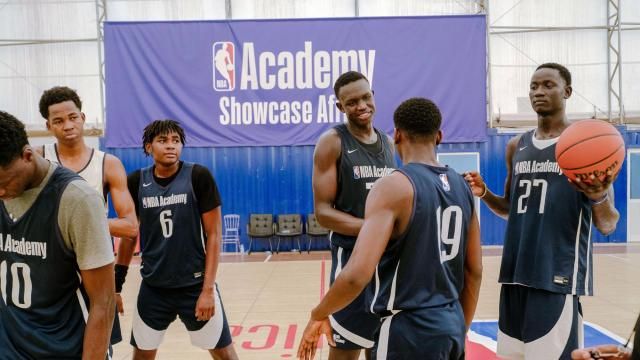
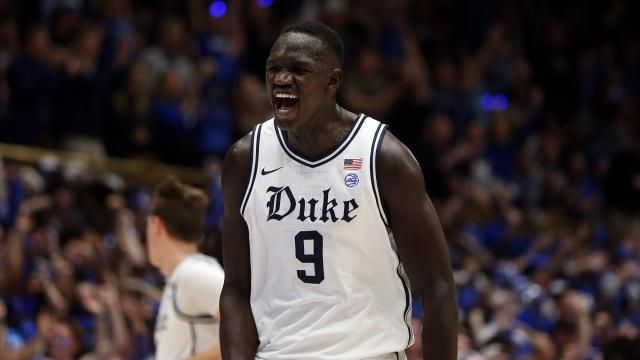
Duke’s starting center for that game, Khaman Maluach, is from South Sudan. The 7-foot-2 freshman represented the new nation in last year’s Summer Olympics.
King, who said she was unaware of the post before the game, didn’t see much of the second half of what amounted to Duke’s most important game in three years. She told WRAL that she and other administrators were instead preoccupied with a new quandary: “How do we protect Khaman and what do we do next?”
It was a high-profile moment when the immigration policies of President Donald Trump’s administration intersected with high-level collegiate sports. It likely won’t be the last.
Maluach is one of nearly 25,000 international athletes competing in the NCAA, according to its website. At Duke, UNC and NC State, at least 140 athletes reported being from international locations on team websites.
First-year international athletes represented 123 countries in 2022, according to the NCAA’s latest report on international student-athlete participation in Division I and Division II. In 2022, more than 60% of first-year men’s and women’s tennis players in Division I were international students. For men’s basketball, it was 15%, and women’s basketball was 13%.
Many of those student-athletes are now wading through murky waters, trying to figure out what new U.S. immigration policies mean for them. Meanwhile, colleges are getting mixed signals from immigration experts who are also trying to navigate a situation that could punch unexpected holes in their rosters. Some students have decided to stay in the U.S. this summer, lest they risk not being allowed back in the country, King said.
Bubba Cunningham, the University of North Carolina’s athletics director, said he’s been involved in numerous discussions about international students, but they have yielded little clarity on the issue.
Trump administration cracks down
In the first few months of his second term, President Donald Trump has sought to crack down on immigration, and he’s paid particular attention to students in the country on foreign visas.
The administration has canceled more than 1,500 student visas in the past few months, including some at Duke, UNC and NC State. In late April, facing a wave of legal challenges, the administration restored most of them but said they could still be terminated moving forward.
“Foreign students are under attack,” Robert Seiger, a lawyer who represents college athletics departments in immigration and related compliance issues for foreign athletes. “That group of stakeholders is a little bit exposed.”
Rubio, the son of Cuban immigrants, has taken a hardline stance on student visas. Last month, following a Rubio directive to diplomats, U.S. immigration officials said they would begin considering social media content “as grounds for denying immigration benefit requests.” The policy applies to applicants for student visas and immigrants “affiliated with educational institutions linked to antisemitic activity.”
Rubio says there’s now a “one-strike policy” that extends to foreign students. Citing protests on campuses related to the war in Gaza and Hamas’ attacks on Israel, Rubio said that any visitor who “endorses or espouses terrorist activity” is considered inadmissible to the U.S. under the Immigration and Nationality Act, which will be enforced.
Maluach wasn’t caught up in those elements of U.S. foreign policy. He was just from a country on a list.
The Trump administration is considering travel bans or limitations on citizens of as many as 43 nations, The New York Times reported in March. Eleven nations would have a complete ban, while another 10, including South Sudan, would have sharp restrictions. The others would have to address concerns.
NC State has more than 4,800 international students, representing 120 countries. As of the fall of 2023, UNC had more than 2,600 international students from 110 counties. Duke had more than 4,500 degree-seeking international students.
“The United States and access to higher education has had a great history together, I think, or at least a history that has allowed others from other countries to come and pursue their dreams and to help those individuals that may be less fortunate or come from difficult circumstances,” Jim Phillips, the commissioner of the Atlantic Coast Conference, said last week at the conference’s spring meetings. Duke, UNC, NC State and Wake Forest are in the ACC.
“So I feel good about us working with the folks in Washington, D.C., to get to the right outcome and make sure that we remain committed, I think, to what I believe is our responsibility as the greatest country in the world,” Phillips said.
Different rules for foreign students
The possibility of deportation is only the latest immigration issue vexing student athletes.
International students studying in the United States must obtain what’s called an “F visa,” which prohibits holders from working in the United States. That has created issues for international athletes who want to take advantage of new rules that allow them to profit from their name, image and likeness. Soon schools may be able to directly compensate student-athletes for their likeness rights. How that might impact foreign collegiate athletes is uncertain.
“So much is flux, it’s very hard to pinpoint specific answers,” said Gregg Clifton, a labor and employment lawyer for numerous professional sports franchises who also represents collegiate athletes. “We’re in a much more reactive stage with NIL and international visas. There’s a lot of answers we don’t have. We’re in a position of advising our international student-athletes to keep their anetana up, pay attention. You can’t ignore the reality of what is going on.”
Most large universities have a point person for international students. At Duke, that’s Kevin D’Arco, a senior associate dean of international students.
“That’s our first phone call for all of our international students on campus,” King said. “To be able to talk to him and collaborate with him and make sure we’re educating our student-athletes on what this means for them, their particular country. Travel? Don’t travel?
“We have a number of student-athletes that stayed on campus this summer instead of going home,” she said. “Just making sure that they’re educated and making decisions that won’t impact them personally and have consequences in terms of being able to study at Duke.”
Ann Robertson, an immigration lawyer from Raleigh, said the travel question is coming up over and over again with her student clients — and others, including permanent residents and some citizens. Clifton said he is advising his clients, if they travel, to make sure they stay out of any kind of trouble in their home countries.
Schools, he said, should remain in contact with their athletes, communicating any changes and “to make sure they’re taking a little bit of a precautionary tale.”
Maluach’s future
King said Maluach didn’t know about Rubio’s statement before the game, in which Houston completed a second-half rally to defeat the Blue Devils. But he had one of his worst games of the season, scoring six points and not grabbing a single rebound in 21 minutes. It was his only game all season with no rebounds.
“We told him after the game,” King said.
South Sudan, which gained independence in 2011, has faced decades of conflict and war, including a civil war from 2013 to 2020 that killed more than 400,000 and displaced more than 4 million including Maluach and his family, who sought refuge in neighboring Uganda.
Maluach left his family at 14 to pursue basketball. His family remains in South Sudan and Uganda.
Three days after Rubio’s post, South Sudan said it would admit a deportee from the United States that it says was from Congo.
Maluach has declared for the NBA Draft, foregoing his remaining college eligibility. He is expected to be a top-10 draft pick next month along with former Duke teammates Cooper Flagg and Kon Knueppel.
“I’m not really focused on that right now,” Maluach told reporters when asked about his visa situation at the NBA Draft Combine. “I let my agency handle that. I let Klutch [Sports Group] handle that. I let them handle that and focus on what’s important to me and what’s ahead of me.”
King said Duke has worked with the NBA.
“I feel good about the situation and where he is,” King said. “We worked with the NBA a lot, and they have an NBA Africa office, and so really our priority was first and foremost to protect Khaman and making decisions in his best interest. He should be good and, again, working with the NBA on making sure that he has a stable situation moving forward.”