The state on Monday reported the first infant death this year from pertussis, commonly known as whooping cough.
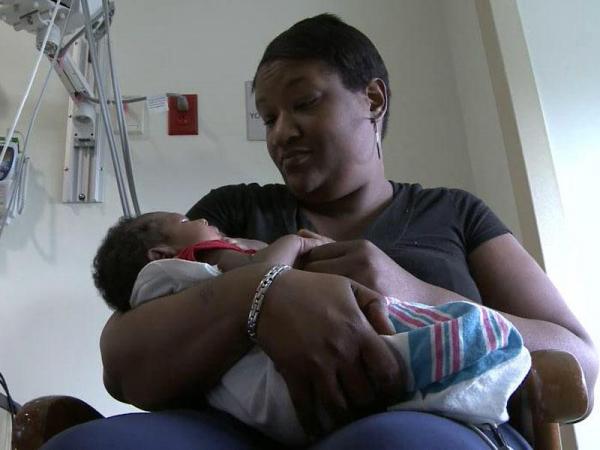
The 2-month-old child was from Forsyth County, according to the North Carolina Department of Health and Human Services.
Whooping cough is highly contagious and spread usually by coughing or sneezing in close contact. It can be serious at any age, but it is life-threatening in newborns and infants who are too young to be fully vaccinated, state health officials said. Many infants who get whooping cough are infected by caregivers who may not know they have the disease.
Officials are strongly urging parents to take precautions to safeguard their children against whooping cough. Children should have current vaccinations and boosters, and adults who interact with children also should be immunized.
“Babies and young children are not fully immunized until they have finished a series of vaccinations, so their only protection against whooping cough is the people around them,” State Health Director Dr. Laura Gerald said. “Anyone who lives with or will be around a baby should be vaccinated.”
DHSS is offering Tdap, a vaccine against pertussis, at no cost for residents ages 7 and older. Health care providers may charge an administration fee.
The vaccine is available through the North Carolina Immunization Network, which includes private health care providers and local health departments.
Tdap is highly recommended for women who are pregnant or may become pregnant; anyone in close contact with infants under 12 months old; and anyone with a chronic respiratory illness.


![[READ STORY]](http://wwwcache.wral.com/asset/news/national_world/national/2013/05/14/12445890/12446751-1368816960-100x75.jpg)
![[VIEW PAGE]](http://wwwcache.wral.com/asset/news/local/2013/05/13/12441232/hahn-100x75.jpg)
![[READ STORY]](http://wwwcache.wral.com/asset/business/2013/05/06/12417151/2457a21a00d94324b6fc448c8ec173d0-Photo-1-100x70.jpg)
![[GALLERY]](http://wwwcache.wral.com/asset/entertainment/2013/03/28/12278304/LNL-100x75.jpg)
![[VIEW PAGE]](http://wwwcache.wral.com/asset/traffic/2009/07/23/5645694/beltline-100x75.jpg)
![[GALLERY]](http://wwwcache.wral.com/asset/entertainment/2013/03/04/12182235/12182236-1362457268-100x75.jpg)


WRAL.com welcomes your comments on this story. All comments are moderated prior to publication based on our posting guidelines. Please review them prior to posting and if your message is not approved.
This story is closed for comments. Comments on WRAL.com news stories are accepted and moderated between the hours of 8 a.m. and 8 p.m. Monday through Friday.
While it is likely true that this is causing SOME of the rise in cases, the highest incidence rates have mostly been in northern states with lower immigrant populations rather than border states. Combine that with the fact that many cases have been in people who have been vaccinated and the 800 lb gorilla appears to be more like a little yippy dog.
August 23, 2012 8:13 a.m.
August 22, 2012 4:56 p.m.
Now, the pertussis vaccine has reduced the annual number of deaths to less than 30.
August 22, 2012 12:10 p.m.
http://www.facebook.com/WhoopingCoughVaccineIsMakingMattersWorse
Or
http://www.dailypaul.com/167931/a-collection-of-mainstream-news-reports-and-studies-exploding-the-whooping-cough-vaccine-myth
August 21, 2012 5:08 p.m.
Immunity from vaccines does wear off over time, but our population had pretty good herd immunity for pertussis for many years, and the wearing off wasn't too big of a deal in adults wasn't a huge deal because kids were still immune and that disrupted transmission just enough to keep infection down. As more and more parents are choosing not to vaccinate, pertussis is slowly creeping back. There may not be many deaths yet, but the number will only increase from here if people continue going without vaccines. The same with happen with measles, mumps, rubella, polio...
August 21, 2012 2:29 p.m.