Soldier sentenced to die for 1985 triple murder
Twenty-five years after a Fayetteville woman and two small children were slain, a former Fort Bragg soldier was sentenced Thursday to death in his third trial for the crimes.
Posted — UpdatedLast week, a panel of 14 Army officers and enlisted personnel found Master Sgt. Timothy Hennis guilty of three counts of premeditated murder for the May 9, 1985, stabbing deaths of Kathryn Eastburn and two of her daughters, 5-year-old Kara and 3-year-old Erin, in their Summerhill Road home.
Jurors deliberated about 13 hours over three days this week before reaching the unanimous decision on the death sentence. The verdict also included a dishonorable discharge, a reduction in rank and forfeiture of all military pay and benefits.
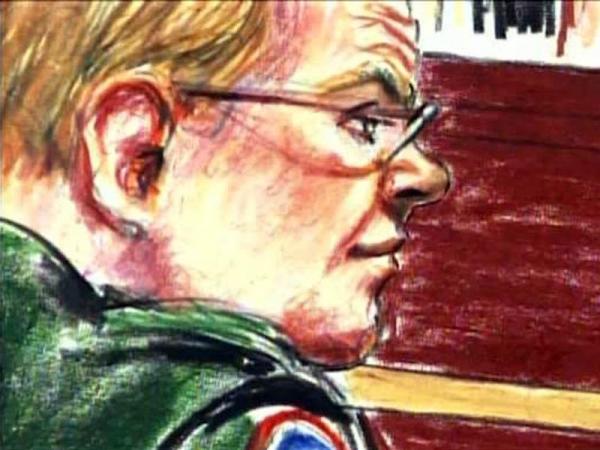
Hennis showed no emotion as the verdict was read. His wife, Angela, and his sister, Beth Brumfield, cried quietly.
Air Force Capt. Gary Eastburn and his daughter, Jana, who was 22 months old at the time of the slayings and was left unharmed in her crib, also cried upon hearing the sentence.
"I think he deserves to die for what he did," Gary Eastburn said later outside the Fort Bragg courthouse. "(It's) not very Christian-like, but there's nothing he can say to me that would make me forgive him."
The court-martial was Hennis' third trial for the crimes. He was convicted in state court in 1986 but won an appeal and was acquitted in a second trial three years later. He finished out his service in the Army and retired to Washington state.
Gary Eastburn said he decided to move on with his life after Hennis' acquittal and rear his surviving daughter as a single parent.
Years later, DNA tests not available in the 1980s linked Hennis to sperm found on Kathryn Eastburn. Because Hennis couldn't be tried in state court again, the case was turned over to the Army to pursue a court-martial.
Seeing Hennis in court every day in recent weeks has dredged up horrific memories, Gary Eastburn said.
"Seeing him just kind of reminds you of how things were and that he had 20-some years of free time off," he said. "This time has been the worst of the three, probably because I'm older. It's been a real emotional roller-coaster."
Jurors appeared to be split Wednesday, questioning whether Hennis would be eligible for parole if sentenced to life in prison and the impact of a divided vote.
After much debate, Col. Patrick Parrish declined to provide the jury with information about military parole regulations. He also urged them to continue deliberating until they reached a decision.
Under military regulations, a death sentence requires a unanimous vote of the jury, and at least 11 members had to vote for a life sentence for one to be imposed. Any other split of the jury would have resulted in a mistrial in the sentencing phase and would have necessitated empaneling another jury to hand down a sentence.
Defense attorney Frank Spinner said the gruesome crime scene photos and the DNA evidence likely swayed jurors in voting for the death sentence.
"How could a man who's led such an exemplary life be the same man who committed these murders?" Spinner asked. "Timothy Hennis has maintained his innocence from Day One. We will continue to fight for his innocence in the appeals."
One issue they plan to pursue on appeal is their contention that the Army didn't have jurisdiction to prosecute the case. They cite previous court decisions that the military cannot prosecute service members for crimes committed while they were in the armed forces once they had been discharged.
Spinner said Hennis' family is heartbroken over the jury's decision, and Gary Eastburn said he understands that family's grief.
"My heart goes out to them. I can certainly relate to the pain they're feeling," he said.
Hennis will join five other men on the military's death row. They include Hasan Akbar, who was convicted at Fort Bragg in 2005 of killing two fellow soldiers in Iraq; former Fort Bragg soldier Ronald Gray, who killed two people and committed three rapes in December 1986 and January 1987; and Camp Lejeune Marine Kenneth Parker, who killed two fellow Marines with a shotgun in 1992.

• Credits
Copyright 2024 by Capitol Broadcasting Company. All rights reserved. This material may not be published, broadcast, rewritten or redistributed.