Log in to WRAL.com with one click using your favorite social network:
OR
Log in using your WRAL.com account:


Wrong email/password combination.

Forgot password?

Register with WRAL.com using your favorite social network:
OR
Register for a WRAL.com account using our web form.

10:38 p.m. • 5-20-13

Weather Forecast for Raleigh

  • Tue: Thunderstorm.
    • Hi: 82° F
  • Wed: Thunderstorm.
    • Hi: 84° F
  • Thu: Thunderstorm.
    • Hi: 82° F

Other Locations

> 7 Day Forecast

Doppler Image

Published: 2010-01-18 18:17:00
Updated: 2010-01-18 22:33:24

N.C. law requires taxes on illegal substances


N.C. law requires taxes on illegal substances
print friendly

The state of North Carolina has collected more than $135 million in taxes from confiscated illegal substances since 1990 – about $50 million of it within the past five years.

The North Carolina Department of Revenue gets the money by seizing bank accounts, garnishing wages or auctioning off personal assets, such as cars, boats, motorcycles, electronics and jewelry – property that he or she might have been able to keep under a state program that allows taxpayers to buy "drug stamps."

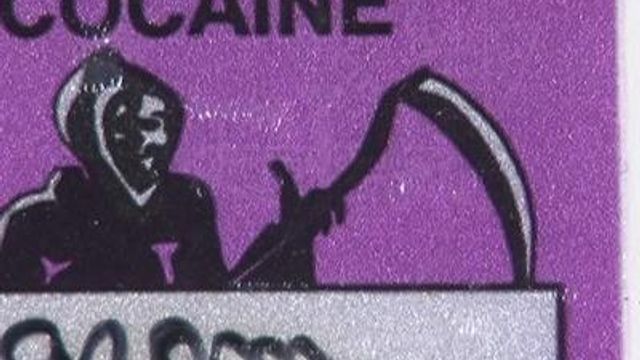
It's a program under the state's unauthorized substance tax, an excise tax on controlled substances, such as marijuana, cocaine, moonshine and other substances.

A stamp for marijuana, for example, costs $3.50 per gram; for cocaine, it's $50 per gram. There's also a stamp for illegally possessing prescription drugs like oxycodone.

Cale Johnson, director of tax enforcement for the department, says that, just because a person pays the tax, does not mean the substance is then legal. It only fulfills his or her obligation to pay taxes.

The process to purchase the stamps is anonymous. An individual can go online, complete a tax form and mail it, and no identifying information, such as name, address or Social Security number, is required.

"It is against North Carolina law for the Department of Revenue to notify law enforcement agencies of an individual that pays their taxes," Johnson said.

The tax is due once, no matter how many individuals come into possession of the drugs. Not paying it within 48 hours of acquiring the substances can also mean a 40 percent penalty on the tax due.

The revenue department handles about 5,000 to 6,000 cases each year in unpaid taxes on illegal substances.

The department has had people pay the taxes but not many, Johnson says. Since the program started, it has received 106 stamp orders worth nearly $5,900. He says he believes a majority of those orders were from stamp collectors.

9 Comments


WRAL.com welcomes your comments on this story. All comments are moderated prior to publication based on our posting guidelines. Please review them prior to posting and if your message is not approved.

View Comments VIEW ALL 9 COMMENTS

This story is closed for comments. Comments on WRAL.com news stories are accepted and moderated between the hours of 8 a.m. and 8 p.m. Monday through Friday.

Latest Comments
I wonder how much the state spent investigating/arresting and prosecuting these cases to reap the benefits of the $135 million over the last 20 years...far more than the amount collected I'm sure. Think how much tax revenue the state could rake in by legalizing, taxing and regulating cannabis; not to mention the money saved not having to pay for law enforcement to investigate and arrest consenting adults who choose to partake of cannabis. Law enforcement could then focus on violent offenders and our correctional facilities could lock up these violent offenders and not non-violent drug offenders. Legalize it!

I'm sure shady drug dealers are standing in line to anonymously pay taxes out of the kindness of their hearts.

How about a tax on knee-jerk politics? The National and State debt would vanish overnight.

wow.

"It is against North Carolina law for the Department of Revenue to notify law enforcement agencies of an individual that pays their taxes," Johnson said. The tax is due once, no matter how many individuals come into possession of the drugs. Not paying it within 48 hours of acquiring the substances can also mean a 40 percent penalty on the tax due.

bahahahahahahahahahahahaha

ahahahahahahahahahahah hehehehehehehehehehehh

pfft

View Comments VIEW ALL 9 COMMENTS