Local News
Raleigh cop battling multiple sclerosis
A.J. Luedtke has decided he will undergo a stem cell transplant overseas in an effort to help make the incurable disease more manageable.
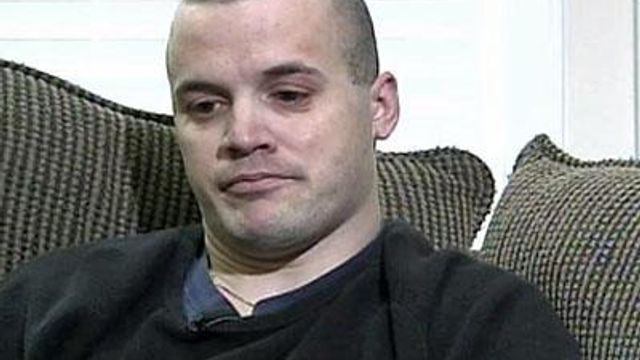
Posted — UpdatedRALEIGH, N.C. — A.J. Luedtke is many things – a 31-year-old father to a 21-month-old little boy, a husband to a beautiful strong woman and a Raleigh police officer stricken in his prime with an incurable disease.
On Sept. 21, 2005, Luedtke, who joined the police force in 2003, was diagnosed with multiple sclerosis and immediately began treatment that has included years of medication and a surgery on his brain.
But the disease has progressed, and his balance and coordination have deteriorated. Because of it, Luedtke is on desk duty at the police department and has difficulty playing with his son.
"The quality of life that I have from MS will not allow me to do that," said Luedtke, who has decided to go to Costa Rica to undergo a stem cell transplant that has not been approved by the U.S. Food and Drug Administration.
"It's not a cure, but this is as close to a cure as you're going to get right now," he said.
Stem cell transplants are still in the experimental phase in the United States, says Dr. Joanne Kurtzberg, chief of the Duke University School of Medicine's Division of Blood and Marrow Transplantation.
Eventually, she says, the transplant will be approved, but that it will take time.
"As frustrating as it can be to follow some of the rules the FDA has, most of them are put in place to protect patients' safety," Kurtzberg said.
Patients who decide to go out of the country for transplants should do their homework, she says. That includes researching donors and how they are screened, finding out how many cells will be transplanted, how they are stored and how results are measured.
In Luedtke's case, the stem cells, he says, come from blood in the umbilical cord from a mother to a newborn.
"If I thought there was no risk, even if my personal opinion was there might not be a benefit, I would say the choice is yours," Kurtzberg said.
Luedtke says he has already made his choice, even though the procedure will cost approximately $30,000. Since the surgery is experimental in the U.S., it is not covered by insurance.
"Personally, I don't know what the holdup is in the U.S. to have this treatment done when there are clinics all over the world that are doing it," he said.
Luedtke's fellow officers are trying to help him raise $17,000 toward the cost of the procedure by selling raffle tickets at the Raleigh Police Department for a jersey signed by the Carolina Hurricanes.
• Credits
Copyright 2024 by Capitol Broadcasting Company. All rights reserved. This material may not be published, broadcast, rewritten or redistributed.