Log in to WRAL.com with one click using your favorite social network:
OR
Log in using your WRAL.com account:


Wrong email/password combination.

Forgot password?

Register with WRAL.com using your favorite social network:
OR
Register for a WRAL.com account using our web form.

Login Options

1:18 a.m. • 2-11-12

Weather Forecast for Raleigh

  • Today: Mostly Cloudy.
    • Hi: 52° F
  • Sun: Clear.
    • Hi: 43° F
  • Mon: Mostly Cloudy.
    • Hi: 50° F

Other Locations

> 7 Day Forecast

Doppler Image

Marketplace Links

Social Links

Main Menu

City Shares Plan to Clean up Contaminated Groundwater, Soil


e-mail print friendly
City Shares Plan to Clean up Contaminated Groundwater, Soil

There was concern Thursday over contaminated water in southeast Raleigh.

An investigation had found that groundwater and soil around the Neuse River Wastewater Treatment Plant had dangerous levels of nitrates, and the city held a meeting to tell area residents its plan for cleaning up the contamination.

Anyone living within a half-mile of the plant, 8500 Battle Bridge Road, and those who live adjacent to contaminated properties are considered to have been impacted, officials said.

The plant, which the city says handles 45 million gallons a day of sewage, is where almost everything that residents flush down their toilets and wash down their drains ends up. The city's other two wastewater plants are much smaller.

At the Neuse River plant, the wastewater was filtered and treated, and what was left behind was spread on fields surrounding the plant.

An investigation revealed dangerous levels of nitrates in the soil and groundwater in 2003, however, and the state ordered the field-distribution of waste leftovers to stop.

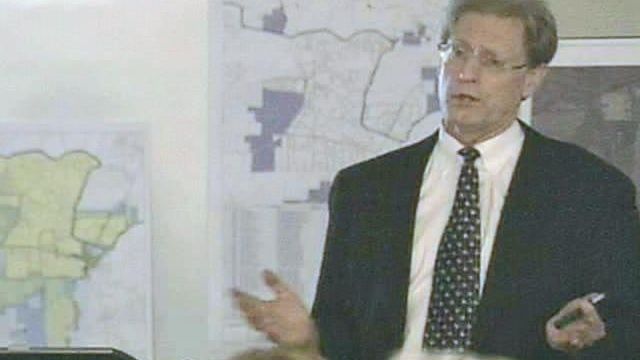
The city came up with a plan to clean up the contamination and shared it with the public Thursday night. Everyone who lives in the affected area received notice, but not everyone was satisfied with what's being done.

“I’m definitely going to have the water tested, probably through a private agency. But I would prefer to have the city of Raleigh pay for it,” said April Nash.

The city tested 75 private wells and found seven with high levels of nitrates. The city extended public water lines to all 75 homes.

Mickey Stricker lives a half-mile from the plant. He's still on well water, but he said he’s concerned the contamination might spread.

“They said they had no problems with it 25 years ago when they started with it,” he said. “They said there wasn’t going to be a problem, and everything was going to be OK, and now we have a problem. So, what’s going to happen 25 years from now?”

Consuming nitrates in large quantities can make people sick. So far, city officials said they have not heard any complaints of health problems. They've hired groundwater experts to remove the nitrates.

The city's assistant public works director said he is confident the contamination will not spread.
RELATED TOPICS: Southeast Raleigh, Raleigh

e-mail print friendly

16 Comments


WRAL.com welcomes your comments on this story. All comments are moderated prior to publication based on our posting guidelines. Please review them prior to posting and if your message is not approved.

View Comments VIEW ALL 16 COMMENTS

This story is closed for comments. Comments on WRAL.com news stories are accepted and moderated between the hours of 8 a.m. and 8 p.m. Monday through Friday.

Latest Comments
I know farmers do not intentionally dump into rivers either. I never said that, nor did I go down the "farm" road. I, too, have a spray irrigation license, and am certified for wastewater collection systems and treatment plants.

As for golf courses, those places are awful for leaching and runoff, mainly due to the over application of fertilizer.

Time to enjoy my labor day weekend!

waterrox, a farmer does not intentionally "dump" into rivers either. That would require a honeywagon. A spill would be excessive runoff from a sloped field or from a riser that burst from excessive pressure. These spills are readily contained and most never reach any significant streams that would lead to rivers. I have had a NC Certified Waste Applicator license and have pumped hog waste upon fields with slopes and I have babysat these irrigating guns to avoid such runoff. I don't have hogs myself but hog farmers get blamed for excessive nitrogen content in rivers. Let's not forget golf courses, they leach nitrogen as well.

I assume it would be true that farmers would have a bigger burden on their wallet than a municipality, but that does not excuse spills from a farmer OR town (Cary, etc.). Either way, the fines go to the school district that the infraction occurred in.

I would also say that Cary didn't "dump" wastewater in to Swift Creek. Their pump station failed, and the water spilled. Dumping implies they did it on purpose, when in fact it was spilled (an accident).

Also, while Riverkeepers, etc. are quite vocal about hog facilities, trust me, plenty of groups get up in arms about municipalities and utilities effecting the rivers. I remember plenty of articles on WRAL about the Cary Swift Creek spill, so I don't think it is 100% farmer bashing.

Have a good labor day weekend!

SS67, your reply only goes to show how "missinformed" you are. I guess that's my "bee" that waterrox is referring to.

Swine waste is contained in a lagoon and the solids sink to the bottom and are digested by anaerobic bacteria. What comes out of the irrigation gun is liquid. No solids.

Waterrox, there is no bee. Articles about Oak Hill Trailor Park (150 water violations) located near the Neuse River, Cary mununcipal plant dumping millions of gallons of raw sewage into Swift? Creek, and other articles of the same don't get the public bashing reports by the almighty Friends of the Neuse. Waste pollution is waste pollution. AND, maybe I'm wrong but I assume that taxpayers fund waste water mununcipal plants, so if NCDNR fines the plants, then that means the taxpayers have to pick up the tab. A hog farmer, however, is a sole entity and if he has to report a spill and pay a fine, it comes out of his pocket not the taxpayer.

View Comments VIEW ALL 16 COMMENTS
Report It

Multimedia

Click Here