The lab belongs to the
North Carolina Museum of Natural Sciences
and researchers plan to study the whale.
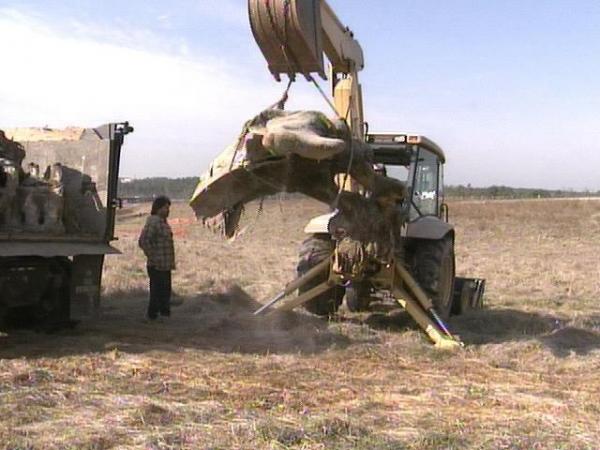
Unloading the flesh and bones of a 40-foot mammal is a whale of a job.
"I could not tell you exactly how much it weighs, but it's nothing that two people could pick up by themselves," said Mary Kay Clark, the museum's curator of mammals.
This is not just any whale -- it is a northern right whale.
"There's less than 300 right whales left in the world and it's one of the most endangered species on the face of the planet. To make matters worse, this was a pregnant female," said Steve Popson of the North Carolina Museum of Natural Sciences.
The fetus died, as well.
The whale, named Stumpy, was struck by a boat. Crews recovered the dead whale near Oregon Inlet.
"How often do you get to bring a whale to a museum in Raleigh?" said researcher Howard Bradford.
For more than 20 years, scientists had been tracking Stumpy as it migrated between Florida and Canada.
Crews will now cover the whale with piles of horse manure in an effort to preserve and study it.
"The insects and the natural decomposition -- the manure just helps speed it up. There's a lot of activity in horse manure, to say the least," Popson said.
When it is done, the bones will be clean and ready for research that could help save the species in a big way.
It will take up to two months for the insects and bacteria to clean the bones. The museum hopes to reassemble the skeleton and display it.
• Credits
Copyright 2024 by Capitol Broadcasting Company. All rights reserved. This material may not be published, broadcast, rewritten or redistributed.