Federal rule change threatens adult group home funding
Thousands of Medicaid patients in North Carolina could soon lose their adult home care because of a federal rule change.
Posted — UpdatedThe Center for Medicare and Medicaid Services told the state last year that personal care services, such as assistance with eating and bathing, must be reimbursed at the same rate for Medicaid patients who live in private homes and for those in group homes.
The move, which is set to take effect April 30, would effectively cut $414 million in Medicaid payments to North Carolina group homes, which patient advocates say could force some homes to shut down and put 4,000 or so patients on the streets.
"I think we'll see a lot of business owners potentially, if they have high Medicaid populations, go out of business," Peggy Smith, executive director of the North Carolina Assisted Living Association, said Tuesday. "Homelessness could be a reality."
Group home owners say they need the higher reimbursement rate they have been getting to help pay for round-the-clock care and the higher standards to which the state holds them.
Frustrated state lawmakers are searching for options, and the state Department of Health and Human Services has asked for an extension.
"We are certainly putting as much pressure as we can on federal officials at CMS and elsewhere to make sure they know the difficult situation North Carolina is in," DHHS Secretary Al Delia said.
Gov. Beverly Perdue said Wednesday that the state cannot allow patients to be forced from group homes.
"I really believe that we need to work together to come up with a solution. I will not be a part of dumping 20,000 older people without any capacity to serve them on the streets of North Carolina," Perdue said.
State officials said they plan to enlist the help of North Carolina's congressional delegation to delay the change until the end of the year.
North Carolina doesn't have a fallback plan if the government enforces the deadline, which worries people like Janice Thompson.
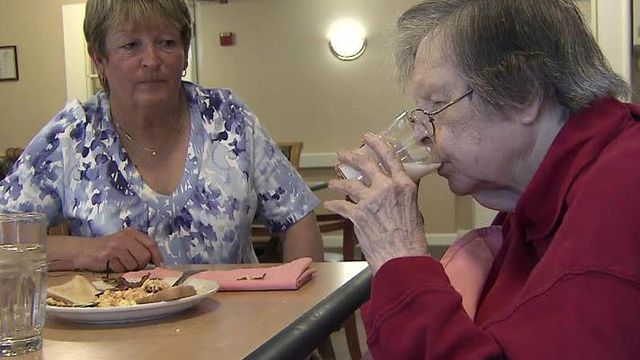
Thompson's 93-year-old mother, Mattie Davis, suffers from Alzheimer's disease and is cared for at the Special Care Unit at Carolina House in Wake Forest.
"My home is not safe for her," Thompson said.
She said there could be a high cost if cuts force Medicaid patients like her mother to move from group homes.
"It would be the end of her. It would be a death sentence for her," she said.

• Credits
Copyright 2024 by Capitol Broadcasting Company. All rights reserved. This material may not be published, broadcast, rewritten or redistributed.