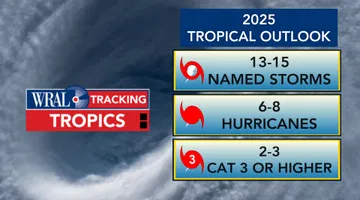
Researchers at Colorado State University have released their latest Atlantic hurricane season outlook, pointing to a slightly below-normal year ahead.
The forecast calls for 13 named storms, six hurricanes and two major hurricanes, reflecting conditions that are expected to be less favorable for storm development compared to an average season.
Other WRAL Top Stories
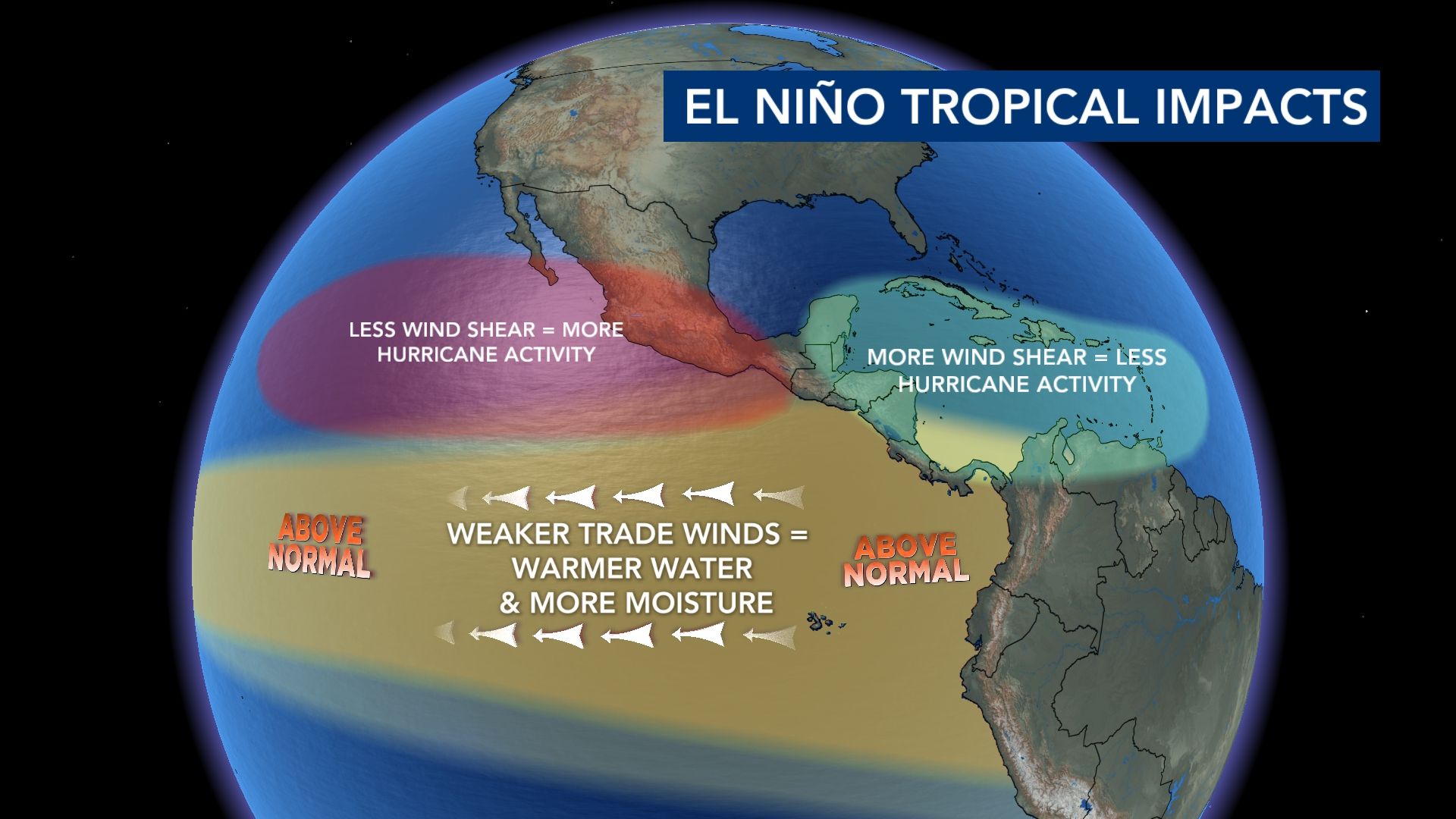
A key driver behind this outlook is the anticipated development of El Niño during the summer months. Forecasters estimate there is a 62% chance El Niño will form by June and persist through the remainder of 2026. This climate pattern plays a major role in shaping hurricane activity in the Atlantic basin.
El Niño tends to increase vertical wind shear over the tropical Atlantic. These winds can disrupt thunderstorms trying to organize into tropical systems, often tearing storms apart or preventing them from forming in the first place.
As a result, even when storms begin to develop, they often struggle to strengthen into hurricanes.
However, El Niño is only part of the equation.
"Sea surface temperatures will also play a key role in how our tropical season plays out," WRAL meteorologist Aimee Wilmoth says.
Warmer ocean waters act as fuel for hurricanes, and if temperatures rise significantly, they could counteract some of El Niño’s suppressing effects, allowing storms to form more easily than expected.
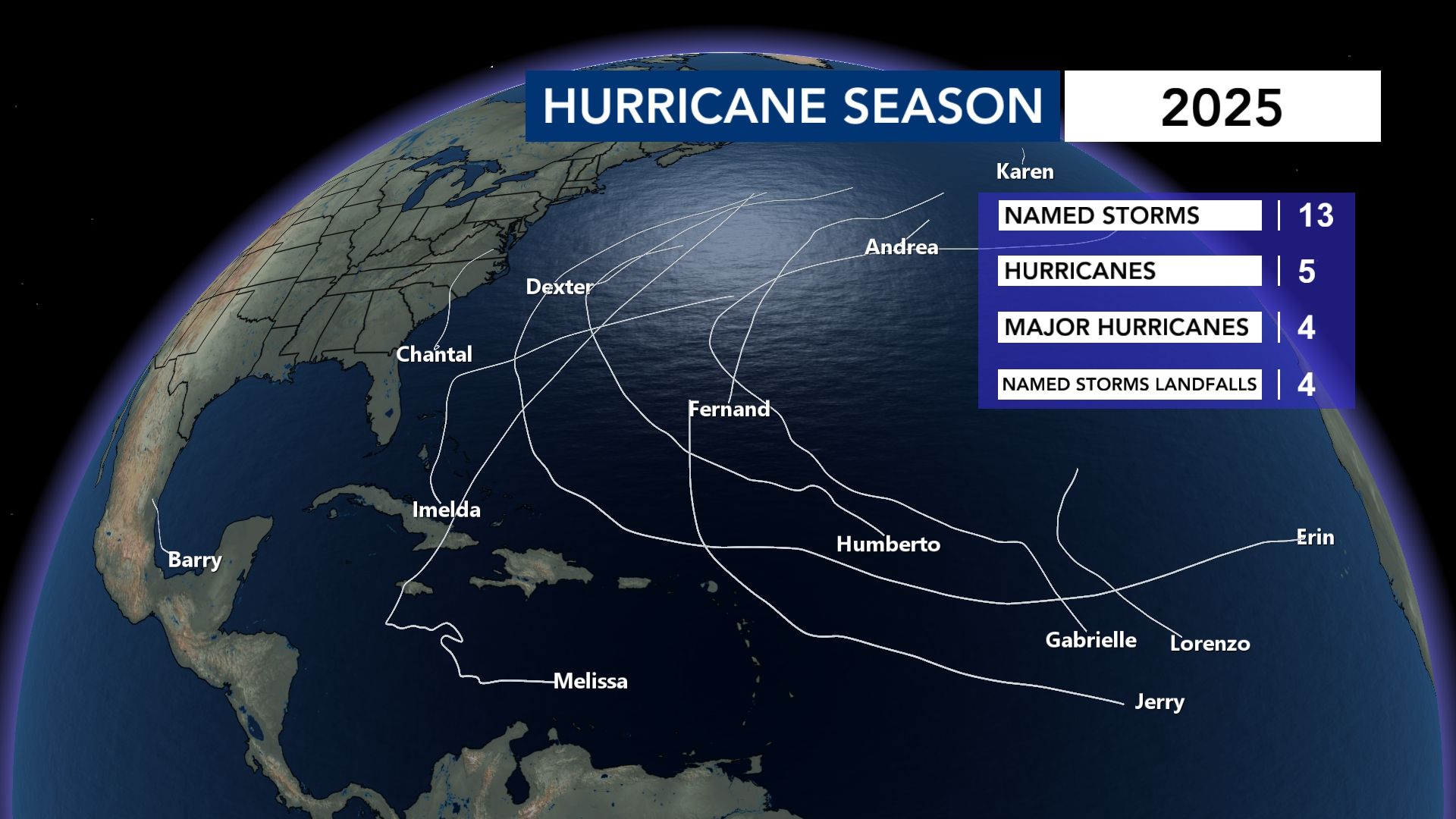
Looking back at last year provides useful context. We were in an El Niño-neutral year.
The 2025 Atlantic hurricane season was considered near normal overall, but notably, no hurricanes made landfall, sparing coastal regions from major impacts.
As the 2026 season approaches, it's important to note that even in a quieter year, it only takes one storm making landfall to create significant damage. Preparedness remains essential, regardless of seasonal forecasts.
The WRAL Severe Weather Team will be sure to keep people posted on any further developments.