The sun rose for the first time in 2026 in Utqiagvik (Barrow), Alaska. It won't set until August 2.
I posted this video to Facebook Monday, showing a timelapse from the Barrow Sea Ice Cam.
Other WRAL Top Stories
What does that mean for us? Let's talk.
Utqiagvik (Barrow), Alaska
Many of us know the town name as Barrow.
In December of 2016, a referendum approved by residents formally changed the name to Utqiagvik.
According to Smithsonian Magazine, Utqiagvik is "the village’s traditional Inupiaq name."
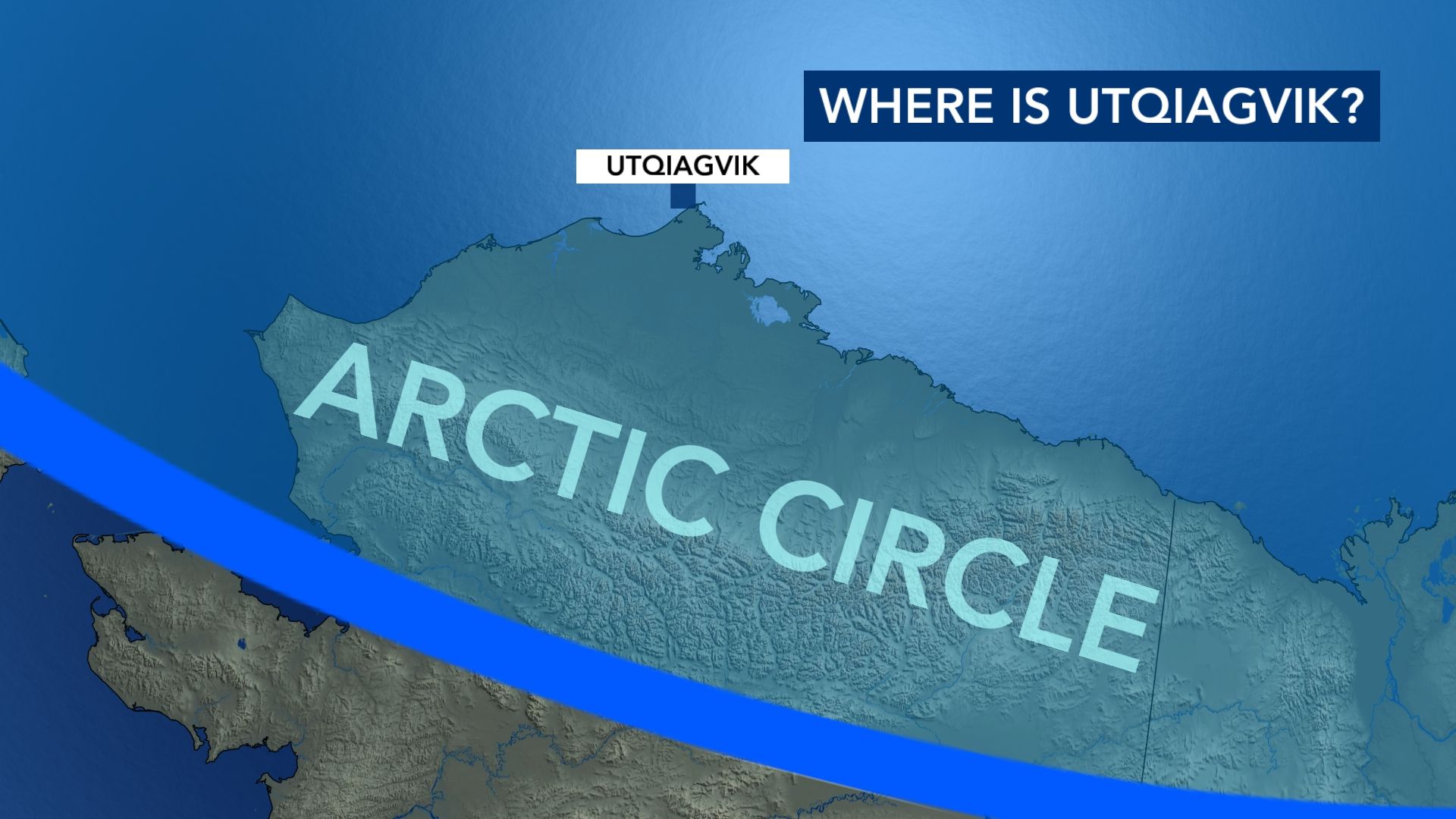
Utqiagvik is the northernmost point of the U.S., and it is located within the Arctic Circle.
Why do they see perpetual daylight?
The Earth is tilted at an angle 23.5 degrees.
The northern and southern hemispheres will either be tilted toward or away from the sun, determining our seasons.
As we get closer to the summer solstice, the northern hemisphere is tilting toward the sun. Because of that, the sun doesn't set for more than 80 days in places like Utqiagvik.

Meanwhile, the opposite is true the closer we get to the winter solstice.
Why do we care in North Carolina?
Utqiagvik's perpetual daylight tells us that summer isn't that far off. It's 40 days away, if you go by the summer solstice (June 21, 2026).
When looking at our daylight, we're nearing peak. As of this post (Tuesday, May 12, 2026), we're sitting at just under 14 hours of daylight.
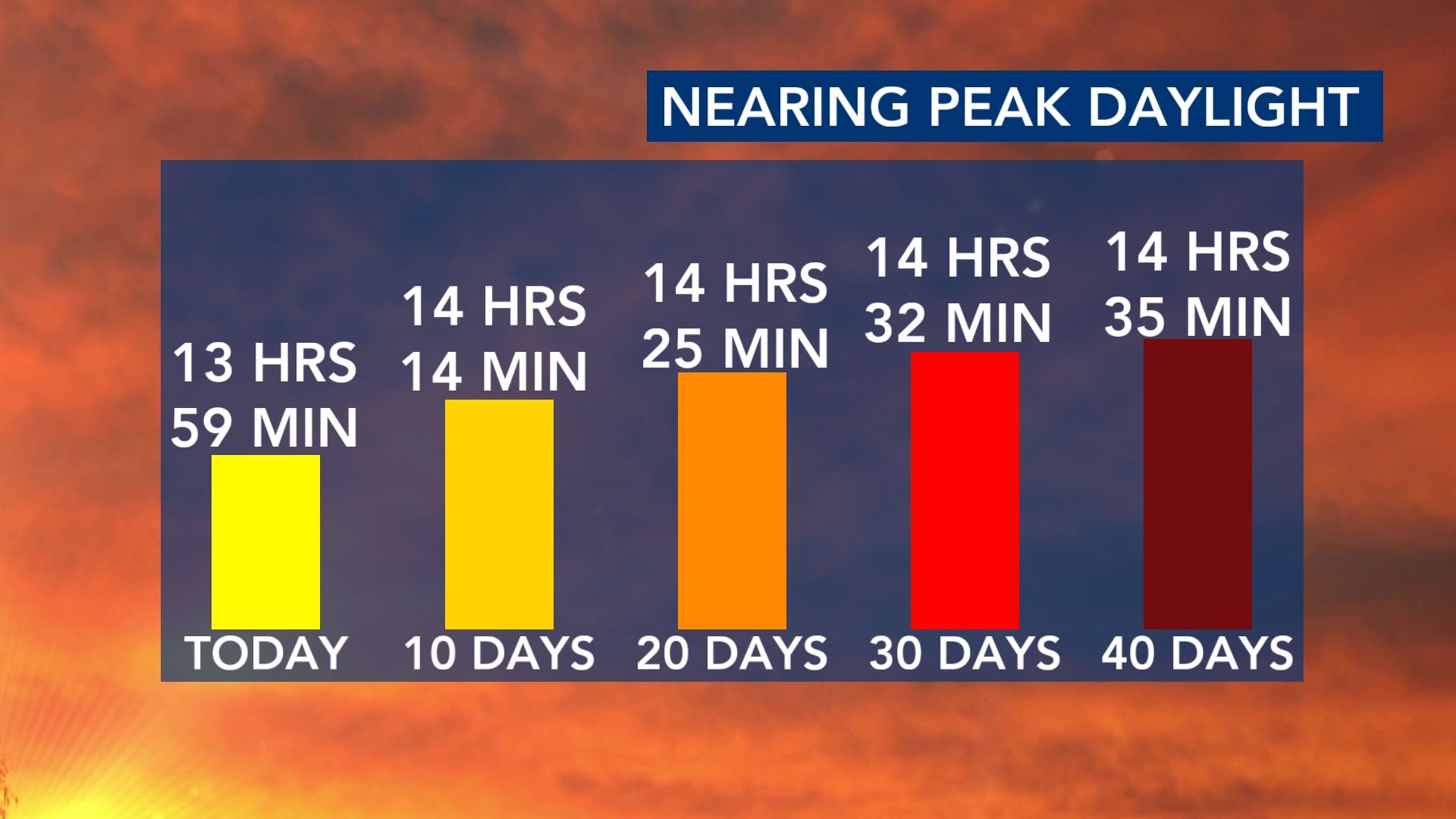
Over the next 40 days, we'll gain more than a half-hour of daylight. It'll peak on the solstice and then slowly drop off from there.
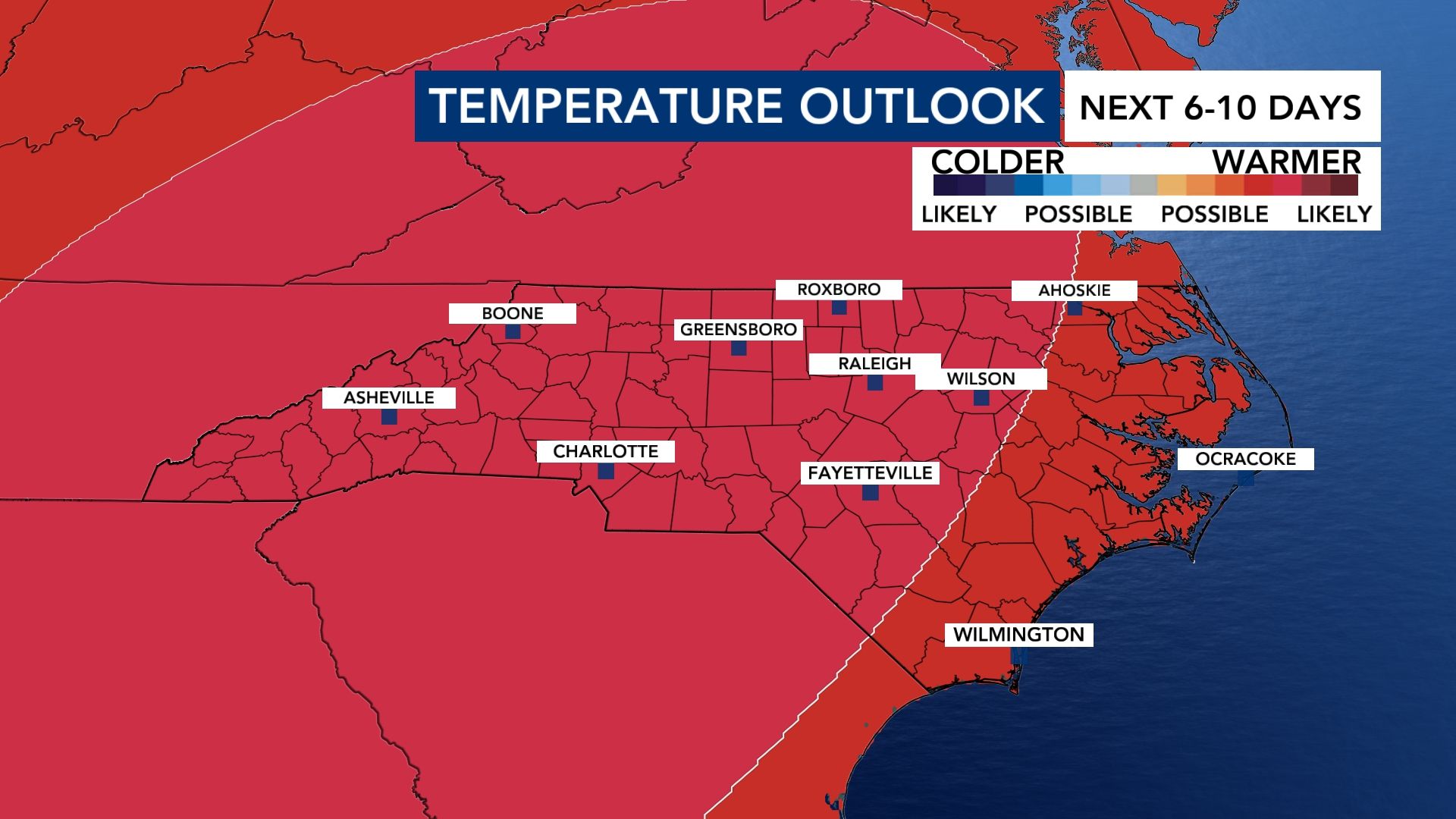
Weather-wise, we're expecting a preview of summer starting this weekend and lasting into much of next week.