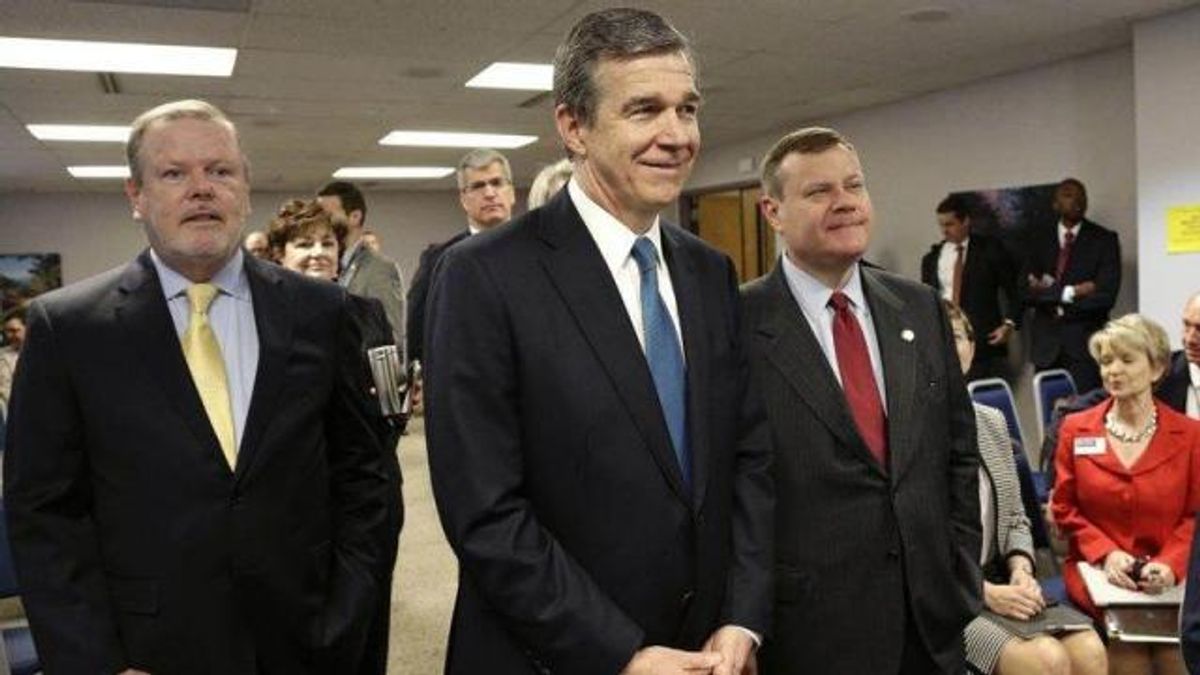
This year’s North Carolina General Assembly races offer a choice between the status quo of divided government—with a Republican legislative majority and a Democratic governor who can veto their proposals—and a return to GOP supermajorities that can cast Democrats aside.
That choice, the sum of voter decisions across 170 different House and Senate elections on Nov. 8, will have repercussions in people’s lives.
Other WRAL Top Stories
Abortion restrictions would almost certainly tighten with veto-proof GOP control. Larger tax cuts become more likely. Medicaid expansion—a real possibility for the first time in a decade but not yet across the finish line—would have a new question mark attached to it as power dynamics shift.
Previously proposed limits on how teachers can talk about race, sexuality and gender, plus a requirement that teachers tell parents if a student questions their sexual identity, almost assuredly would become law. The same goes for stiffer punishments for rioting and looser gun laws. These are things Gov. Roy Cooper either vetoed this year or that Republicans didn’t pass because they knew he would.
The state’s largest teacher group, which has fought Republicans for a decade on policies and budgets, says it fears for school funding if Republicans win supermajorities. The state’s Democratic Party warns of “harsher and more discriminatory election rules that would disenfranchise voters – particularly voters of color.”
Republican leaders call these scare tactics. They had supermajorities in the General Assembly, or a GOP majority paired with a Republican governor, for much of the last decade. Divided government is “an anomaly since I’ve been here,” said Sen. Ralph Hise, a top GOP leader who’s been at the General Assembly 12 years.
“And we’re doing really well,” said Hise, R-Mitchell.
Democrats point to House Bill 2, the 2016 legislation that laid out the sorts of public bathrooms people should use, based on gender assigned at birth. The law targeted transgender people, and the bill brought an international backlash when it passed under a GOP general assembly and the Republican governor at the time, Pat McCrory. The law lasted barely a year before it was repealed.
Democrats are highly unlikely to win their own majorities in the House or Senate this year, so Cooper has stressed North Carolina’s run of economic success under divided government. He has called on voters to let Democrats “hold the line” against some GOP proposals, using the bathroom bill as a cautionary tale.
“I don’t think there’s any question that all of us together in this state have contributed to the success,” Cooper said this month. “But the problem comes when you have a supermajority and their worst impulses can’t be stopped.”
Cooper has wielded the veto 75 times, more than any other North Carolina governor, by far. In his first two years in office, Republican supermajorities overturned 23 of his 28 vetoes. Among other things, they made judicial races partisan again in North Carolina, cut business regulations, passed state budgets and approved tax cuts over Cooper’s objections.
Democrats broke those supermajorities in the 2018 elections. Ever since that General Assembly was seated, none of Cooper’s vetoes have been overturned.
Races to watch
It takes three-fifths of members present and voting to override a veto. If all 170 lawmakers are voting, that’s 72 members in the House and 30 in the Senate. Republicans hold 69 House seats right now and 28 in the Senate, so they need to pick up five seats overall to win supermajorities.
But it’s not quite that simple. Lawmakers redrew state legislative districts this year to account for population shifts that showed up in the 2020 census. Some legislators retired, leaving open seats, and the makeup of some districts changed significantly, complicating predictions.
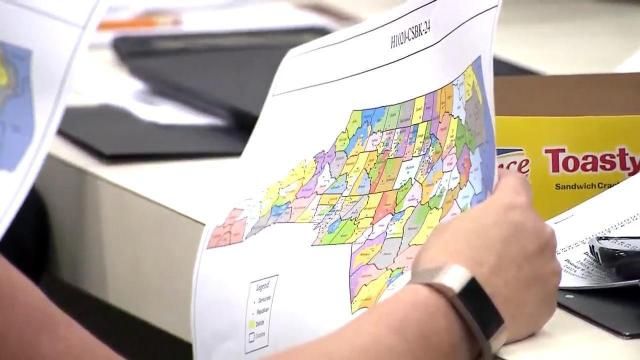
But predictions are possible, and between the way Democrats tend to live in or around cities and how election lines were drawn, there are only so many seats that both parties have a shot of winning.
Analysts at the John Locke Foundation, a right-leaning think tank, identified 19 districts in the House and nine in the state Senate that are key to Republicans winning a supermajority. Nearly all lean slightly toward Democrats based on past election results, but Republicans are widely expected to run strong enough this year to make these the battleground seats.
Republicans need to win 14 of those 19 House seats and six of nine Senate seats to take the supermajority, according to the foundation’s analysis, known as the Civitas Partisan Index.
Just to win a simple majority, Democrats would have to win 18 of these 19 House districts, according to the Foundation, and all nine Senate seats. Even the most optimistic Democrats don’t see that happening.
Seven to watch
Working off the Civitas Partisan Index, and based on conversations with political consultants involved in state legislative races, WRAL News whittled the list of battleground districts down to seven: Four in the House, three in the Senate.
Republicans don't have to win all of these districts to take supermajorities, but these are the types of districts they need to win. Some are must-wins, some are true toss-ups, and a couple of them would be stretches for the GOP, meaning a win would signal a very, very good night for the party.
Things you might get
WRAL News asked legislative leaders in both parties, in both chambers, to produce a list of five likely policy outcomes if Republicans retake the majority. Republican Speaker of the House Tim Moore’s office declined to participate. GOP Senate President Pro Tempore Phil Berger’s spokeswoman wouldn't list issues but said Republicans would “continue to pursue policies that make North Carolina the best state to live and do business in.”
“Since gaining the majority in 2011 our policies have catapulted North Carolina to new heights,” spokeswoman Lauren Horsch said in an email. “We reduced the tax burden for all North Carolinians, increased funding for education, reformed our transportation funding models and created an advantageous business climate that helped jump-start the economy after the last recession.”
Democratic legislative leaders left it to the state party to respond, and the party produced a list of worries over reproductive rights, voting rights, education spending, gun laws and socially conservative legislation that the party thinks will damage the state’s reputation and, by extension, North Carolina’s economy.
WRAL News went back to Republican leaders for comment on the North Carolina Democratic Party’s list. Leaders declined to respond to specifics but issued a statement saying in part that “Democrats need to consult a new psychic because these predictions are nothing more than fear-mongering propaganda.”
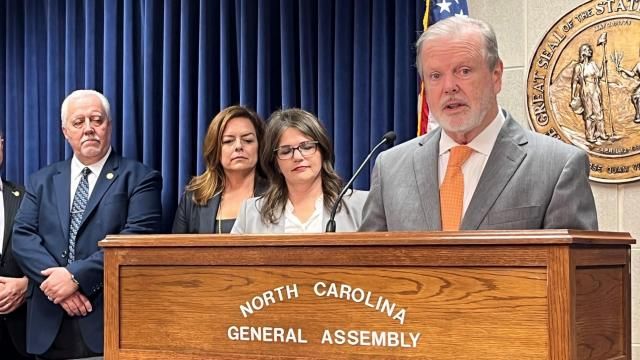
The following are policy areas, based on past Republican statements, bills that Cooper has vetoed in recent years and WRAL analysis, where policy shifts are likely with a GOP supermajority.
Abortion. Moore and Berger have contemplated more restrictive abortion regulations than the existing state ban on abortions after 20 weeks, a restriction that includes emergency exceptions. Both leaders have said there’s no consensus among legislative Republicans on details, but Moore has said he favors a general ban after six weeks and Berger has advocated for a general ban after 12 weeks.
Democrats worry that Republicans will pass extremely restrictive laws that would no longer make North Carolina “a safe haven for reproductive freedoms in the southeastern United States.”
“Access to abortion in North Carolina is on the ballot this November,” the state Democratic party said in its memo.
Voting. Democrats are also worried about new laws that would restrict voting access, particularly those that they think will disenfranchise voters of color.
Republican lawmakers have consistently supported North Carolina’s 17 days of early voting and voter-identification laws that allow for a wide range of IDs, though state and federal courts have repeatedly blocked implementation over constitutional questions. They have tried to tinker with mail-absentee ballot rules, and Cooper vetoed a GOP bill late last year that would have required civilian mail-in ballots to arrive by election day to be counted.
Multiple courts, at the state and federal level, have struck down Republican-drawn election maps, finding racial or partisan gerrymanders intended to lock in GOP power, and Republican leaders are fighting in the courts now to limit the ability of state courts to stop gerrymanders.
“With a supermajority, Republicans would be even more brazen: tossing out legitimate mail-in ballots that arrive after Election Day even if it's a postal service error and make in-person early voting more difficult for Black communities,” the state Democratic party said.
Education funding. Republican lawmakers have consistently boosted annual public education spending, but not nearly as much as Democrats have wanted. That’s in part because lawmakers prioritized personal income and business tax cuts.
Republicans have also boosted funding for private school vouchers, which are slated to get $176.5 million next year, growing to $296.5 million in 2031. A long-running state education spending lawsuit, known as “Leandro” for one of the defendants, calls for more money for public schools.
“Further declines in per-pupil spending for our public schools at the expense of an accelerated expansion of private school voucher problems that benefit wealthier households,” the Democratic party said in its memo. The party said Republicans should unlock surplus funds for education.
Cooper’s Office of State Budget and Management said this month that the state has at least $5.25 billion in unobligated reserves.
Gun laws. Republican lawmakers have blocked Democratic proposals to further restrict access to firearms. Five years ago, the House also passed a bill allowing people 21 years old and older to carry concealed weapons without having to obtain a concealed-carry permit. The bill did not pass the Republican-controlled Senate.
Both chambers passed a bill last year that would have ended the state’s pistol-permit system, which requires local sheriffs to sign off on handgun purchases. Under the bill, which was supported by the North Carolina Sheriffs’ Association, background checks still would have been performed at the point of sale.
Cooper vetoed that bill and another bill that would have allowed people to carry concealed weapons on church properties that are off limits now because the church also hosts a school.
Democrats worry about more deregulation, which they say would further endanger schools and communities. “Republican supermajorities will make us even less safe by pushing laws to allow 18 and 19 year olds to carry concealed weapons and to take away the authority local sheriffs have to issue pistol permits so it’s easier for people who currently are getting flagged by their local sheriff,” the party said.
Social issues. The state Senate passed a bill this year forbidding mention of sexual orientation or gender identity in the public school curriculum in kindergarten through third grade, as well as requiring educators to notify parents if a student, regardless of grade, questions their own sexual identity. The House didn’t take up the bill, with leadership saying Cooper would have vetoed it.
Moore said at the time that Republicans were confident they’d win a supermajority in November and that the bill was “the kind of issue that we can take up in next year’s session.”
Democrats say the passage of legislation along these lines would damage the state’s national reputation, using fallout of the bathroom bill as a case in point.
“This will hurt business recruitment, tourism and the quality of life for millions of North Carolinians,” the state Democratic party said. “Stricter abortion legislation is on the horizon, but the restriction of constitutional freedoms is a slippery slope.”
Medicaid, marijuana and gambling
Three of the biggest issues before the General Assembly this year remain unresolved: Medicaid expansion, legalized marijuana and an expansion of legalized sports gambling.
Medicaid expansion would extend taxpayer-funded health insurance to hundreds of thousands of the state’s working poor. After blocking the Democratic priority for years, Republican leaders in both chambers came around on the idea, but with radically different proposals. That gap was never bridged and will likely be an issue for the legislature in 2023.
The dispute is between House Republicans and Senate Republicans, but it’s hard to say how supermajorities change the calculus. Berger, the top Senate Republican, said last month that expansion will remain a priority regardless.
In the House “it sort of depends on who gets elected,” Rep. Donny Lambeth, a House budget writer and long-time Medicaid expansion supporter, said this week. House Republicans “were pretty split” on expansion this year, Lambeth said, so it’s not so much about a supermajority but how individual Republican lawmakers feel.
“If there is not a supermajority, then I think expansion is part of the discussion in getting the budget passed,” Lambeth said.
Lawmakers came close this year to legalize online sports gambling, which would have expanded wagering beyond tribal land in the state. Bills passed the Senate, but a key measure fell one vote short in the House.
The bills had bipartisan support, and bipartisan opposition. Rep. Jason Saine, a Lincoln Republican pushing the gambling legislation, said he believes a supermajority makes passage more likely.
“Looking at the candidates, and the areas they represent, plus retirements and new members, I think we end up with a more favorable group,” he said.
The state Senate passed legislation this year legalizing medical marijuana, but the House declined to take that bill up. Saine said a House supermajority would likely include more suburban Republicans “who would tend to be more supportive” of that bill.
Post election controversy?
After the elections, a lingering bit of controversy could come to bear in the Senate.
Republicans this summer challenged Democrat Valerie Jordan’s candidacy in Senate District 3, an eastern North Carolina seat that will likely host a close race and may prove crucial to the GOP’s supermajority aspirations. The district borders Virginia and stretches from Warren to Currituck counties.
The state constitution says legislators must live in their district for at least a year before their election. Republicans submitted evidence suggesting that Jordan actually lives in Wake County, outside Senate District 3. The evidence included pictures of her car parked outside a Raleigh home for 23 straight days.
In a close but bipartisan vote, the Currituck County Board of Elections found enough evidence to advance the matter to the North Carolina State Board of Elections.
The state board’s 3-2 Democratic majority sided with Jordan and agreed to keep her on the ballot. If she wins, it’s possible the Senate’s GOP majority will refuse to seat her. The constitution says that each chamber “shall be the judge of the qualifications and elections of its own members,” and state code lays out a process for lawmakers to reject candidates and order a new election.