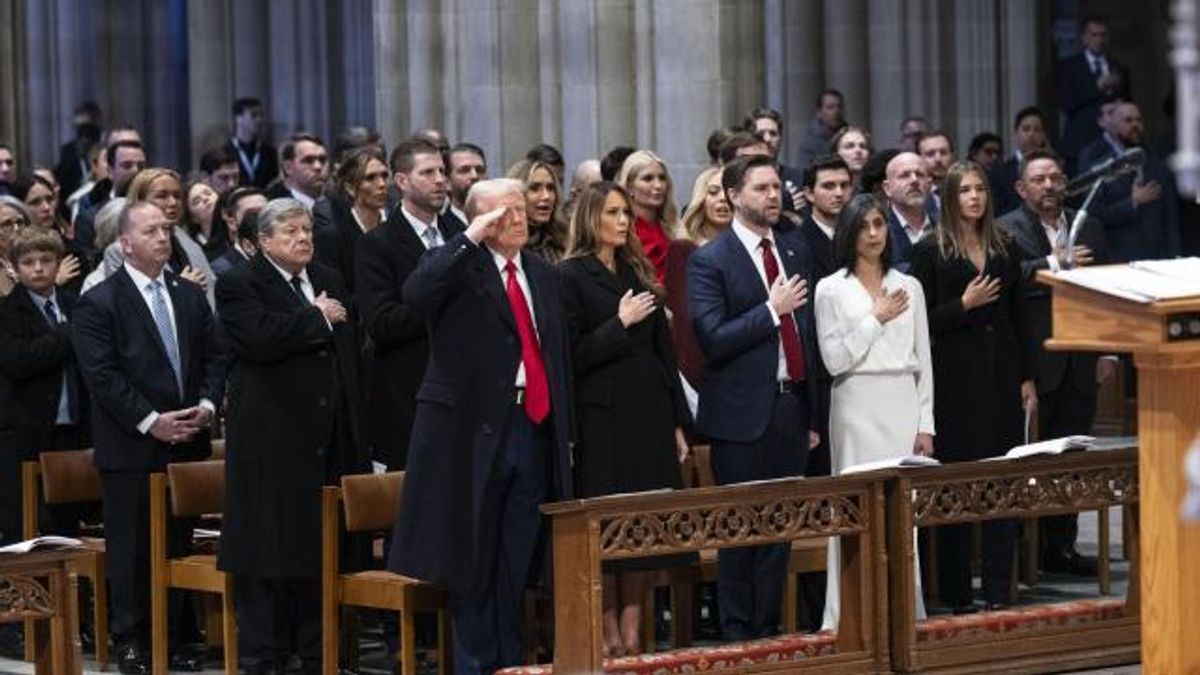
After President Donald Trump’s first blitz of executive orders heralded seismic changes in domestic and international policy, the second day of his administration was marked by notes of defiance, including multiple lawsuits and a personal appeal from the pulpit at the National Cathedral.
Bishop Mariann Edgar Budde, addressing Trump directly during an interfaith service Tuesday morning, asked him to “have mercy upon the people in our country who are scared now,” specifically naming LGBTQ+ people, immigrants, children and people fleeing war zones. Afterward, Trump appeared unmoved by the service, telling reporters, “Not too exciting, was it?”
Other WRAL Top Stories
By then, his flurry of executive orders was already receiving pushback. Attorneys general from states across the country sued the Trump administration to block an order that refuses to recognize the U.S.-born children of unauthorized or temporary immigrants as citizens, the constitutional principle known as birthright citizenship. A union representing about 50,000 career federal workers filed a lawsuit over a change in employee protections that would make it easier to fire them. And at least two Republican senators issued rare intraparty criticism of Trump for his decision to issue blanket clemency for Jan. 6 defendants.
Elsewhere, the leaders of Mexico and Canada reacted to Trump policies that would alter their relationship with the United States. Panama’s president wrote to the United Nations Security Council about Trump’s comments about reclaiming the Panama Canal. And at a gathering of political and business figures in Switzerland, Ursula von der Leyen, president of the European Commission, said the rest of the world would not alter its course on climate change because of Trump.
The president was meeting Tuesday afternoon with leaders of the Republican-controlled Congress, including House Speaker Mike Johnson and Sen. John Thune of South Dakota, the majority leader, to discuss the early priorities of his term, including legislation that would extend expiring tax cuts that Trump signed into law in 2017.
Republicans, who hold slim majorities in the House and Senate, are working on the outlines of legislation that would extend the tax cuts, cut federal spending and crack down on immigration.
Here’s what else to know:
— Jan. 6 clemency: Members of the mob that attacked the Capitol on Jan. 6, 2021, including two of the country’s most prominent far-right extremists — Enrique Tarrio of the Proud Boys and Stewart Rhodes of the Oath Keepers militia — have been released from custody after being pardoned by Trump. The president pardoned all of the nearly 1,600 people who had been charged in connection with the riot.
— Confusion and worry: Chicago neighborhoods were fearful of an immigration crackdown, which was leaving many migrants across the southern border in a state of despair. Trade policy experts were straining to understand the scope of a new federal agency he has called for, the External Revenue Service. And automakers were facing an assault on electric vehicles programs, in which they had invested billions of dollars with the Biden administration’s support
— Cabinet nominees: Two of Trump’s Cabinet nominees faced confirmation hearings Tuesday. Doug Collins, a former House Republican chosen to lead the Veterans Affairs Department, said he would defend a program that allows veterans to seek health services outside the department’s system. Elise Stefanik promised to combat antisemitism and counter Chinese influence if confirmed as the ambassador to the United Nations. Scott Bessent’s nomination to be Treasury secretary was advanced by the Senate Finance Committee.
— Europe’s uncertainty: European business leaders and policymakers have been bracing for Trump’s return behind the scenes. That includes the European Commission — the European Union’s executive arm — which formed a never-officially-announced group, sometimes colloquially referred to as a “Trump task force,” that spent much of 2024 working on possible responses to changes in American policy.
— Executive actions: Trump signed dozens of executive orders Monday addressing the first priorities of his administration, including pulling the United States out of the Paris climate accord and the World Health Organization, and attempting to stall a federal ban of the popular app TikTok.
This article originally appeared in The New York Times.