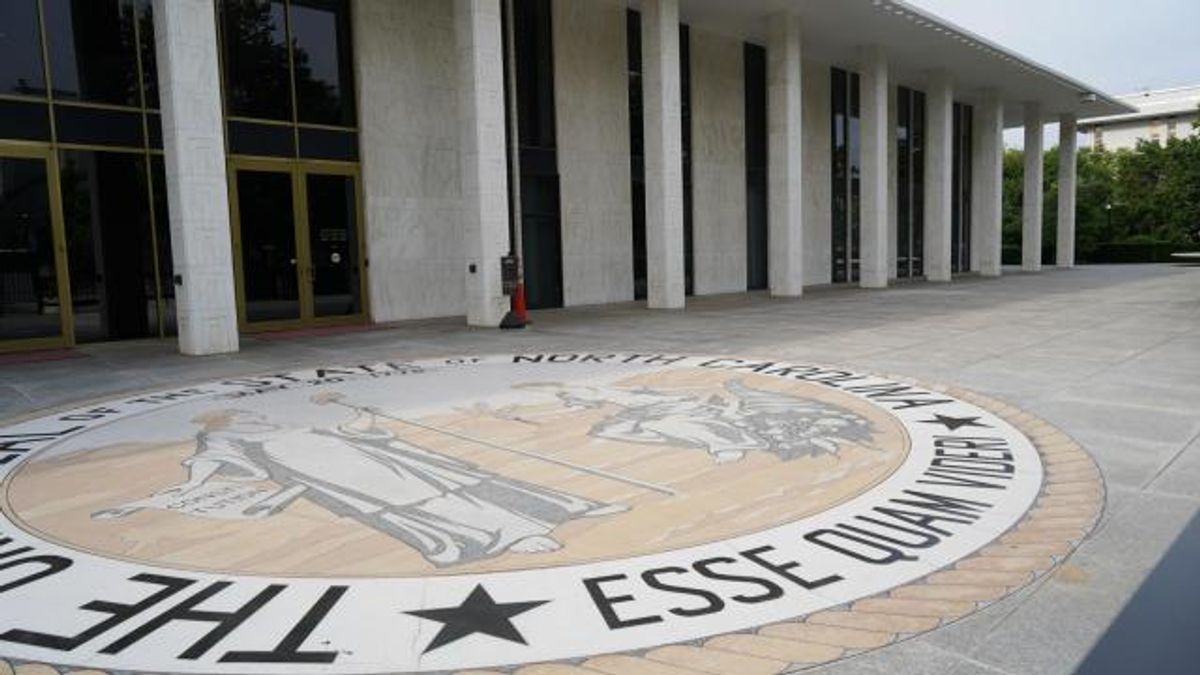
Some North Carolina lawmakers want to sever ties with a public-private partnership aimed at identifying and fostering commercially viable work born out of research at state universities.
The partnership, called NCInnovation, is funded with millions of dollars from the private sector, as well as a much larger sum — half a billion dollars — from state taxpayers.
Other WRAL Top Stories
House Bill 154 seeks to order the return of all of the group’s $500 million in state funds, which would pose an existential threat to NCInnovation if approved.
Rep. Harry Warren, R-Rowan, filed the bill this week. Warren also co-chairs a state House oversight committee that last year required NCInnovation President Bennett Waters to testify under oath about its operations.
“I have doubts about whether this is really the best use of taxpayer dollars,” Warren said during that meeting in July, WRAL reported at the time. His new bill underscores that sentiment.
If the bill passes the state House, it would face an uphill battle in the Senate — where top GOP leaders originally wanted to spend even more on NCInnovation than what the legislature ultimately approved when it created the partnership in 2023.
The goal of NCInnovation is to turn academic research into job-creating businesses. That same economic development formula is what led the Research Triangle Park to boom for the past half century. Supporters believe it can and should be copied in other parts of the state, even if on a smaller scale.
Some critics, however, don’t want the government involved in the private sector at all. Other critics have more individualized complaints about NC-Innovation and its financial management.
NC -Innovation contends it’s a good steward of that public money. It hasn’t used any of its state money for grants — instead investing all of it, with a plan to use only the interest on those investments to pay for grants. And the group’s endowment has grown, even after it dispersed its initial round of several million dollars in grant funding last year.
Those initial grants totaled more than $5 million, sent to researchers at about half of the public universities in the state. NCInnovation spokesman Pat Ryan said the group is currently reviewing grant proposals worth more than $90 million from North Carolina researchers to consider for the future — as long as it still has the money to support its work.
“If and how policymakers wish for NCInnovation to support North Carolina’s world-class applied research is and always has been entirely up to policymakers,” Ryan said. “NCInnovation has dedicated $5.2 million toward university research that has real-life commercial and strategic applications, including PFAS removal, lithium refining, and power grid resiliency.”
The idea behind the group has deeply divided Republican leadership at the state legislature. Originally, the state House proposed spending $50 million on the program. The state Senate wanted to spend 200 times as much, proposing a $1 billion appropriation. As part of the 2023 budget negotiations they settled in the middle, agreeing to give the group $500 million.
But some House Republicans remain deeply skeptical of the group — and not just those who filed the bill this week to claw back the money. State lawmakers also gave themselves the power to appoint board members to the group in exchange for the state funding, and one of former House Speaker Tim Moore’s picks was businessman Art Pope, who had been highly critical of NCInnovation before being named to its board.
Pope has since fought with other board members on some key votes, often coming out on the losing end, while saying he’s pushing for more transparency in how the group operates.
He has also called for an audit of the group, questioning its finances and accounting standards.
Supporters, however, see what RTP has done for the economy in the Triangle and hope NC Innovation can bring similar growth to other areas with university researchers: Places like Charlotte, Greensboro, Winston-Salem, Fayetteville, Greenville, Wilmington, Elizabeth City, Pembroke, Sylva, Asheville and Boone.
Many of the businesses in or near RTP count professors from UNC-Chapel Hill, Duke University and N.C. State University among their founders, senior leaders or key advisors. One of North Carolina’s richest people, Jim Goodnight, was an N.C. State University professor when he founded Cary software company SAS in the 1970s.