Space enthusiasts, rejoice! The latest forecast from the Space Weather Prediction Center indicates a strong possibility of witnessing another round of the magnificent Northern Lights Sunday morning.
According to the report, glimpses of the aurora borealis could be visible as early as 2 a.m. in areas with clear skies. The celestial light show is expected to peak around 5 a.m., offering the best chance of witnessing vibrant colors dancing across the night sky.
Other WRAL Top Stories
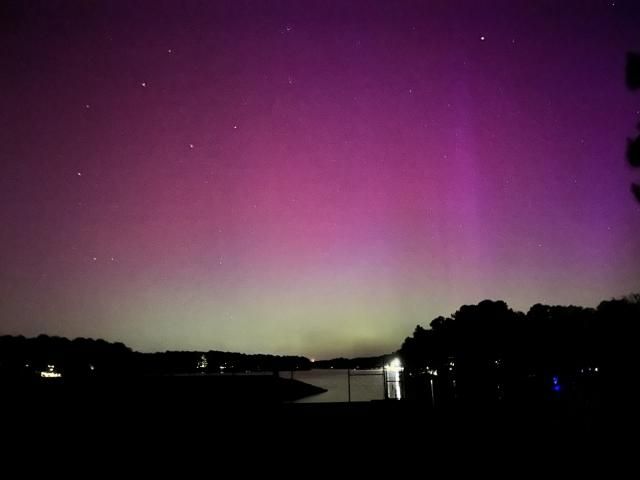
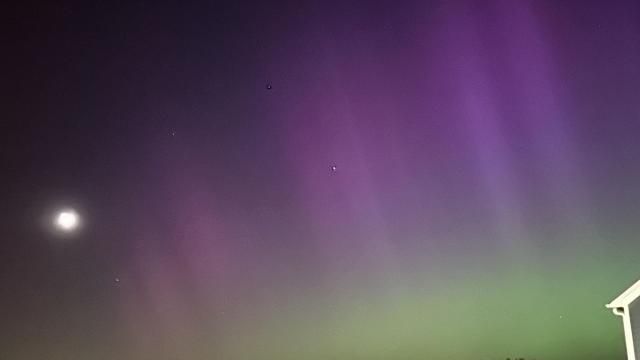
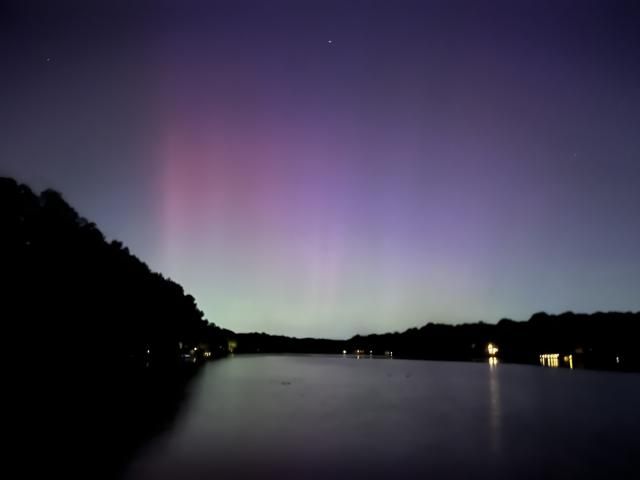
Some locals lost sleep overnight Friday, staying awake to take in rare first sighting of the Northern Lights filling the North Carolina sky – a sight very rarely visible this far south.
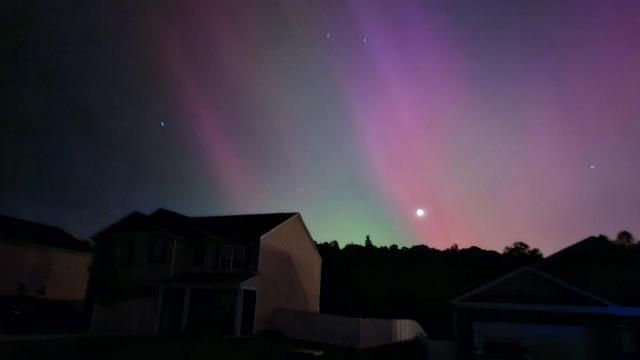
While many in places like Raleigh and surrounding towns were able to see the auroras in their own backyard, some traveled to get the best view. Some WRAL viewers sent in photos from Falls Lake or Jordan Lake, from as far west as the mountains, or from rural areas where the lack of light pollution led to more spectacular shows.
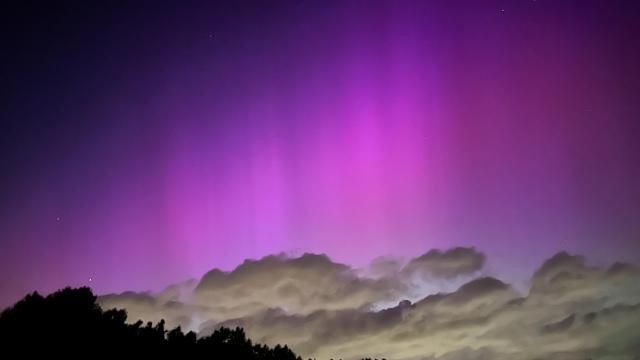
North Carolina was in the "possibly visible zone," with the National Oceanic and Atmospheric Administration's Space Weather Prediction Center reporting the best viewing would be between 2 and 5 a.m. However, many viewers saw the lights vividly as early as 9:30 p.m.
MORE ON THIS: Photo gallery: Northern Lights put on rare, dazzling show across the Triangle
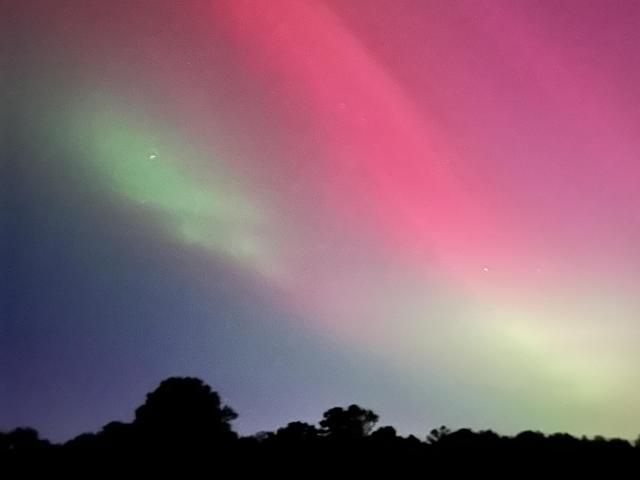
"You'll want to look to the north, low on the horizon," said WRAL meteorologist Kat Campbell. "They'll be a faint, green glow in the distance. That's what it will look like here."
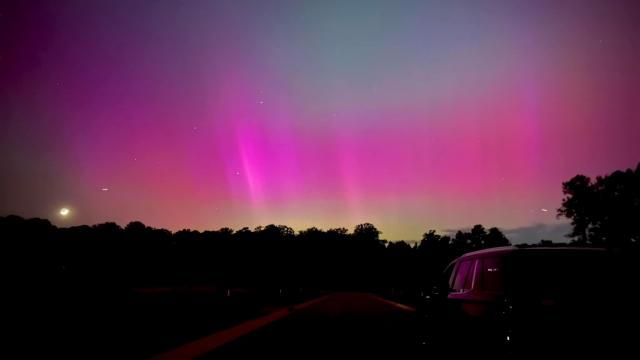
The rare visibility this far south was due to a series of solar flares and coronal mass ejections from the sun. The center issued a Severe Geomagnetic Storm Watch for Friday evening and referred to this as “an unusual event.”
It’s the first such watch issued since January 2005.
Geomagnetic storm could also disrupt GPS, power grid, satellites
As the sun nears the peak of activity in its 11-year cycle, known as solar maximum, later this year, researchers have observed increasingly intense solar flares.
When directed at Earth, these ejections can cause geomagnetic storms, or major disturbances of Earth’s magnetic field.
“Geomagnetic storms can impact infrastructure in near-Earth orbit and on Earth’s surface, potentially disrupting communications, the electric power grid, navigation, radio and satellite operations,” according to the Space Weather Prediction Center. “(The center) has notified the operators of these systems so they can take protective action.”
Solar storms generated by the sun can also cause radio blackouts and effect flight patterns of commercial airlines.
The center warned that additional solar activity could cause geomagnetic storm conditions to be ongoing through the weekend.
How often do severe geomagnetic storms impact the power grid?
Extreme storms have occurred before, such as one that knocked out the power grid in Quebec in 1989 and the Carrington Event of 1859.
The Carrington Event of 1859 remains the most intense geomagnetic storm ever recorded, causing telegraph stations to spark and catch fire. If such an event were to occur today, it could cause trillions of dollars’ worth of damage and bring down some power grids for a substantial amount of time.
So far, researchers have observed only three severe geomagnetic storms during the current solar cycle, which began in December 2019, according to the center. Previously, a G5, or extreme geomagnetic storm, occurred on October 23, resulting in power outages in Sweden and damaged power transformers in South Africa, according to the center.