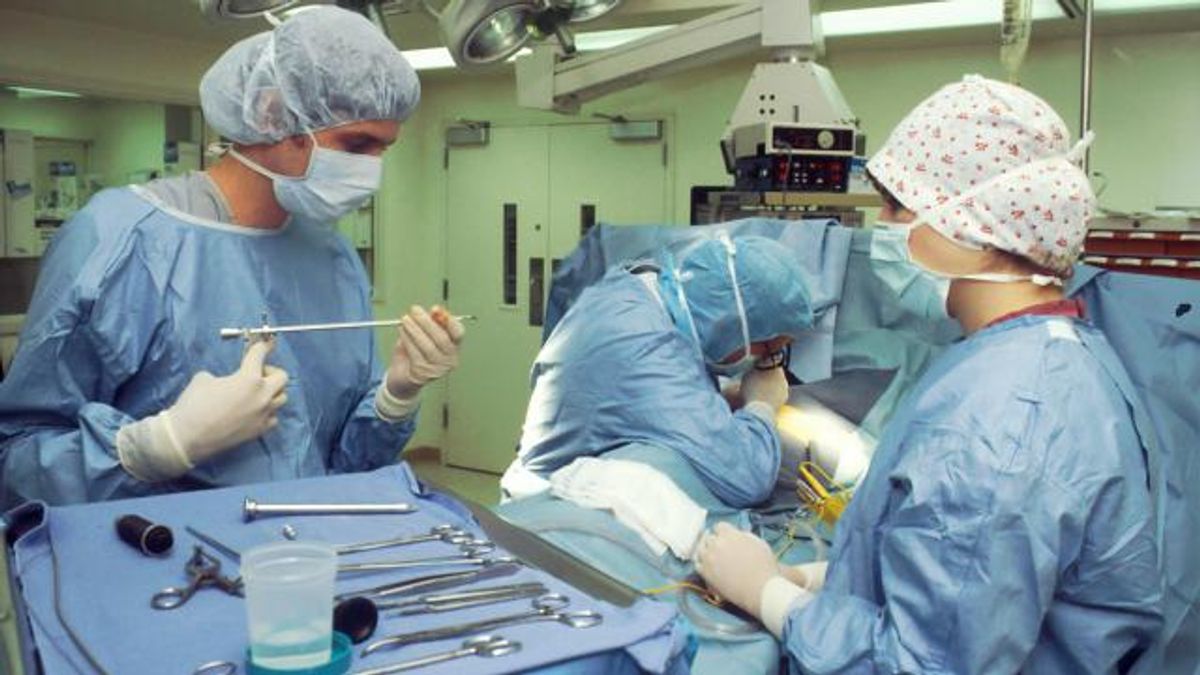
A new plan to give state employees free surgeries should also help save the state money, Treasurer Brad Briner says.
The idea is to create a group of surgeons around the state who will be given favoritism by the State Health Plan to treat the 770,000 teachers, state workers, retirees and their family members on the plan. In exchange for patients being directed their way, those surgeons will be paid less than the normal rate for their work.
Other WRAL Top Stories
The idea is that it’ll end up as a win-win for all parties: The select group of surgeons should make more money even despite the lower rates, because of their increase in patients, State Treasurer Brad Briner says. And the state should save money by paying lower rates.
State workers won’t have to use those surgeons if they want, but they will have to pay more for using surgeons outside of that group. If enough people choose to use the new group, then the State Health Plan should be able to afford charging them little to nothing for the surgeries.
“The idea is to have high-quality providers compete for our business,” Briner said. “Lowest price wins. We’ll pass that low price on to the members of the State Health Plan in the form of no deductibles, no co-pays, for major surgeries.”
Bidding is currently underway between health care providers who want to join the program, which will be overseen by a company called Lantern.
Briner has repeatedly emphasized that the surgeons chosen will be proven, experienced professionals and not just anyone looking to bring in clients. And according to Lantern, fewer than 1% of its surgeries result in complications — far below what it says is a national average of more than 8%.
"Though most people don’t need surgery often, when they do, it’s a stressful time and finding the right surgeon is important," Lantern CEO John Zutter said in a statement about the State Health Plan partnership. "We focus on building a network of the highest quality surgeons and connecting people to the right one, at an affordable price, so they get the best outcome."
The partnership will offer state employees surgeries in Raleigh, Durham, Charlotte, Greensboro and Hickory, as well as potentially other parts of the state. The bidding period was extended to give more of an opportunity for rural providers to try getting added to the list, said state House Majority Leader Rep. Brenden Jones, R-Columbus, who pushed for the extension.
“Rural hospitals are instrumental in providing critical health care to our communities,” Jones told WRAL. “I’m glad to have played a part in ensuring they have a voice and quality rural health care remains.”
Despite the extended bidding period, the system is still set to go live in October.
Ardis Watkins, who leads the State Employees Association of North Carolina, said it’s a small step forward but a positive one for state workers — and one that could help lower health care costs not just for state employees but potentially for everyone in North Carolina down the line.
“It’s a statewide problem, being the most expensive state for health care in the country,” she said. “But the State Health Plan can do something about that. … People think health care is expensive for no reason. But there is a reason. We’re being over-charged.”
Premium increases coming
Briner explained the new surgery system this week to fellow politicians on the Council of State, the group of 10 elected officials who lead North Carolina’s executive branch. A Republican and former investment banker who first entered politics in the 2024 elections, Briner has spent his first several months in office attempting to overhaul the State Health Plan and stop it from losing money.
The plan faces a $500 million deficit, due to rising health care prices as well as a previous policy, under former Republican State Treasurer Dale Folwell, of keeping premiums mostly frozen in place.
Briner abandoned that policy. The State Health Plan will now raise premiums on members, in addition to implementing creative new programs like the surgery partnership.
State workers aren’t happy about it, said Watkins, the SEANC boss.
““People are definitely angry at premiums going up,” she said. “There’s no pay raise for state employees. There’s been nothing for retirees. So they’re going backwards. And that doesn’t even count inflation.”
Exactly how much people’s premiums rise will be decided at a meeting next week. But Briner and other health plan officials have suggested a new model using a sliding scale, based on income: Rates will increase for all current state employees, but higher-paid workers will pay more than lower-paid workers.
Briner told the Council of State that when the State Health Plan leadership votes next week to raise premiums, “there are not going to be a lot of surprises” based on what they’ve previously said they’re considering in terms of the new costs.
WRAL reported in May that the out-of-pocket maximums would remain the same for most members, but that premiums might increase anywhere from $25 to $130 per month, depending on their level of coverage and their salary.
Here are the details from the State Health Plan’s discussion in May:
70/30 plan: People on the more basic plan — which is currently called the 70/30 plan but which will soon see its name change to "Standard" — would see their premiums increase from $25 per month to as much as $70 per month, depending on their salary. Single members would see their deductible rise from $1,500 to $3,000, and families would see their deductibles rise frm $4,500 to $9,000.
80/20 plan: People on the more robust plan — currently called 80/20 but which will soon see its name change to "Plus" — will see their premiums rise from $50 a month to as much as $130 per month, depending on their salary. Single members would see their deductible rise from $1,250 to $1,500, and families would see their deductibles rise frm $3,750 to $4,500.
Medicare: Older state employees and retirees on the state's Medicare advantage plan would see almost no changes to what they pay, with just a $100 increase to their annual out-of-pocket maximum. People on the Medicare 70/30 plan would see large increases to what they pay, however. That's an intentional move by State Health Plan leadership, which is hoping to drive qualifying people to the Medicare advantage plan.