Thousands of North Carolina women who suffer from endometriosis or similar issues might soon have more hope for winning accommodations at work or at school, due to a former state employee’s fight against the government.
Endometriosis is a condition in which tissue that normally lines the uterus grows outside of it, on other parts of the body. The condition, which affects up to 10% of women nationwide, can cause incredibly painful menstrual cramps and other health concerns. Some women find the pain and nausea so debilitating that there are days they can barely get out of bed.
Other WRAL Top Stories
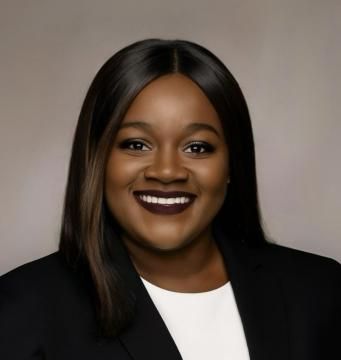
One of those women is Christian Worley, a former juvenile justice counselor for the North Carolina Department of Public Safety. Worley is now in law school and getting some real-world courtroom experience outside of class: She’s suing the state, alleging disability discrimination. She says department bosses refused her request to work from home one or two days a month while experiencing symptoms. She also says they threatened to fire her if she asked again.
Lawyers for the state declined to comment through a spokesperson. But in court filings, they have questioned the merits of her allegations and whether she has enough evidence to prove her case.
Worley is acting as her own lawyer in the case. So far, she isn’t losing.
The Americans with Disabilities Act requires employers to provide reasonable accommodations to employees with disabilities. But endometriosis itself isn’t classified as a disability under the ADA.
Last month a federal magistrate judge in Raleigh granted the state’s request to throw out Worley’s claim of gender discrimination, for lack of evidence. But he allowed six other claims she made about disability discrimination to move forward — potentially to trial, if she and the state can’t settle their differences before then — after finding that her endometriosis symptoms should’ve qualified for ADA protections.
Advocates for disabled people say Worley’s crusade has the potential to be groundbreaking for other women with endometriosis. They say it’s the first time a judge in North Carolina has made such a decision.
“It’s really exciting,” said Lena Welch, a lawyer for Disability Rights NC, an advocacy and litigation group that isn’t involved in Worley’s case.
Because of how disability law works, the judge letting Worley’s claims go forward doesn’t automatically mean all North Carolina women with endometriosis are now eligible for disability protection themselves. Many factors go into each individual case, Welch said, including the person’s exact symptoms, their job duties and more. But it’s still something people can point to in their own discussions with employers — or lawsuits — and a sign that judges are becoming more open to these sorts of arguments than they were in the past.
“It opens up the pathway for other people, too,” Welch said. “Not just for endometriosis, but other episodic disabilities.”
Episodic disabilities are those that don’t impact people every day. Some employers tend to treat those conditions less seriously, Welch said.
Worley said that kind of skeptical attitude was exactly what she faced when trying to get the state to agree to let her work from home one or two days a month as she dealt with period pain and vomiting. Because most women have periods, she said, it made it even harder to explain why she needed an accommodation when other female workers weren’t making the same requests.
“I remember growing up and I would tell my friends, my female friends, I'm suffering in this way,” she told WRAL in an interview. “And they'd be like, ‘What? Like, I get cramps, but it's not that bad.’ So even some of the women I've spoken to have also invalidated that pain. And I just thought maybe I'm just being weak.”
Claims of denial, retribution
Worley joined the Department of Public Safety in late 2020, when many state government jobs were still remote due to the Covid-19 pandemic. But that work-from-home policy had ended by April 26, 2022, when she was admitted to the emergency room and had to miss a few days of work.
After returning to work, Worley told a female manager about her menstrual issues, and her manager suggested she might have endometriosis, according to court records.
After Worley requested permission to work from home for one or two days a month because of her condition, Worley claimed in court filings, her manager started questioning her work ethic and escalated it to a higher-up manager. The other manager expressed concern that if he let Worley work from home when she was having her period, then soon every woman in the office would make the same request.
That was something the state was apparently not willing to do, Worley alleges, despite her job having been fully remote during the pandemic. But Worley’s argument is that the state shouldn’t need to let all women have monthly work-from-home days anyway, since endometriosis presents so much more severely than normal periods.
Worley and the managers then had a discussion about whether she’d be fired in a few months, at the end of her two-year probationary stint. The two sides disagree on what exactly the managers told her during that conversation, court documents show — with the state framing its concerns as being over "deficiencies in [Worley's] work" rather than her disability claims — but what happened next is clear: Worley resigned that same day, filed an administrative complaint about discrimination, and later sued.
A spokesperson for NCDPS declined to comment on the case or Worley’s claims specifically but said that the department follows ADA guidelines. There are procedures in place, he said, for any employees to self-identify as disabled or to request accommodations for those disabilities.
“Employees who self-identify as having a disability do so via the state’s Integrated HR/payroll system,” DPS spokesman Matt Debnam said. He added that the state “provides guidance to its employees on the process for requesting reasonable accommodations consistent with the requirements of the ADA and [state government] policy.”
The state’s human resources office, responding to a request for comment on what guidance state agencies are given for dealing with issues like this, pointed to resources available online for state workers regarding the Family and Medical Leave Act and the state’s Reasonable Accommodation Policy.
'Women who suffer just like me'
Welch, the disability lawyer who isn’t involved in Worley’s lawsuit, said her group has sued the state over disability concerns in the past. But she said the state government generally doesn’t have a bad reputation for how it treats disabled employees.
“They're a very big employer,” she said. “They have lots of resources, and we are happy that they've determined that it is worth expending those to make sure that people with disabilities can comfortably work for the state government, just like anyone else.”
She pointed to a 2019 executive order signed by then-Gov. Roy Cooper that ordered agencies to do more to hire people with disabilities, “to ensure their representation and equitable treatment in the state government workforce.”
But before now, it hasn’t been clear that people with endometriosis could be considered among the people who can legally request disability accommodations. Although the condition itself isn’t recognized as a disability under the ADA, many of the symptoms could be disabling. That was the crux of the judge’s recommendation last month.
“She has shown that for several years she suffered from severe menstrual-cycle related pain that, for at least one day a month, confines her to bed and causes her to vomit and have diarrhea,” wrote Robert Numbers, the federal magistrate judge handling Worley’s case. “Being bedridden impedes her ability to engage in any number of major life activities. And given that most members of the public are not confined to their beds for one day a month … her endometriosis qualifies as a disability under the ADA.”
Worley and Welch independently researched the issue and said no judges in North Carolina had previously recognized endometriosis as disabling before now. And even across the entire country, there appear to have only ever been a small handful of other cases.
Worley said it feels vindicating to get that declaration, and that was exactly why she kept fighting this legal battle even after leaving state government and moving to Washington, where she’s in law school at the Georgetown University Law Center.
“I feel very accomplished because it's going to cover not only just me, but for women who suffer just like me,” she said. “All the way down from little girls in school who are fighting their principals to get some access to much needed health care — much needed breaks or rests or what have you — all the way up to women who are 40, 50 years old who have been suffering much longer than I have.”