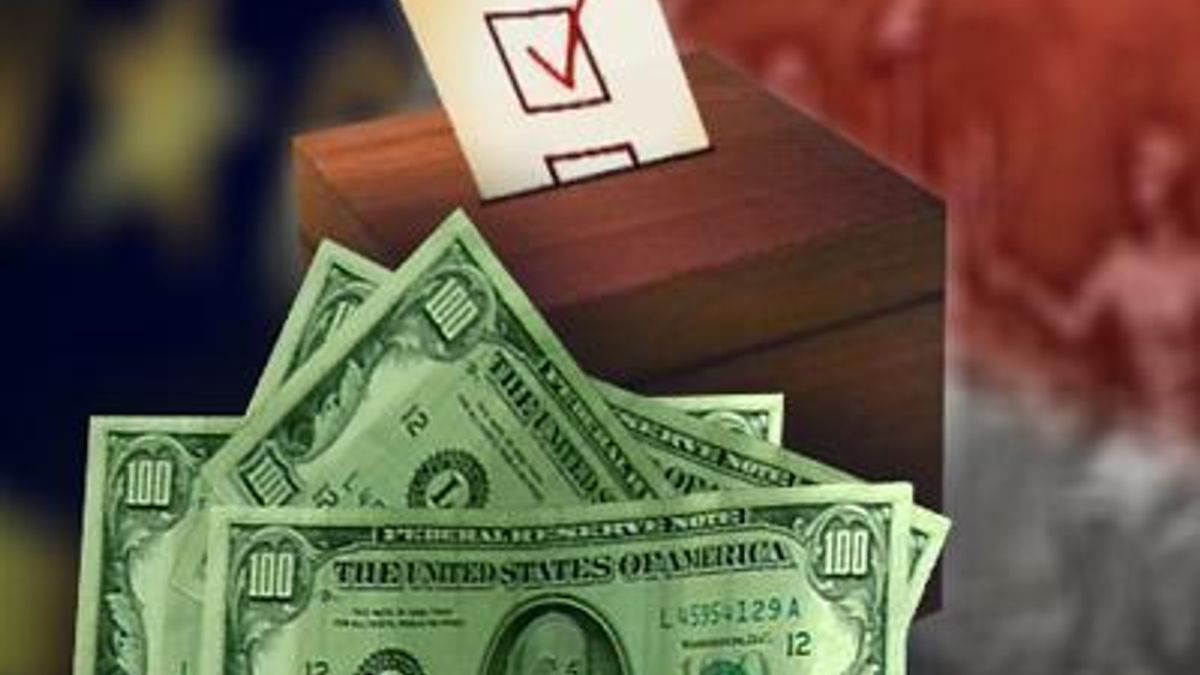
A new proposal from North Carolina Republican lawmakers could enact what state elections officials have described as a loophole that would give corporations outsize influence over state elections.
State law currently bans corporations and labor unions from giving money directly to political candidates. But they can give direct — and unlimited — funding to a type of federal political fundraising committee called a 527 organization, named after the part of the tax code that governs it.
Other WRAL Top Stories
The change being proposed by Republican lawmakers would allow those corporate-funded 527s to donate to state political parties here in North Carolina. Political parties can already receive unlimited donations, and they can also give unlimited amounts of money to their parties’ candidates. The proposal introduced Thursday would allow business and labor leaders to use political parties as a sort of middleman, to give money directly to their favored candidate.
Democratic critics say that would take influence away from regular people and hand it to wealthy people and corporations.
“Now you’re talking about dark money, that’s going to come in with no accountability whatsoever, and literally buy this election,” Sen. Jay Chaudhuri, D-Wake, said.
The State Board of Elections wasn’t aware of the proposed changes, a board spokesman said Thursday. When asked to provide any correspondence that related to the legal changes, the elections board sent WRAL a copy of a 2020 memo about the type of change being proposed in Thursday’s bill.
North Carolina Elections Director Karen Brinson Bell wrote in that memo that if this sort of contribution system were to be allowed, "there would be a significant loophole in North Carolina law."
Other correspondence with the elections board included a letter from the Democratic Governors Association claiming that such changes "would effectively gut the state’s corporate contribution ban and undermine existing contribution limits by creating a significant loophole through which excessive and impermissible funds can influence North Carolina elections.”
Bob Phillips, who leads the government watchdog group Common Cause North Carolina, said Thursday it's the kind of thing that makes people distrust their government.
"This is harmful to democracy because it turns people off, seeing big money flowing into our elections," he said.
GOP defends the changes
Republicans objected to the criticisms. Senate leader Phil Berger and House Speaker Tim Moore told reporters Thursday they saw the changes simply as a way to level the playing field.
It appears to boil down to a difference between how the Democratic Governors Association and the Republican Governors Association — two national 527 groups that take money from corporations, labor unions and others who can't give directly to candidates — handle their funds.
The DGA segregates its money, keeping its corporate and labor union donations separate from its other donations. It can therefore use its non-corporate account to send money to the North Carolina Democratic Party, which can then pass those funds along to individual candidates.
It appears the RGA does not go through that extra step of keeping its funds separate, which in part is why Republicans want to change the law — to allow it to pass along its money to the North Carolina Republican Party, even if that money comes from otherwise-banned sources.
"The ways the rules have been interpreted seem to give a balance in favor of the way the Democrats did it," Moore said.
He added: “What we’re seeking to do is level the playing field so that everyone plays by the same rules.”
'Money laundering scheme'
The proposal, included in a bill about public face-masks and penalties for protesters, passed the state Senate on Thursday without debate or explanation. The changes now go to the state House for a vote, which could come as early as next week.
Every Democrat in the state Senate skipped the vote or walked out in protest, refusing to vote on the bill. They later held a press conference outside the legislature, denouncing the changes.
Critics acknowledged the changes could hypothetically help any political party. But they alleged that since Republican lawmakers are pushing it, it seems to be an effort to help Republican candidates.
“This is a money laundering scheme for Mark Robinson, and you can quote me on that,” said Melissa Price Kromm, executive director of North Carolina For the People Action, referring to the Republican gubernatorial candidate.
Robinson is running against Democrat Josh Stein in the November race for governor. Neither campaign immediately responded to requests for comment.
Chaudhuri said it’s no coincidence the changes were introduced and passed almost immediately after Stein began airing his first ads of the campaign — especially since Robinson has yet to air any of his own ads.
“This has everything to do with changing the rules in the middle of a gubernatorial race,” he said. “And it’s not a surprise that this provision was introduced just two days after the ads on Mark Robinson, and his extreme abortion position, were starting to be run.”
The latest campaign finance records show Stein had raised $19.1 million as of February, with $12.7 million left to spend. Robinson had raised $10.7 million in that same period, with $4.5 million left to spend.