In December 2017, with less than 24 hours notice, North Carolina Gov. Roy Cooper boarded a plane to Japan for a series of secret talks. The Democrat, who was less than a year into the job, had a big mission: Convince executives of one of the world’s biggest car manufacturers to build their newest auto factory just outside Greensboro.
He failed. The Toyota Motor Corp. factory and its 3,800 jobs went to Alabama instead.
Other WRAL Top Stories
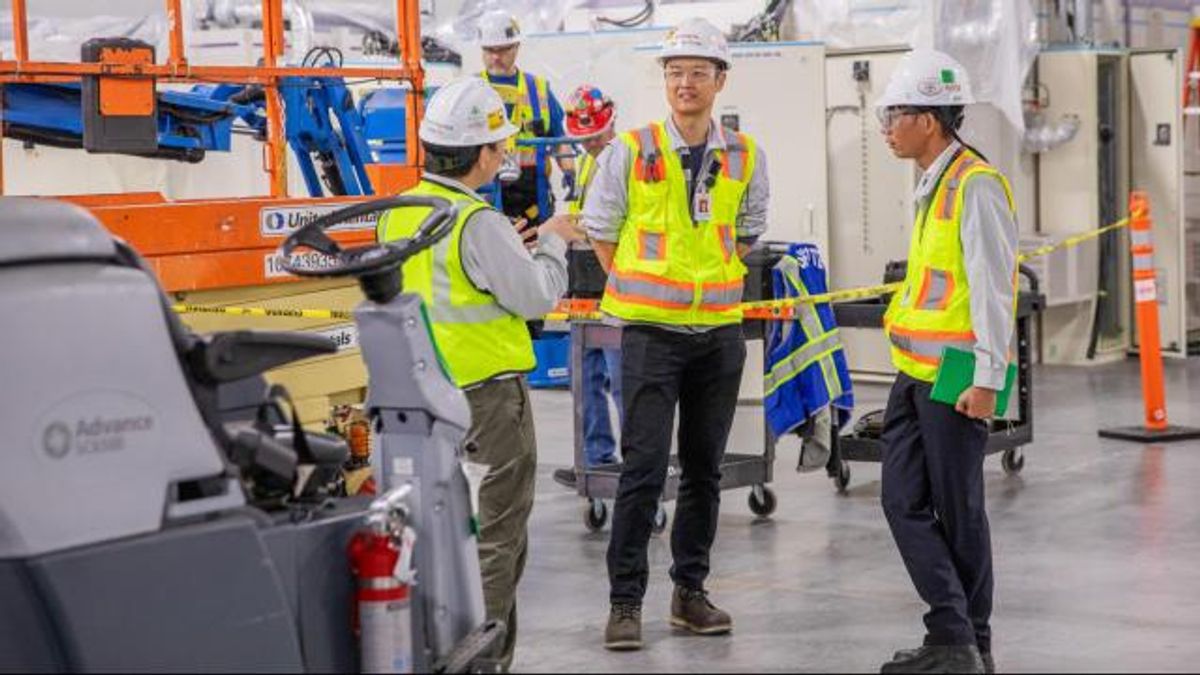
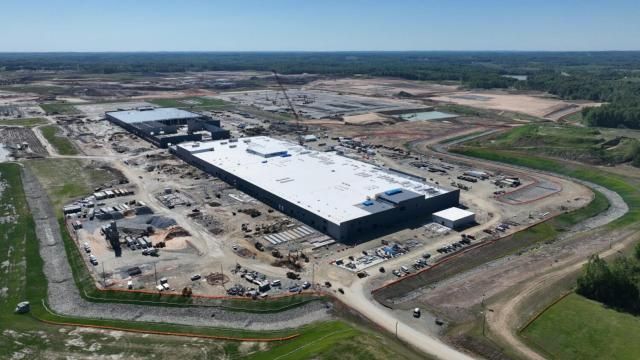
Last month Cooper was in Tokyo again, this time returning triumphant. Shortly after his trip, he announced that Toyota would add 3,000 jobs in the Triad, where the company is ramping up a new electric vehicle battery plant. The project, first announced in 2022 was originally expected to represent a $6 billion investment in the state, employing 2,100 people.
But now, the North Carolina plant will employ at least 5,100 new jobs once it opens in 2025, Toyota says, in what will be a $14 billion investment at the site — one of the biggest EV battery factories in the world.
“This was an instance where a window closed, but then a giant door opened,” Cooper said in an interview with WRAL. “I'm grateful we did not get that plant. Because what we've got now is so much bigger than that.”
The Toyota deal is part of a broader strategy. The governor is in charge of economic development efforts, and during Cooper’s two terms North Carolina has offered up to $3 billion in taxpayer-funded incentives aimed at bringing a specific industry to North Carolina: Clean energy manufacturing.
North Carolina has sought to reinvent its economy following the massive loss of textile and furniture manufacturing jobs over the years. Cooper said this push on clean energy accomplishes a one-two punch of fighting climate change while also replacing thousands of factory jobs North Carolina lost when those other industries left.
“That's how we attack the wealth divide,” he said. “That's how we get middle class families more secure. … We know that is where the market is going: Away from fossil fuels. So we're at the front end of a tremendous wave here on clean energy.”
In addition to the Toyota deal — and similar incentives for other clean energy companies, big and small — Cooper has also signed formal trade deals with the United Kingdom and Denmark, promising to work together on advancing clean energy research and manufacturing, and fighting climate change.
Denmark in particular gets the majority of its energy from wind power. And as PolitiFact NC has found, North Carolina is among the most promising states in the U.S. for offshore wind. On Monday Cooper also announced a new trade office in Taiwan — not explicitly related to clean energy, but focused on building ties with the island’s tech sector in general.
Economic development is one of the few ways Cooper can leave a stamp on the state. As the Republican Party has gathered power in North Carolina — gaining supermajorities in both chambers of the General Assembly, flipping the state Supreme Court to a GOP majority, and siphoning authority from the executive branch — Cooper has been left with little power.
He has turned to the bully pulpit in an effort to sway public opinion on issues such as public education and abortion rights, but his ability to block laws he opposes has been snuffed out. So his focus on clean energy is a rare example of the governor being able to implement his own vision for the future of the state.
It also could foreshadow Cooper’s plans for life after state office, and has at least grabbed some national attention: Soon after the latest Toyota announcement, Cooper was in Miami giving the keynote address to a major financial conference focused on bringing foreign investment into America.
Yet while job creation is the kind of thing politicians across the political spectrum tout, not everyone is convinced Cooper’s strategy is the right one.
Donald Bryson, who leads the conservative John Locke Foundation, said the governor’s focus on clean energy is a dangerous gamble with taxpayer money. The demand for electric vehicles is still low, he said, raising questions of whether factories for electric cars or EV batteries will be able to remain open.
“Governor Cooper’s economic development strategy is sort of ready-shoot-aim at this point,” Bryson said. “He’s so dead-set on electric cars and electric vehicles that he’s doing it at the expense of everything else.”
Some of the state’s incentives deals on the clean energy front — at least so far — include companies from Japan, Vietnam and India. There are also homegrown tech companies, Durham’s Wolfspeed and Charlotte’s Albermarle Corp.
- VinFast: $1.2 billion to build electric vehicles in Chatham County.
- Toyota: $900 million to build batteries for electric vehicles in Randolph County.
- Wolfspeed: $775 million to build semiconductors in Chatham County.
- Epsilon Advanced Materials: $34 million to build battery components in Brunswick County.
- Albermarle Corp.: $12.7 million for a battery research lab in Charlotte.
- Forza X1: $1.6 million to build electric boats in McDowell County.
The incentives money, which comes from a mix of local governments and the state, isn’t guaranteed. Companies have to hit targets for creating jobs that pay certain wages, as well as investing in physical plants or offices that will grow the property tax base of the places they’re moving into — many of which are more rural areas that have been struggling economically.
If the jobs don’t materialize as promised, the state can get its money back.
But beyond being a political embarrassment, a failed incentives deal also means lost opportunity: If a big site was tied up for years waiting for a development that never came, there’s no telling which other companies the state may have missed out on recruiting that would’ve been more successful.
And if an entire industry fails, then all the time and money spent training workers and building supply chains will have been for naught.
What it means for Cooper’s legacy
David McLennan, a Meredith College political science professor, noted that environmental groups criticized Cooper early in his tenure for not doing more to push renewable energy, such as by pressuring Duke Energy to transition away from coal and natural gas.
But those critiques have largely evaporated, as Cooper has signed executive orders focused on climate change and used his influence over economic development to bring clean energy manufacturing jobs to the state.
Former Gov. Jim Hunt is widely known as the education governor for his work boosting teachers and public schools — as governor and after he left office. McClennan said Cooper could possibly do the same in the energy arena.
“He might be positioning himself for a position in the Biden administration, assuming a Biden reelection, or wanting to lead a think tank on renewable energy investment,” McLennan said.
Cooper, who can’t run for reelection due to term limits, didn’t want to talk about his legacy or his plans for after the 2024 elections. “I don't even think about that,” he said.
He said he’s continuing to meet with companies about economic development deals, and he hopes to have more big jobs announcements before his term ends in January 2025.
“Really what I think about is what I can get done tomorrow, and the next day,” Cooper said. “And there's no question that we are laying the groundwork.”
A governor’s influence
Cooper won the governor’s office in 2016 on an economic development pitch of a different sort: Hammering then-Gov. Pat McCrory over his support of a controversial law that focused on which bathrooms transgender people could use and banned cities and counties from being able to enact policies such as local anti-discrimination rules or a higher minimum wage.
The law, known as HB2, caused companies to boycott and cancel expansion plans in the state.
And even though Cooper’s power as governor is limited — Republican lawmakers have targeted Cooper by further weakening what was already one of the least powerful executive branches in the nation — Cooper does remain in charge of the Commerce Department, which leads the state’s economic development efforts.
Gerald Cohen, chief economist for the Kenan Institute of Private Enterprise at UNC, said politicians do have the ability to affect the broader economy, just not as much as people usually tend to think. Companies make big decisions based on many factors: Government incentives, local tax laws, the skills local workers have and what quality of life an area offers, among other factors.
“I think a general rule is that governors and presidents both get more credit, and more blame, than they actually deserve,” Cohen said.
But the power they do have, he said, is the role Cooper has taken on: Using his status to get meetings with corporate executives, pitch them on North Carolina, and then take their feedback on what they want to see and try to turn that into change at the state level. He pointed to efforts under Cooper by the state’s community college system to create new programs to train workers for the anticipated new jobs in the clean energy field.
Cooper said those new training programs at the community colleges were a direct result of the meetings when Toyota told him they were passing over North Carolina for an auto factory but were interested in possibly building a battery plant — if the state could develop the proper workforce to support such a large and specialized factory.
Cohen, a former Wall Street fund manager and Obama administration official, said he thinks the clean energy industry is likely here to stay.
As for how Cooper’s legacy on it will be judged, he said, it’ll depend on how the companies do in the long run — as well as the bigger question of whether people think the decision to give billions of dollars to those companies to create new jobs in North Carolina was worth it, or if it should’ve gone to other priorities.
“You need to think of this in a dynamic sense,” he said. “‘Am I spending this billion dollars where I should? Or would it be better spent on schools, or some other type of funding?’”
Cooper says Biden deserves credit
The Cooper administration’s clean energy push hasn’t come without some help from the federal government.
Democratic President Joe Biden championed two massive spending projects upon taking office, the Bipartisan Infrastructure Law in 2021 and the Inflation Reduction Act in 2022. They include hundreds of billions of dollars on efforts to fight climate change, including promising $370 billion in subsidies for electric vehicles and other similar products that are made in America.
Financial Times reported that Toyota’s battery plant in Greensboro, as well as clean energy investments in other states by Honda, Bridgestone and Panasonic, were all spurred by that federal spending.
“That is even more incentive for clean energy companies to locate in the United States,” Cooper said of the Biden stimulus spending. “So we're getting, out of this, good-paying American jobs. And it's particularly great when they are North Carolina jobs.”
Time will tell if the incentives were worth it. Critics such as Bryson say it’s not something the government should be involved in at all.
“I’m not opposed to electric vehicles,” he said. “I’m opposed to subsidizing electric vehicles, which we’re doing with these incentives.”
And while Cooper pitches the jobs as a way to save the middle class and replace solid blue-collar jobs that dried up in the past decade or two, Bryson said that’s a tough pitch to make when North Carolina already has a tight labor market with low unemployment.
The credit for that, he said, ought to go to Republican lawmakers who in recent years have slashed the personal income tax rate, saving taxpayers billions of dollars in the process, and approved a plan to cut the corporate income tax to zero by 2030.
“It feels like there’s a political angle there,” he said of Cooper’s focus on clean energy incentives. “But I have no idea what his future aspirations might be.”