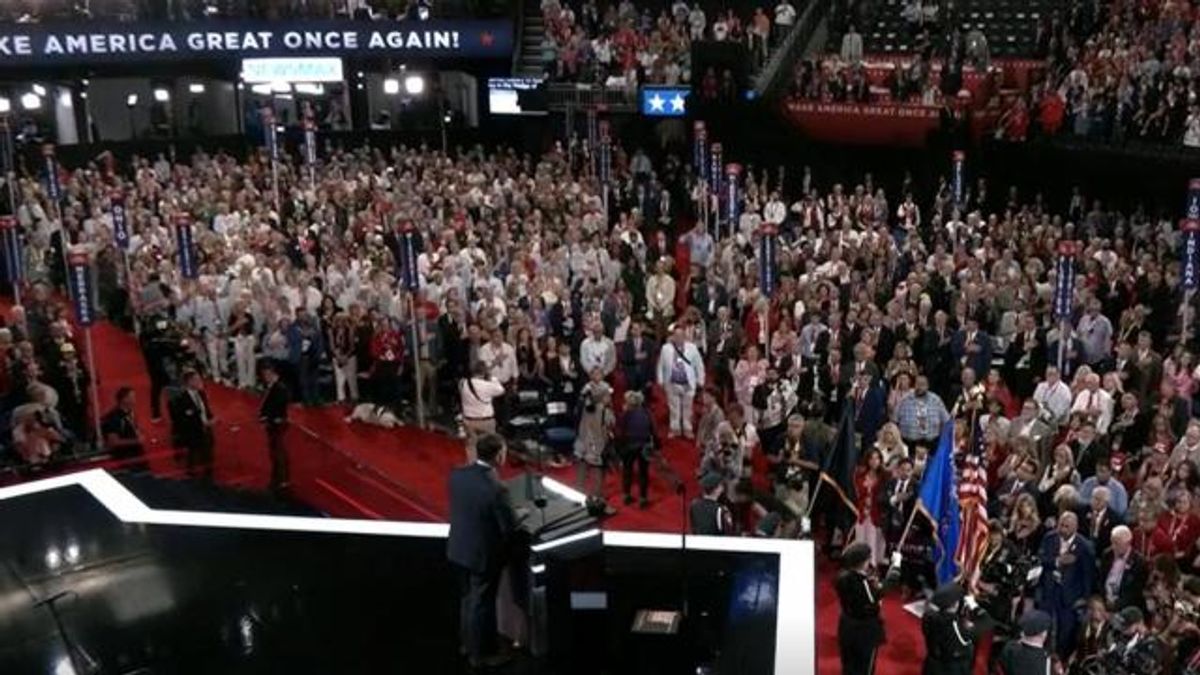
When Jarrod Lowery was a kid, he never could have imagined someone from the Robeson County community of Prospect — a town with fewer than 1,000 people — speaking at the Republican National Convention.
Robeson, which is just south of Fayetteville and east of Pinehurst, was a Democratic stronghold. Lowery’s grandmother, Louellen, was the only Republican he knew who was politically-active. Family friends “used to pick and say she was the only Republican in western Robeson County,” Lowery says.
Other WRAL Top Stories
And yet there Lowery was in Milwaukee on July 15, leading the nation’s Republican delegates in the Pledge of Allegiance on national television.
“Here I am, a Lumbee boy from Prospect, in front of 20,000 people and millions of people watching, doing something on the biggest stage that Republicans have every four years,” he said.
Lowery, 35, is in his first term as a member of the North Carolina House of Representatives. He’s still learning the ropes of state government and building relationships in Raleigh. But Lowery’s presence at the state Capitol represents a years-long effort by the GOP to court supporters from the Lumbee Tribe, and his role at the convention signifies Lowery’s growing importance to the state party.
The Lumbee — who are spread across Robeson, Hoke, Cumberland, and Scotland Counties — are the largest Native American tribe recognized by the federal government that doesn’t get any of the benefits or independence granted to every other recognized tribe. The tribe has about 55,000 members, enough to influence elections in a state with a history of close contests.
Unaffiliated voters are the biggest bloc of voters in North Carolina, followed by Democrats, who have a slight edge over Republicans. In 2020, President Joe Biden lost North Carolina to former President Donald Trump by just under 75,000 votes.
Like many rural voters, Lumbee members historically supported Democrats but started voting for Republicans in more recent years. The party noticed.
In 2020, former President Donald Trump held a rally in Lumberton 10 days before the election. In 2021, a recruiter for the North Carolina House Republicans called Lowery and asked him to run for state House the following year.
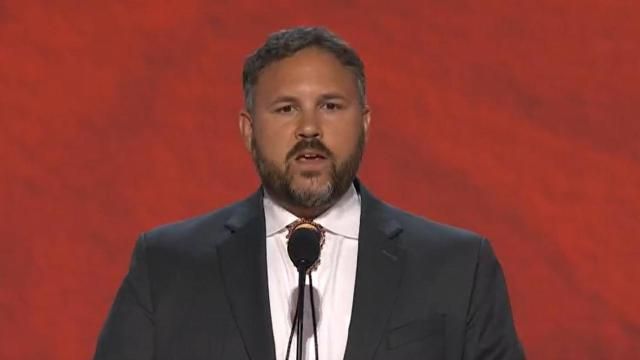
Lowery had an appealing résumé.
Lowery is a self-employed public relations consultant. He served six years in the Marine Corps and attended UNC-Pembroke. He then worked for former Gov. Pat McCrory and Insurance Commissioner Mike Causey, becoming a regional director of constituent services for both. He was also a member of the Lumbee Tribal Council and led his brother’s campaign in 2021 to become chairman of the Lumbee Tribe.
Lowery had run for state House in 2018 but lost to a popular incumbent. In 2022, the seat was open — and Republicans were giving Robeson County more attention. That January, the Republican National Committee opened an office on Main Street in Pembroke. Lowery won his race with 60% of the vote.
The RNC is now led by Michael Whatley, former chairman of the North Carolina Republican Party. A few months prior to the convention in Milwaukee, Lowery sent a text message to Whatley offering to help. “If there's any way I can assist or help you with the convention, I’m at your service,” Lowery told him.
Lowery had already planned to attend as an alternate delegate, and he assumed event organizers could use more volunteers on the ground — as ushers or errand-runners. But then, about three weeks prior to the event, RNC organizers emailed Lowery: Would he be willing to recite the pledge on stage?
The freshman legislator was shocked. Whatley was eager to help.
“Rep. Lowery is a leader in the Lumbee Tribe and the North Carolina Legislature,” Whatley told WRAL in a statement. “It was an honor to have him join us in Milwaukee for our historic convention and I look forward to working with him closely to deliver North Carolina for President Trump in November.”
A couple days after leading the pledge, Lowery participated in a forum about Native American issues hosted in Milwaukee by Republican U.S. Sen. Markwayne Mullin of Oklahoma.
Lowery said he feels a unique responsibility to raise awareness not only for the Lumbee Tribe but for American Indians throughout the state. North Carolina is one of 14 states that is home to more than 100,000 American Indians. The Tar Heel State has more American Indians than North Dakota and South Dakota combined, according to data from the U.S. Census Bureau.
“I'm the only American Indian in the General Assembly,” Lowery said. “I am one of the few Republican American Indians in any legislature across the country. And so, I want to do whatever I can to move or to continue to make Indian Country issues priorities to the Republican Party.”
Lowery’s Democratic predecessor, former N.C. Rep. Charles Graham, is also Lumbee. He ran for Congress in 2022 and lost. Democrats hope Eshonda Hooper can defeat Lowery in the upcoming election and the party can win back support in the region, said House Minority Leader Robert Reives, D-Chatham.
“It is incumbent on Democrats to go to every community across the state and give voters a compelling, affirmative argument for why voters should cast their ballot for us,” Reives said. “I am proud that we have candidates running in nearly every district who can bring that message directly to their friends and neighbors.”
Contacted about Lowery, Hooper said in an email that “Robeson County is already experiencing a lot of division and hate in our community,” so she did not want to offer any comment that would “cause more division.”
She said it’s important to note, though, that Lowery isn’t the only elected official who has sought to raise awareness of the Lumbee and fight for federal recognition.
“Robeson County has suffered from several hurricanes and floods and families being displaced,” Hooper said. “My prayers to God is that by me winning this election that I can help many of those families that are trying to survive.”
‘Personal to my people’
North Carolina’s top state lawmakers are already including Lowery in high-level discussions about some of their most controversial issues, such as casinos and gambling.
Republican legislators have considered allowing more casinos and legalizing slot machine-style games in the state. A proposal by House Speaker Tim Moore, R-Cleveland, would have allowed the Lumbee Tribe to own and run a casino — even if the tribe doesn’t get its long-sought federal recognition.
Moore brought Lowery into the discussions. “He understands very well the federal law when it comes to Indian gaming and how those laws work,” Moore told WRAL in an interview. “So he was able to talk about that, and I think he was able to talk about some of the economic development opportunities that would present themselves.”
Those efforts ultimately stalled. But Lowery appreciated the opportunity to be a liaison between lawmakers and the Lumbee Tribal Council.
“They wanted my thoughts on if this was something Lumbee people would want, or if it would help, or if it would be good for the region,” Lowery said, adding that he did think so. “And so I became part of the team that was advocating to my fellow caucus members saying, ‘Hey, this is why I support it. This is very personal to my people.”
His proudest accomplishment so far, though, is introducing the American Indians Graduating with Honors Act. The law allows members of state and federally-recognized tribes to wear “objects of cultural significance” during a public school graduation ceremony.
Across the nation, students of Native American heritage are regularlyreprimanded for trying to wear a feather on their graduation cap. Lowery said he had heard of similar squabbles in Robeson and surrounding counties too.
“It seemed like every time high school graduation comes around, you’ve got students that are getting feathers ripped off their cap, they're getting thrown out of line, or they're trying to sue the school board because they won't let them wear these feathers,” Lowery said.
“One year you can wear a feather, and then next year they can't wear a feather,” he said. “So there were a lot of folks who wanted something to be done.”
The bill received unanimous support in the legislature and Gov. Roy Cooper signed it into law in June 2023 — just in time for some graduation ceremonies. Lowery thinks the new law could offer extra incentive to graduate for American Indians, who in 2023 had the lowest graduation rate of any race or ethnicity in the state.
“The amount of people who were sending me pictures through Facebook or who had my number and were texting me about their child on stage wearing a feather — that was neat. That was pretty cool,” Lowery said.
Matt Mercer, a spokesman for the state Republican Party, said Lowery is liked in Robeson County because he’s effective.
“Jarrod Lowery is an up-and-coming leader in North Carolina and has a bright future because he has delivered for the district he represents in Robeson County,” Mercer said.
About a year after Lowery’s bill became law, his phone was buzzing again. This time, friends were texting about Lowery’s time on stage in Milwaukee.
“I had, in total, at least 100 texts, calls, Facebook messages, Facebook posts about me,” he said. “They took pictures of me and some were like, ‘Man, we got a guy from Robeson County. This guy's from Prospect. I went to school with this guy!”
Lowery also learned that more exposure can lead to more scrutiny. A stranger who watched Lowery lead the pledge messaged him on Facebook about his performance.
“I did get one person, one random person, found me on Facebook and sent me a message,” Lowery said.
The message said: “I hope you just forgot to not put your hand over your heart, because that's what you're supposed to do.”
The messenger was right. Pledge of Allegiance etiquette suggests that people place their right hand over their heart while saying the pledge — and Lowery forgot. But he had a good reason.
“I said, ‘Listen, as a former United States Marine, you're right,’” Lowery recalled with a laugh. Marines — even those who have left the service — stand at attention when the pledge is said or when the national anthem is played.
“But also as a Marine, I follow instructions,” he said. “They [stage directors] told me to walk out and put my hands on the podium,” Lowery said. “And that's what I did.”