A successful Triangle developer appears close to hatching plans for apartments, shops and hundreds of parking spaces in downtown Fuquay-Varina. And the town is considering development incentives to help get the project off the ground — part of a strategy to revitalize the town center through public-private partnerships.
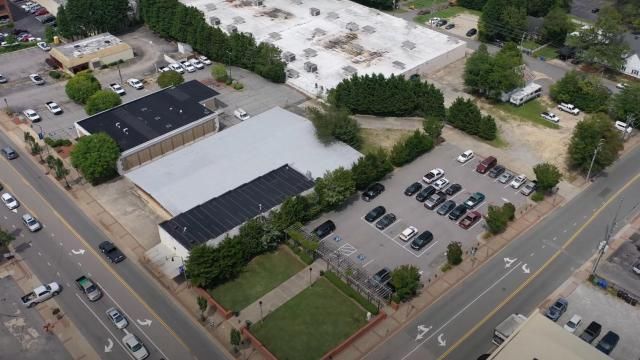
HMP Holdings is working on a deal to pay the fast-growing southwestern Wake County town $3.4 million for a 2.5-acre assemblage adjacent to the John W. Byrne Municipal Building, according to Fuquay-Varina officials.
Other WRAL Top Stories
HMP is managed by Gregg Sandreuter, the president of Raleigh-based Hamilton Merritt, state business registration records show. Sandreuter, who declined to comment, is the longtime Triangle developer behind ambitious downtown Raleigh mixed-use projects such as the Dawson on Morgan, West, SkyHouse Raleigh and 400H, a new Hillsborough Street tower.
The Fuquay-Varina project — on land that was once home to a police station, Hardee’s restaurant and Parker Furniture — could eventually include about 244 apartments, 20,000 square feet of ground-level retail space, and a 420-space parking deck, according to a public meeting notice. The town has been clearing the property to ready it for development. Planning ordinances would allow for a three- to five-story building on the site.
The town began accepting bids and proposals last year. It is considering a proposal to pay up to $3.3 million in economic development incentives for the project, which is expected to add about $70 million to the town and Wake County tax bases, the notice said. The town would pay the incentives from its general fund, assuming the proposal is approved by town commissioners.
The Fuquay-Varina Board of Commissioners scheduled a Nov. 19 public hearing about the sale of the town-owned assemblage — including at least seven parcels northeast of the intersection of East Academy and North Main streets, according to the notice.
The town purchased the properties for economic development purposes, paying roughly $1.75 million for the parcels over the course of about 25 years, Wake County property records show. The properties have an assessed tax value of about $3.5 million. Adjoining land owned by a private entity, Jones Fuquay Properties LLC, is also expected to be part of the project, the town notice said.
Benjamin Ho, a managing member of Jones Fuquay Properties and managing partner of Fuquay-Varina-based commercial real estate firm High House Capital, declined to comment.
Timing and other details about the project weren’t immediately available. Susan Weis, a spokesperson for the town, also declined to comment. Details about economic development deals are often exempt from open records laws, and such matters are often only discussed in closed sessions.
Fuquay-Varina is one of the state’s fastest-growing municipalities. Its population has more than doubled since 2010, growing to roughly 44,000 people, according to 2023 Census estimates. The town, like many smaller Wake County municipalities, has become a magnet for families who want to live in the county but may otherwise be priced out of more established areas, such as Raleigh and Cary. Fuquay-Varina is also expected to benefit from additional growth with the completion of the N.C. 540 Outer Loop, as well as an explosion of biotechnology and pharmaceutical jobs planned for nearby Johnston County.
Downtown focus
Fuquay-Varina officials have invested heavily in the downtown area in recent years, pumping money into facade improvement grants, streetscape improvements and infrastructure upgrades. They’ve made dense, pedestrian-friendly development a priority in an effort to strengthen the town’s core to serve its growing population. Town officials have used economic incentives to spur ambitious projects that promise new jobs, provided developers meet investment targets.
“The town board has been very proactive and very adamant about identifying developers and business owners that want to be part of the Fuquay-Varina fabric, and working with them in that true public-private partnership to make that happen,” Jim Seymour, the town’s assistant city manager, told WRAL on Wednesday.
Seymour, who declined to discuss specifics of the Town Hall project beyond what was in the public notice, says town incentives are focused on helping lure industry, services or amenities that will strengthen the town’s core, making it a magnet for residents and boost for existing businesses. The public-private partnerships also give the town a little more say in how the area develops.
The town approved up to $203,250 in development incentives for Aviator Brewing, which planned to spend at least $4 million to relocate and expand its manufacturing and distribution facility to 609 North Street, a project expected to create at least 75 new jobs and feature a concert venue, distillery, restaurant and bar.
In 2021, CCL Label Inc., a unit of Massachusetts-based CCL Industries, said it would build a $33.8 million, 110,000-square-foot plant and create 150 full-time jobs in the town. The company bought the site from the town, which had purchased the site with the hopes of attracting a major employer. CCL, which focuses on specialty packaging and labeling, said it chose the town because of its proximity to customers in the pharmaceutical and medical device production industry. The company was eligible for $750,000 in economic development funding.
In April, the town announced plans by Hilton to build one of its Tru-branded hotels. The $14 million, 91-room project is eligible for up to $350,000 of economic development funding assistance, provided it meets investment and hiring targets. The project filled a need for hotel rooms in the town — something a 2003 market study identified as a priority, the town said.
The project near Town Hall, meanwhile, would enable hundreds of people to park downtown — another strategic need identified by town planners.
The incentives, Seymour said, can help lure developers or businesses to the town, or perhaps keep them from investing in other nearby communities that are experiencing the same rapid growth and offering similar financial perks — including towns in Harnett or Johnston counties, or other towns in Wake.
“We are in a very competitive market, and our goal is to get that unmet amenity that we currently don't have but our residents and businesses are telling us they want in the community,” Seymour said. “So as an inducement to get that high-end retailer or commercial tenant or business, economic development incentives can be used as that tool to leverage that.”