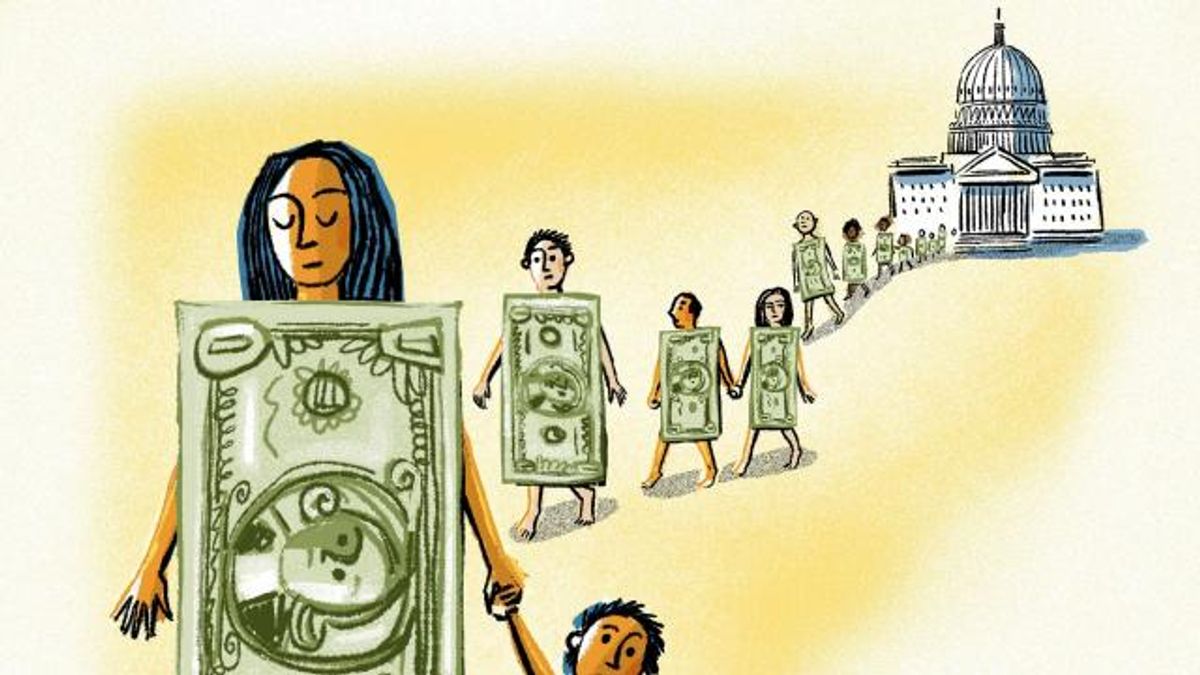
A second round of stimulus payments is included in a coronavirus relief package and spending bill approved late Monday, Dec. 21. President Trump signed the bill late Sunday, Dec. 27.
The second package includes $600 direct payment checks to many Americans, but experts say it will take at least two weeks for the Treasury to get cash into individuals' bank accounts after legislation is signed.
Other WRAL Top Stories
Treasury Secretary Steven Mnuchin told CNBC that he expected the first payments to go out before the end of the year. But it will be awhile for all eligible people to receive their money.
"The timing could be more challenging this time, but the IRS could likely begin to get the money out in January," said Howard Gleckman, a senior fellow at the Urban-Brookings Tax Policy Center.
Under the CARES Act passed in March at the start of the pandemic, payments began landing via direct deposit about two weeks after that legislation passed. But those who received their payments by another method often had to wait much longer.
In March, Congress provided individuals with $1,200 direct payments and couples with $2,400 plus $500 per child under the more than $2 trillion CARES Act. Those payments started phasing out for singles who earn more than $75,000 a year and those earning more than $99,000 did not receive anything. The income thresholds were doubled for couples.
The second plan has smaller payments for individuals -- half of the March plan -- but slightly higher payments of $600 for each dependent child up to age 17. Reduced checks will go out to individuals making up to $87,000 a year (down from $99,000 in the spring).
Reduced checks, on a sliding scale, will go out to married couples who earn up to $174,000. Married couples also will receive an additional $600 for every child under 17.
Individuals who file as a “head of household” -- usually single parents with children -- are eligible for a $600 check if they have an adjusted gross income up to $112,500 a year. They also will receive an additional $600 per child under 17. Reduced checks, also on a sliding scale, are available for heads of household earning up to $124,500 annually.