Delays and funding cuts within state and federal governments are raising concerns about North Carolina’s ability to respond to hurricanes or other natural disasters in the near future.
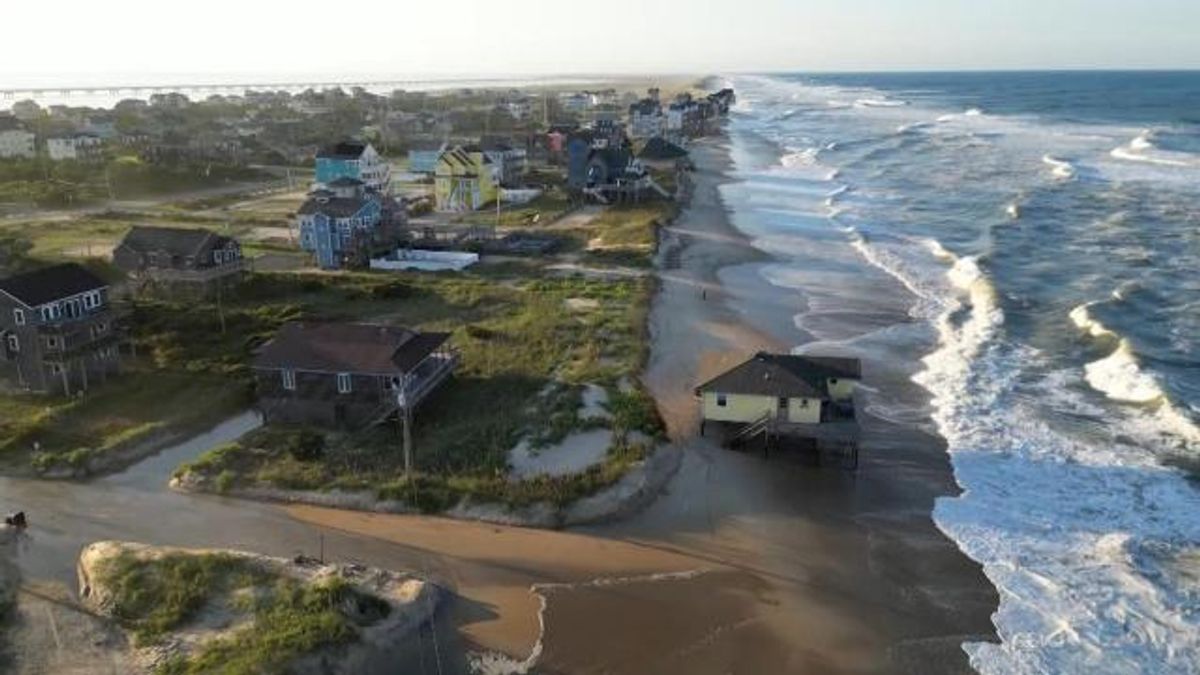
Hurricane Erin, which turned away from the state Thursday after causing storm surges on the coast, wasn’t as bad as it could’ve been. And had it been worse, the state would’ve been prepared to handle it, Gov. Josh Stein told reporters Wednesday during an emergency briefing.
Other WRAL Top Stories
Stein, however, acknowledged that longer-term guarantees are harder to make given current political realities.
“These guys have enough money in their accounts to respond to [Erin],”Stein said, gesturing to the leaders of the Highway Patrol, National Guard and the state’s departments of transportation, emergency management and public safety who were standing on stage behind him. “Clearly, we need to engage with the General Assembly to make sure that, going forward, we have adequate resources to respond to storms.”
State lawmakers in Raleigh haven’t come to an agreement on a new budget this year, and there’s no indication that a deal will be made soon. Among other consequences, that means the state’s emergency fund hasn’t been replenished as intended ahead of the 2025 hurricane season.
As of late last week, before Erin blew through, the state had just under $110 million left in a disaster-specific savings reserve — down from $720 million in January, due to spending on relief tied to Hurricane Helene, which ravaged the western part of the state almost a year ago. The state also has $3.6 billion in a broader savings account that can be used for many reasons. One dispute between lawmakers in the ongoing budget debate is how exactly to balance Helene relief with setting aside money in savings for future disasters.
And in the federal government, the Department of Homeland Security is lagging months behind in handing out the normal round of disaster preparedness grants it gives out each year, WRAL reported Tuesday. FEMA has also lagged in approving Hurricane Helene relief aid, until this week, when $96 million worth of aid was sent to western North Carolina.
On the disaster preparedness grants, it’s unclear if DHS was originally planning to hand out the funding at all, as Republican President Donald Trump has sought to cut spending. Trump has targeted other federal grants for elimination and has pushed out thousands of government workers, including more than 200 at FEMA and another 600 at the National Weather Service. Some are being rehired.
WRAL obtained records showing that Stein wrote to DHS Secretary Kristi Noem in July, asking her why the application process for those disaster preparedness grants hadn’t yet begun.
Normally, Stein told Noem, the applications would’ve opened in March and the money would be sent out in July. But with the process not yet open by July, Stein questioned whether the money would be made available at all.
There’s no record that Noem responded to Stein’s letter. However, six days later, DHS announced it was opening the applications for those disaster preparedness grants.
Last year, under Democratic President Joe Biden, North Carolina received $13 million from that program to help with hiring emergency responders, providing training, buying new equipment and running public awareness campaigns during the 2024 hurricane season.
Ahead of Erin’s brush past the coast, state emergency officials were in contact every day with Federal Emergency Management Agency officials, said Will Ray, North Carolina’s emergency management director. He indicated that due to the relatively minor impact from Erin, the response would likely fall mostly on the state and local governments, with limited federal involvement. But he added that that doesn’t mean FEMA is completely cut off from what’s happening on the ground here in North Carolina.
“We actually have a small team from FEMA, across the different parts of their agency, that are embedded here with our team every single day,” Ray said. “We work alongside them. So they are here daily working with us. We also have some specialists from the National Hurricane Center that are also embedded with our weather team day to day.”
But while state officials are pleased to have FEMA workers embedded here on the ground, there have been other frustrations with the pace at which money — specifically for Helene recovery — has trickled into North Carolina.
Records obtained by WRAL show that when Stein wrote to Noem in July asking about the grants, he also asked why she hadn’t signed off on more than $200 million in requests for Helene aid. He then wrote her a followup letter in August saying that the state’s pile of pending requests had since grown to nearly $300 million.
Much of the money in question had already been approved by FEMA. But Noem has instituted a new policy that she must personally approve nearly every disbursement before it can be sent out. The policy has created backlogs in the agencies that DHS oversees, including FEMA, CNN reported.
After Stein sent that second letter, Noem signed off on some of North Carolina’s $281 million in pending requests. On Tuesday, WRAL reported, she allowed $83 million to be released. And by Thursday, a Noem deputy said in a statement, that number had grown to $96 million.
“Under President Trump and Secretary Noem’s leadership, FEMA is moving faster than ever before to get Americans the relief they need,” DHS Assistant Secretary Tricia McLaughlin wrote. “This move to continue supporting North Carolina victims of Hurricane Helene is a testament to that fact.”
Not everyone agrees that FEMA is moving quickly under Trump and Noem. Stein told reporters Wednesday that he’s grateful for the money the federal government has now allowed to go to North Carolina as of this week, but that “it has taken longer than usual.”
In Stein’s August letter to Noem, he noted that FEMA had previously been sending North Carolina an average of $40 million a month for Helene recovery — but that the pace of funding had recently slowed to just $6.5 million a month.
FEMA has not responded to WRAL’s requests for comment this week on the funding for Helene recovery and Stein’s allegations about the delays.