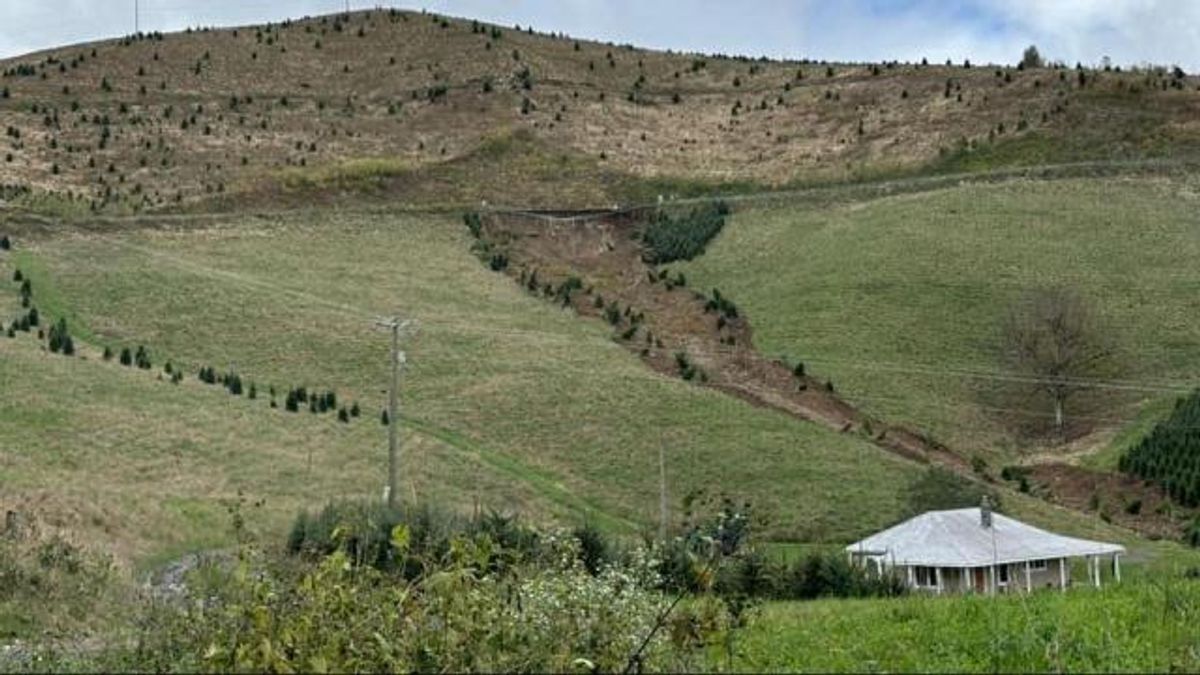
Helene's direct impact on North Carolina was felt Friday, September 27. In the days before that, a predecessor rain event (PRE) dumped torrential rain on the mountains.
As a result, more than 400 landslides/mudslides have been reported by the United States Geological Survey (USGS). Nearly 300 of these have impacted rivers, roads or structures.
Other WRAL Top Stories
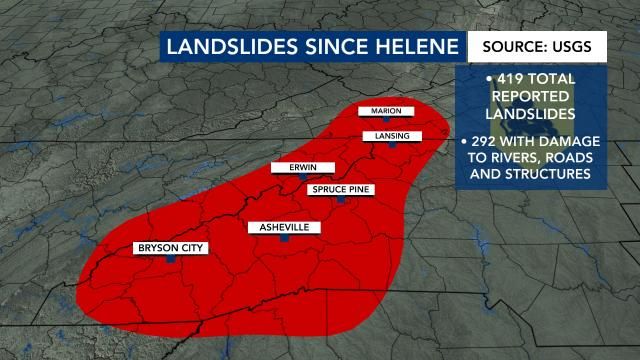
It seems pretty obvious that the force of gravity would play a big role on the formation of landslides/mudslides, but heavy rain events like Helene and its predecessor are the reason for how widespread these have become.
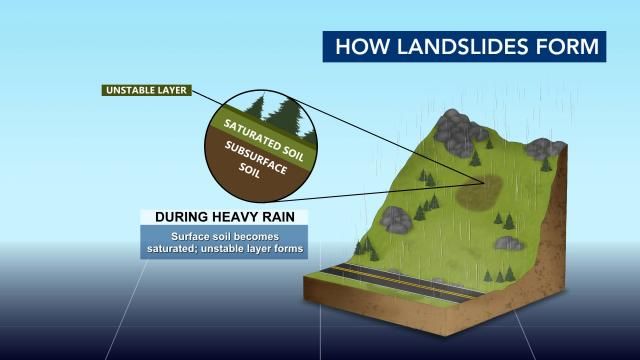
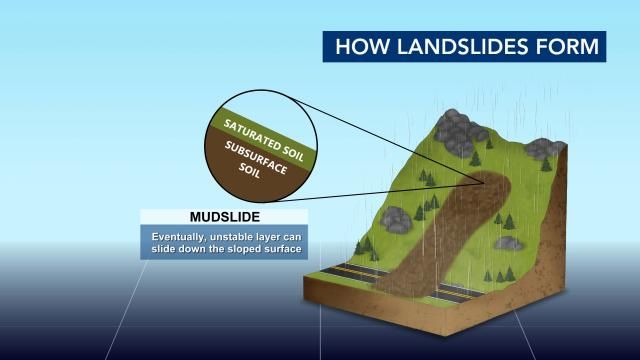
During heavy rain, the soil beneath the surface (which is usually compact) becomes unstable and soft.
This softening, along with gravity, allows the land and mud to slide downward.
As the threat for landslides and mudslides continues, even days after Helene, there is some good news toward the recovery efforts.
The weather pattern through mid-October is drier-than-average for areas including Western North Carolina.
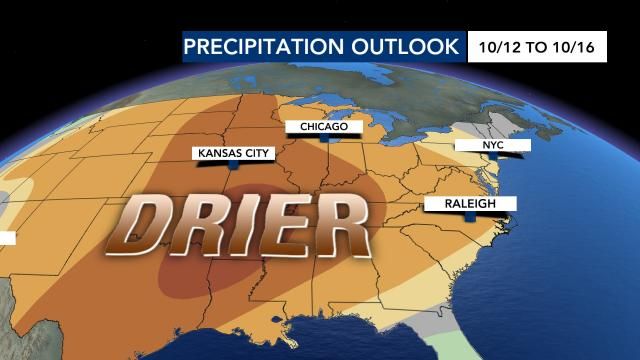
Relief and recovery efforts will still take much longer than that, but any break in the action is beneficial toward bouncing back from this tragic storm.