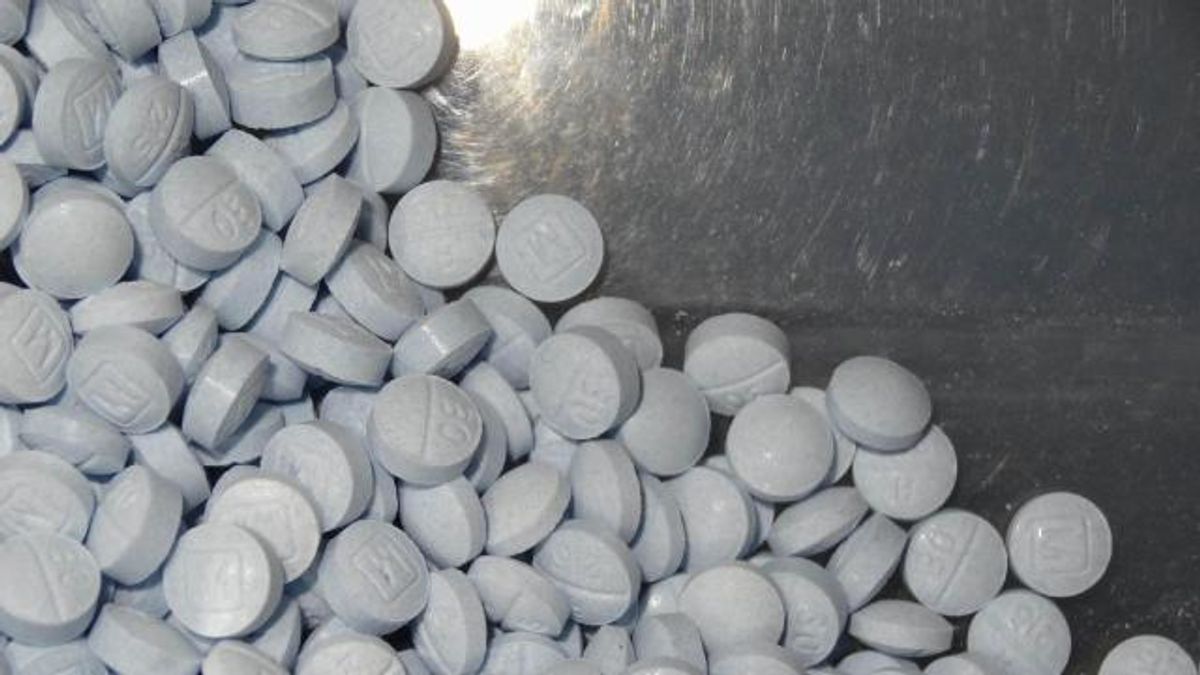
The first payments in a $26 billion national opioid settlement will start flowing to North Carolina counties in the next two months, part of a settlement expected to provide 18 years of funding for addiction treatment programs with the spending primarily directed by local governments in North Carolina's 100 counties.
The money comes from a multi-state lawsuit against Johnson & Johnson and various drug distributors that were sued by states and local governments across the country and accused of flooding the nation with pain pills that fueled addictions and overdose deaths. The settlement was negotiated over three years and is the second-largest multi-state agreement of its kind in U.S. history, behind the 1998 settlement with Tobacco companies.
Other WRAL Top Stories
North Carolina's portion is $750 million. The state will direct 15% of that spending, with local governments in charge of the rest. Attorney General Josh Stein, whose office was heavily involved in settlement negotiations, has traveled the state in recent days discussing spending plans with local leaders.
“We want this money to mean something," Stein told WRAL’s “On the Record,” which first aired Saturday. "To actually help people change the direction of their lives."
A separate settlement with McKinsey & Company, a consulting firm that advised drug companies, totaled $573 nationally, and North Carolina expects to receive nearly $19 million. Other settlements may following, including one with Purdue Pharma, which has been delayed by bankruptcy proceedings.
The coming funding has bred hope, anticipation and quarrel. North Carolina Health News, a nonprofit that covers state health care, reported last month on a conflict between medical experts and faith-based groups. The medical experts are advocating for programs that use medication, such as methadone and buprenorphine, to knock back opioid cravings. The faith-based groups demand abstinence-only programs.
Some groups that offer residential programs and counseling to people struggling with addiction won't admit patients who are taking drug-replacement therapy medications.
“The old school recovery advocates have relied heavily on an abstinence-based model," Taylor Knopf, a North Carolina Health News reporter who has written extensively on addiction, told “On the Record.” "In many situations people need both the medications and recovery supports to give them the best chance at success in recovery.
“So when we discriminate against people who are using [Federal Drug Administration]-approved medications … then they don’t get the housing supports, the employment supports, the coping and counseling skills that they need.”
Knopf reported last month that former U.S. Rep. Robin Hayes, R-N.C., who pleaded guilty in 2019 of lying to the FBI as part of a bribery scheme, has formed a group called "Bridge to 100," which aims to connect faith-based rehabilitation centers to grant funding in all 100 North Carolina Counties. Hayes is working on the plan with Daniel Williford, who was convicted of a multi-million dollar Ponzi scheme and is still serving time in federal prison, Knopf reported
“Everybody deserves another chance," Hayes told North Carolina Health News last month.
An attempt by WRAL to reach Hayes for comment was not successful. The Bridge to 100 website says the nonprofit “does not raise money, charge for services or expect any portion of grant money we help to secure.”
Stein said North Carolina has laid out strong rules to govern spending with "very clear elements of both transparency and accountability.”
“Once [local governments] make the decision on how they’re going to spend their money … they have to tell the public who they’re giving the money to, how much they’re giving to that organization," Stein said. "And, this is really important, it has to show what the outcomes were.”
The state’s initial tracking efforts have drawn praise. Christine Minhee, a Seattle lawyer who created an opioid settlement tracker, told Knopf that other states should emulate North Carolina’s settlement dashboard.
Opioid overdoses dipped in 2019 for the first time in years, but they shot up again during the pandemic. State Department of Health and Human Services statistics showed an all-time high for overdose deaths last year, with 3,304. That’s about 34 people out of every 100,000 in the state. Some counties have seen overdose death rates higher than 80 per 100,000.
Valinda Barefoot lost her son, Josh, to an overdose in 2017. He was 24, and she said that what started as prescribed pain killer use after a car accident evolved into buying pills off the street. Eventually Josh Barefoot took a deadly dose of heroin laced with other substances, she said.
“He went to rehab for 45 days,” Valinda Barefoot said. “When he returned home he was good for 28 days. And after that time he met the person who had been supplying him the pills and started using again.”
Barefoot urged parents to talk to their children about the dangers of drugs, and to push back if a doctor prescribes opioids for pain to a young person.
"Stay away," she said.
Stein said the money in this settlement won't be enough to solve the problem. But he counseled hope.
“We can’t allow ourselves to be lost in despair," he said. "Because we know that strategies can be effective and make a difference. So what we have to focus on is maximizing the impact.”
WRAL Investigative Data Reporter Ali Ingersoll contributed to this report.