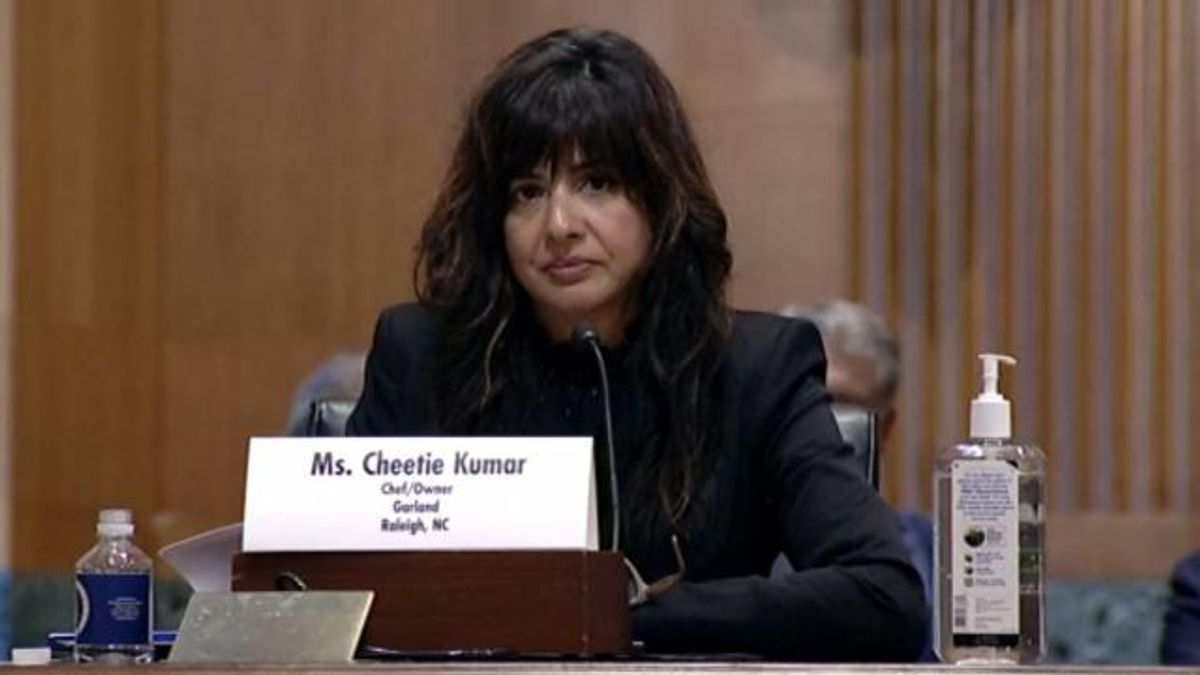
The owner of a Raleigh restaurant spoke Wednesday afternoon before U.S. senators about the importance of helping establishments devastated by the COVID-19 pandemic, supply-chain disruptions and rising inflation.
Garland restaurant owner Cheetie Kumar explained how she feels it is important to replenish the Restaurant Revitalization Fund (RRF).
Other WRAL Top Stories
“I would be remiss if I testified before this committee and did not advocate for refilling that fund to take care of the 177,000 restaurants who applied and did not receive a grant,” Kumar wrote in a prepared statement. “They desperately need help, and the Congress could ensure the success of a generation of independent restaurants by providing the money to fund all the outstanding grant applications.”
On Wednesday afternoon, Kumar spoke before the U.S. Senate Committee on Small Business. Three others spoke before the committee, including Virginia-based restaurant owner Jason Lam, MForesight executive director Dr. Sridhar Kota and Hermitage Foundation research fellow Joel Griffith.
Lam, however, disagreed with Kumar on how Congress can best help struggling restaurants and the economy at large.
"Throwing money at the challenges we face like the RFF is like putting a Band-Aid on a wound that needs stitches," Lam said. "It will stop the bleeding, but it doesn't fix the issue. You're still going to bleed out in the end.
Lam said he did not apply for the RFF.
"Spending billions of taxpayer dollars is not the answer," Lam said before senators. "Giving grants to these restaurants is not the answer.
"I want you to look my kids in the face and tell them that they're not going to be responsible for paying that back. They will."
Lam said he needs the federal government's help with the supply-chain issues.
Specifically, Kumar thanked the committee and Sen. Ben Cardin, D-Maryland.
“You have given us a lifeline to survive in the Restaurant Revitalization Fund (RRF), and we are eternally grateful,” Kumar wrote.
The American Rescue Plan Act established the RRF to provide funding to help restaurants and other eligible businesses keep their doors open. The program provided restaurant funding equal to their pandemic-related revenue loss up to $10 million per business and no more than $5 million per physical location.
Cardin said more than 100,000 restaurants received RFF funding.
Recipients of the RFF are not required to repay the funding if it meets the list of allowable use of funds, which includes:
- Business payroll costs (including sick leave)
- Payments on any business mortgage obligation
- Business rent payments (this does not include prepayment of rent)
- Business debt service, both principal and interest (this does not include any prepayment of principal or interest)
- Business utility payments
- Business maintenance expenses
- Construction of outdoor seating
- Business supplies (including protective equipment and cleaning materials)
- Business food and beverage expenses (including raw materials)
- Covered supplier costs
- Business operating expenses
Restaurants that received funding must use it no later than March 11, 2023.
“Many of my friends and colleagues are hanging on by a thread and have taken on crushing personal debt as they fight against joining the growing list of closures,” Kumar wrote.
Kumar said more than 80% of restaurants that did not get the grant say they are on the verge of closing.
Capital Club 16 owner and chef Jake Wolf is among those that did not receive the RFF. He said the federal funding would have helped his business, especially with the rising cost to prepare food.
“It was really big because we were really counting on that to move forward to help with expanding labor costs and food costs,” Wolf said. “We are having a tough time getting some of the food for our menus."
Kumar said Garland adapts to supply chain issues every day.
“We look for less expensive cuts of meat with great flavor and potential to be featured in dishes,” Kumar said.