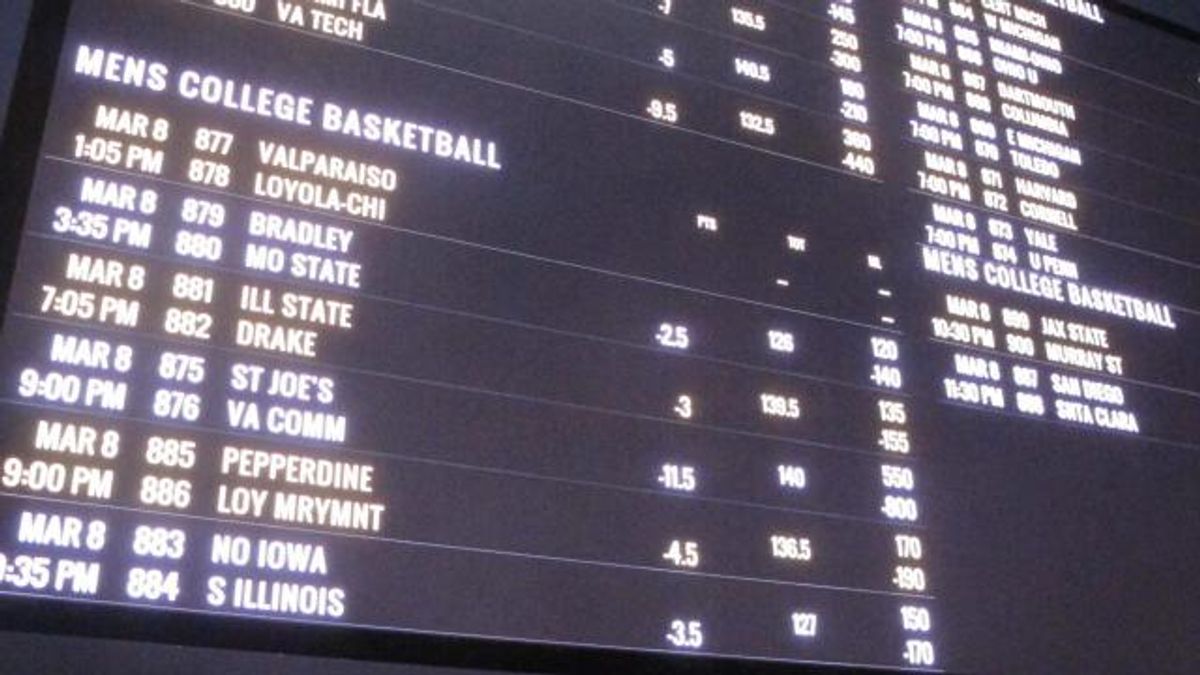
After months on hold, a bill that would legalize and tax sports gambling in North Carolina is moving again, taking its first tentative step through the House on Thursday.
But even supporters don't expect it to become law this year.
Other WRAL Top Stories
It's unclear whether Senate Bill 688, which cleared the Senate three months ago, can even pass the House, where it faces stiff opposition from socially conservative Republicans as well as some Democratic critics.
Rep. Jason Saine, R-Lincoln, assured members of the House Commerce committee that the bill isn't being fast-tracked by House leadership. The intent, he said, "is to make sure that this bill and this issue is before you so that you have something to think about" over the upcoming holiday break.
Saine said he doesn't bet on sports, but he has friends who do. He told the committee he asked one friend how he did it, since it's currently illegal in North Carolina, and the friend replied that he "has a guy" who takes his bets on a clandestine website.
"Opponents claim that it's going to drastically expand gambling in North Carolina. That's just false," Saine said. "There's already an estimated 2 million people in North Carolina betting on sports through illegal channels like local bookies, like I told you, and offshore sports books."
Saine claimed many of the offshore sites are run by organized crime groups, who he said use the profits for criminal activity like drug and human trafficking, Legalizing sports gambling in the state through licensed, regulated vendors, he argued, would reduce the money going to those illicit sites.
At least 30 other states have legalized sports betting since 2018, when the U.S. Supreme Court struck down a federal law that disallowed it in most states.
North Carolina law bans gambling on games of chance like video poker or craps, with the exception of the state lottery. However, Rep. Jon Hardister, R-Guilford, told the committee he doesn’t think that should even apply to sports betting because it does require skill.
"There's actual data and statistics and analytics that can go into this kind of thing," Hardister said. "It's not like you just roll the dice and you hope you're going to roll number seven, or [you] spin the wheel."
The bill would legalize sports gambling for people 21 and over. It would be regulated by the state lottery commission, which would issue licenses to vendors to operate in the state in return for application and renewal fees as high as half a million dollars. Operators’ profits would also be taxed at 8 percent.
Supporters say it could bring in a lot of new revenue for the state budget. Rep. Jay Adams, R-Catawba, doesn't find that arguement persuasive.
"What you see is not always what you get when it comes to gambling," Adams warned, recalling how the state's education lottery "was going to cure all of our education ills, and it's a $3 billion economic activity. But once you pay everything out, you wind up with $700 million."
"However you characterize this, it is a wild expansion of gambling in North Carolina," said Rep. Deb Butler, D-New Hanover, who voted against the bill in committee. "It is clear to me that it is going to affect those who can arguably least afford it the most."
"I'm not convinced, as Chairman Saine said, that everybody's got a guy. I don't have a guy. I don't know who any – I don't know people who have guys," Butler added. "So, access to this is going to be broadly, broadly expanded, and that's a fact."
The bill passed House Commerce on a 12-4 vote. It still has to clear the House Judiciary and House Finance committees, as well as House Rules, before it makes it to the floor for a vote. Saine told WRAL News he wouldn't expect to that to happen before next spring's short session.
"There are passions on both sides. People believe what they believe, for whatever reason they believe it, but we want to make sure that they get an opportunity to review the bill [and] see what the implications are," he said.