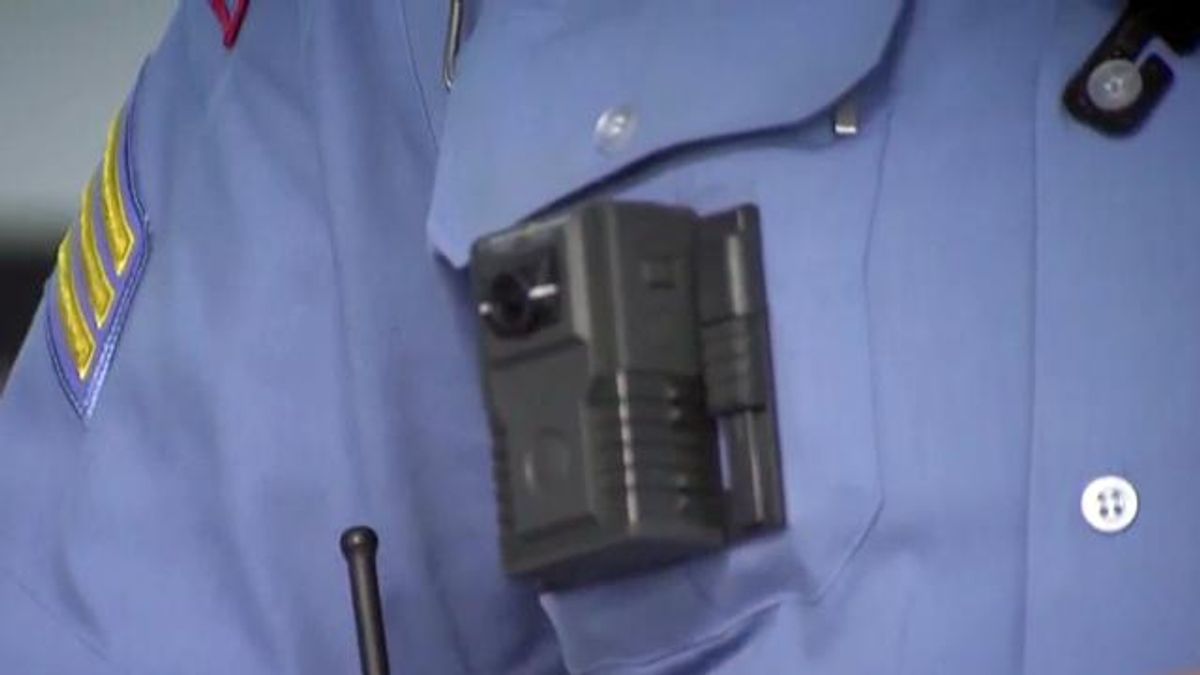
State lawmakers on Wednesday dropped what was once a consensus reform on the release of police body-worn camera footage, putting its future in doubt for this legislative session.
Current law requires a court order to release footage.
Other WRAL Top Stories
Senate Bill 300, a wide-ranging bill with a number of policing reforms in it, would have changed that for the families of people shot by police. Instead of a family having to ask a judge to release footage, law enforcement would release it to the family on request, unless the agency convinced a judge to keep it secret.
The bill essentially flipped the process, putting the onus on law enforcement to block release instead of requiring the family to file for it in court.
The bill passed the state Senate unanimously in May. But when it began its journey through the House on Wednesday, the body camera language had morphed. Sen. Danny Britt, R-Robeson, the bill's primary sponsor, said law enforcement had second thoughts and asked for changes, which were written into the bill late Tuesday afternoon.
The new language would require a court appearance by the family or their attorney for any body camera footage release, something a number of House Judiciary committee Democrats objected to when the new bill was unveiled.
Dawn Blagrove, an attorney and executive director for racial justice advocacy group Emancipate NC, told committee members that the new language made the bill "inexplicably worse."
“It takes a monumental step backwards for transparency in law enforcement and for victims and families," Blagrove told committee members.
After some back and forth, the committee voted to simply remove the bill's body camera section altogether, which would leave current state law intact.
It's entirely possible the Senate's preferred language will be added back to the bill as it moves through what can be a lengthy and circuitous process, but that's far from guaranteed. Language that once had sign-off from law enforcement, as well as unanimous backing in the state Senate, has apparently become controversial.
A number of other reforms in the bill, including new databases logging complaints against police officers and a new duty to intervene if an officer sees other law enforcement use excessive force, remain intact in the bill.