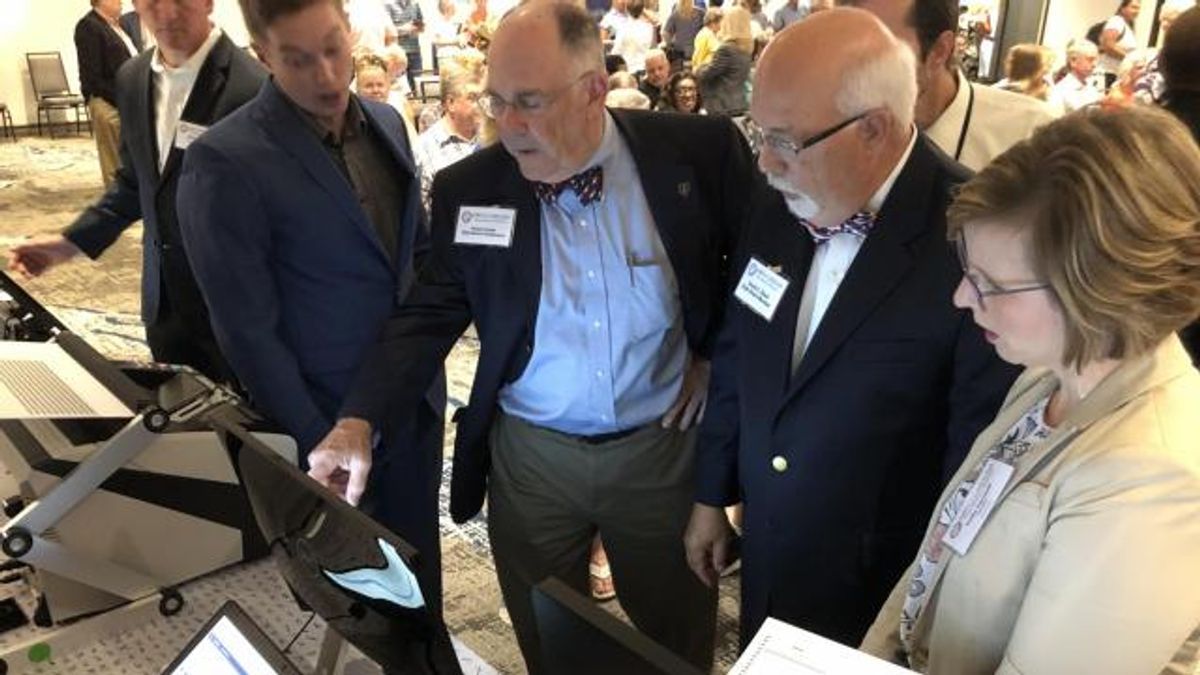
Activists and computer scientists have raised questions about the process used to certify new voting machines in North Carolina that, for weeks, the State Board of Elections hasn’t answered.
The board's chairman and its executive director say answers are coming and that staff plan to bring detailed information to the board at its meeting next Tuesday. But at least two board members, along with a string of academics and activists, are concerned that the state skipped steps as it certified three new election systems.
Other WRAL Top Stories
Counties around the state are weighing whether to buy those systems to use in the 2020 elections. Frustrated by slow progress at the state level, activists worried about the security of touchscreen systems reached out to county officials responsible for picking and buying new machines, spurring an email Tuesday from the state elections director promising local officials answers next week.
If the issue lingers, it may "throw chaos into the 2020 elections," said Marilyn Marks, a Charlotte activist who founded the Coalition for Good Governance and has pushed this line of inquiry.
"The lack of response to date is irresponsible, given that the questions have been swirling for at least three weeks," Marks wrote to state board members and other election officials on Sept. 14. "Obviously, if the legally mandated certification work had been performed, documentation would have been produced weeks ago."
Chairman Damon Circosta said the board, which has been through lawsuits, a power struggle, turnover, a major election fraud investigation, more turnover, a series of back-and-forthvoting machine certification votes and two special congressional elections this year, is trying to get this right.
"I don't think anybody's confused at all," Circosta said. "The specific questions Marks and others have asked deserve specific answers."
Marks questioned whether the state reviewed the source code that runs the new election machines, a requirement laid out in state code. She also said the board failed to test the new systems to the latest standards, as required by the board's own rules, and relied instead on 15-year-old standards.
"The three voting systems are not properly certified," Marks said in her Sept. 14 email. "Try as staff might, they will not be able to produce a non-existent North Carolina state level review of the source code or the required security review of the systems."
Eight computer scientists or other voting experts from at least six states sent their own letter, along the same lines, to the board on Sept. 11, after Marks asked them to weigh in.
"The state may have failed to conduct the essential security testing and source code review," the letter states.
WRAL News has asked the board about the issue for weeks. Spokesman Pat Gannon said board staff is talking with the U.S. Election Assistance Commission, which was involved in the federal certification process on the machines, which are already used in other states.
Board member Stella Anderson tasked staff during a Sept. 5 board meeting with answering a series of questions in line with what Marks has asked repeatedly.
Gannon said in a statement that, "as soon as those answers are complete, they will be provided to the State Board and the public." Executive Director Karen Brinson-Bell told county election officials via email Tuesday those answers will come during the board's Oct. 1 meeting.
Anderson has pushed for quicker answers.
"I think they are (valid concerns)," she said. "I think it's incumbent on the board to demonstrate yes or no. ... And that's the problem right now. ... The fact that it's not been forthcoming is not a good sign."
Board member Jeff Carmon has backed Anderson's push. He said Wednesday that the lack of answers "creates some concern," but he acknowledged the turnover that has made life difficult at the board, which is on its fourth chairman since December and replaced its executive director in May.
"We want to make sure that, if yes is said, then yes can be substantiated," Carmon said.
Marks is one of many activists trying to block North Carolina from using voting machines that don't require hand-marked ballots, and her side lost a close State Board of Elections vote on the issue last month. The state NAACP and the League of Women Voters are part of the same push.
Her group is also a plaintiff in a federal lawsuit in Georgia seeking to force that state to require hand-marked ballots. That lawsuit has cleared several key steps, surviving efforts from state officials who hoped federal judges would dismiss it.
In the Sept. 11 letter from elections experts, University of South Carolina computer science and engineering professor Duncan Buell and his co-signers asked the board to take another look at the new election machines it approved for purchase. Buell said he wrote at Marks' request, and that he and others are making this argument across the country.
"North Carolina’s a chance to do something right," he told WRAL News. “Every single one of these voting computers that has been looked at and been opened up has been found seriously wanting when it comes to security.”
Much of the pushback centers on the ExpressVote system from ES&S, which produces a paper ballot to satisfy a North Carolina legal requirement but lets voters use a touchscreen to vote, then prints out a piece of paper with a bar code on it. The bar code is the vote, and it's read by another machine.
State board staff, and officials from ES&S, say they're confident in the technology, which is in use across the country. Buell said it's likely, though, that state officials skipped a step in certifying this machine and two others last month. He said the table of contents from California's machine review has more information on machine source code than he's found in all the North Carolina documents he's reviewed.
“I think it’s pretty certain that the source code review was not done," he said.
State officials may eventually say reviews done by the Federal Election Assistance Commission covered that step, but lawmakers who sponsored the legislation requiring the review told the state board in a recent letter that it doesn't.
"We incorporated the fundamental concept that North Carolina should not rely simply on the Federal Election Assistance Commission's (EAC) review, but must have independent and transparent testing of the source code and basic security features of the software and systems," Rep. Verla Insko, D-Orange, and former Rep. Ellie Kinnaird said in their letter.
Marks also argues that the machines were tested against 2005 Voluntary Voting System Guidelines instead of newer guidelines required by the state board's own standards.