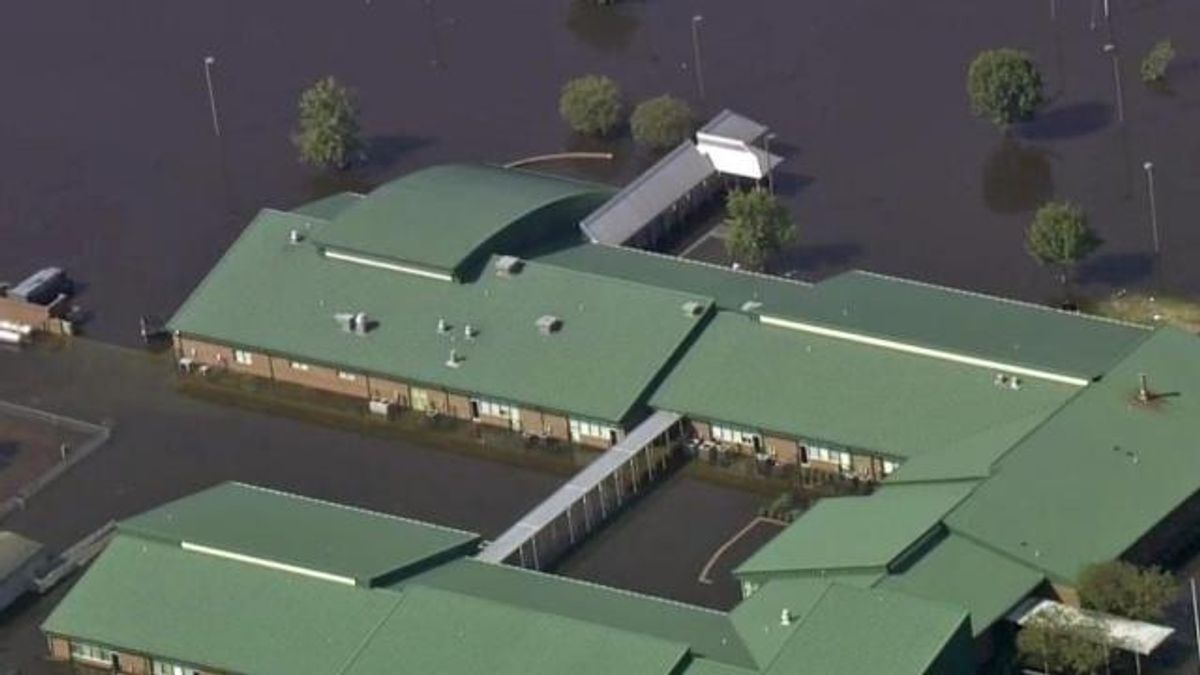
North Carolina needs a permanent office of disaster recovery, according to a state report released Monday.
The report by the legislature's Program Evaluation Division looked at why the release of some federal disaster funds for Hurricane Matthew recovery has been so slow. Basically, the state wasn't prepared to use the money.
Other WRAL Top Stories
After Matthew devastated eastern North Carolina in October 2016, federal Community Development Block Grant Disaster Recovery, or CDBG-DR, funds started to flow. But North Carolina was no longer eligible to receive them.
According to the report, the state hadn't received that type of funding in more than a decade, and the people who used to manage the money no longer worked for the state.
Also, shortly before the hurricane hit, state lawmakers moved the spending of those funds from the Department of Commerce to the Department of Public Safety – something DPS had never done before.
Laura Hogshead, the director of the state Office of Disaster Recovery and Resiliency, which lawmakers created last year, said administrators had to learn on the job.
"The state had not received funds, CDBG-DR funds, since 2003, with Hurricane Isabel, and there was no institutional knowledge left in the state to spend those funds," Hogshead said.
As of last week, the state has spent only 4 percent of more than $230 million available in that program, officials said.
- Congress members want Cooper to explain slow distribution of Matthew recovery money
- Lawmakers unleash torrent of complaints over slow trickle of Matthew recovery funds
- Legislators grill administration over Matthew recovery delays
Rep. Craig Horn, R-Union, who chairs the legislative oversight panel that reviewed the report, said there has to be a better way.
"We've got to be careful, I understand," Horn said. "It's just very frustrating if you're in a home that's been devastated. You've lost everything, and it seems like everybody's spinning their wheels and nothing's happening, and you're stuck."
All of the positions in the Office of Disaster Recovery and Resiliency are temporary, and the report recommends that some become permanent so the state won't find itself in this position after the next big storm.