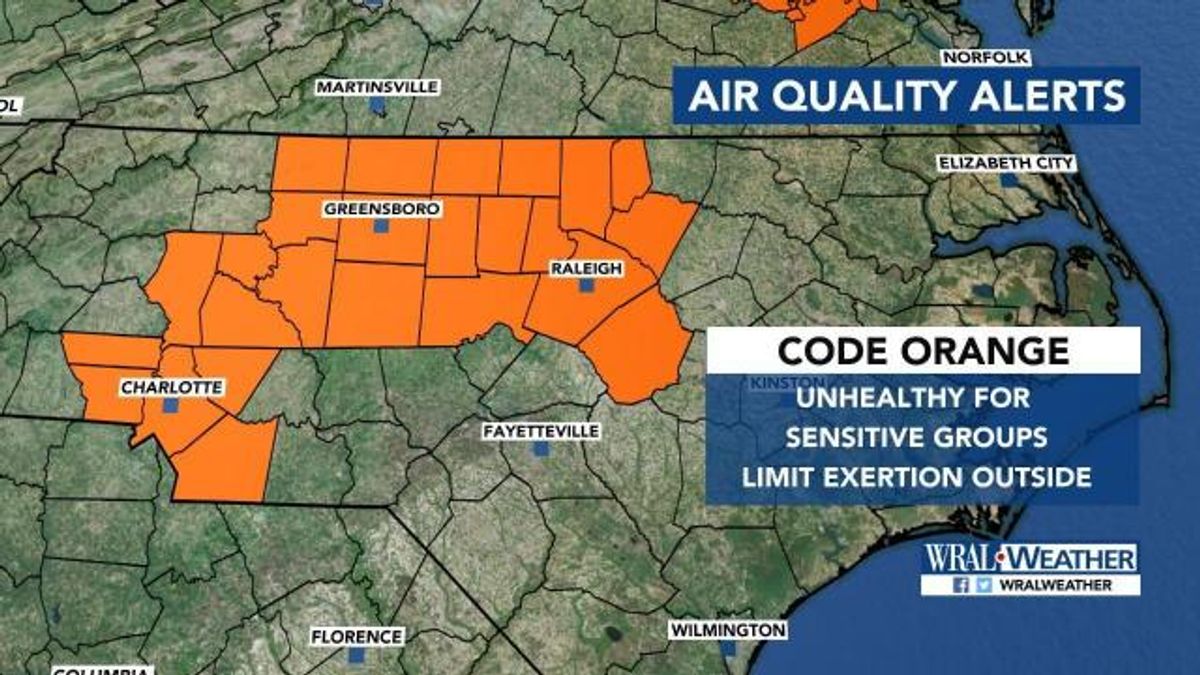
When it gets hot, hot, hot and still air settles over the Triangle, chemicals in the atmosphere, especially ozone, can build up, causing breathing difficulties even for the healthiest people.
On days like that, the North Carolina Air Quality Forecast Center will warn against over-exertion in outdoor work or exercise.
Other WRAL Top Stories
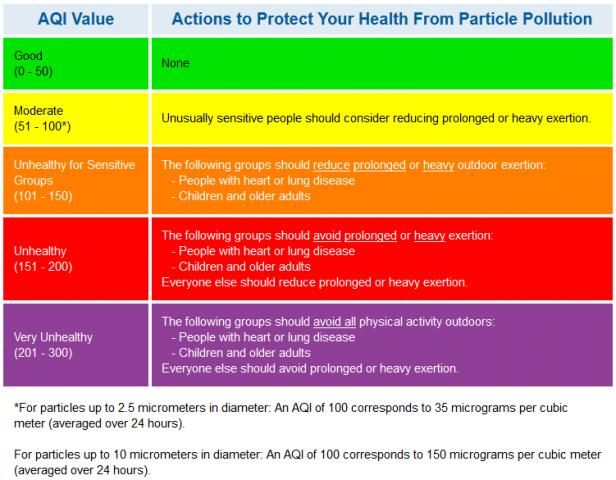
Air quality is measured in a color-coded scale, from green, which is good, through yellow, orange and red to purple, with is "very unhealthy."
What pollution is in the air?
Each step on the scale corresponds to a measurement of four major air pollutants:
- Ozone: A gas that forms near the Earth's surface as a result of a chemical reaction with sunlight.
- Particle pollution: Tiny, solid pollutants, like dust churned up by traffic and smoke from wood fires.
- Carbon monoxide: The odorless, colorless gas most commonly associated with vehicle exhaust.
- Sulfur dioxide: A gas produced when fossil fuels, like coal and oil, are burned
Values range from 0 to 500.
What does Code Orange air mean?
Most days are Code Green, with air quality index up to 50 and no impact on human health
Code Yellow days denote an air quality index between 51 and 100. Those who are extra-sensitive should limit their outdoor exertion.
Code Orange, with an air quality index of 101 to 150, is where people with asthma, those with COPD, children and the elderly and those who do strenuous outdoor work or exercise may feel some effects.
Code Red days can be unhealthy for even those with no lung problems. Everyone should limit prolonged outdoor exertion when the air quality index reaches 151 to 200.
On Code Purple days (air quality index 201 to 300), people with lung issues should avoid the outdoors as much as possible, and even healthy people should limit activities that cause them to get out of breath.
Who is at risk?
Code Orange, Red and Purple days tend to correspond with the hottest days of the summer, because heat and intense sunlight trigger the chemical reactions that worsen air pollution. The hottest part of the day is most dangerous for children -- whose lungs may not be fully developed – the elderly, and for those who work or play outdoors.
High ozone levels can impair breathing, irritate the lungs and worsen conditions like asthma, emphysema and bronchitis. Over time, repeated exposure to polluted air can permanently damage the lung cells and make them more susceptible to infection.
What can I do?
Those with diagnosed heart or lung conditions should pay attention to the air quality forecast daily.
On days with a Code Orange, Code Red or Code Purple forecast, everyone should limit outdoor activities that get them out of breath. Heavy breathing puts a strain on the lungs and allows more pollution to get in.
Plan outdoor activities for early morning or in the evening after the heat of the day has cooled.
Individuals can contribute to the air quality by limiting pollution-creating activities during hot and calm days as well. If you can, limit electricity use – turn the thermostat up a bit and don't use unnecessary lights – and avoid driving, grilling or other fire, which send polluting smoke into the air.