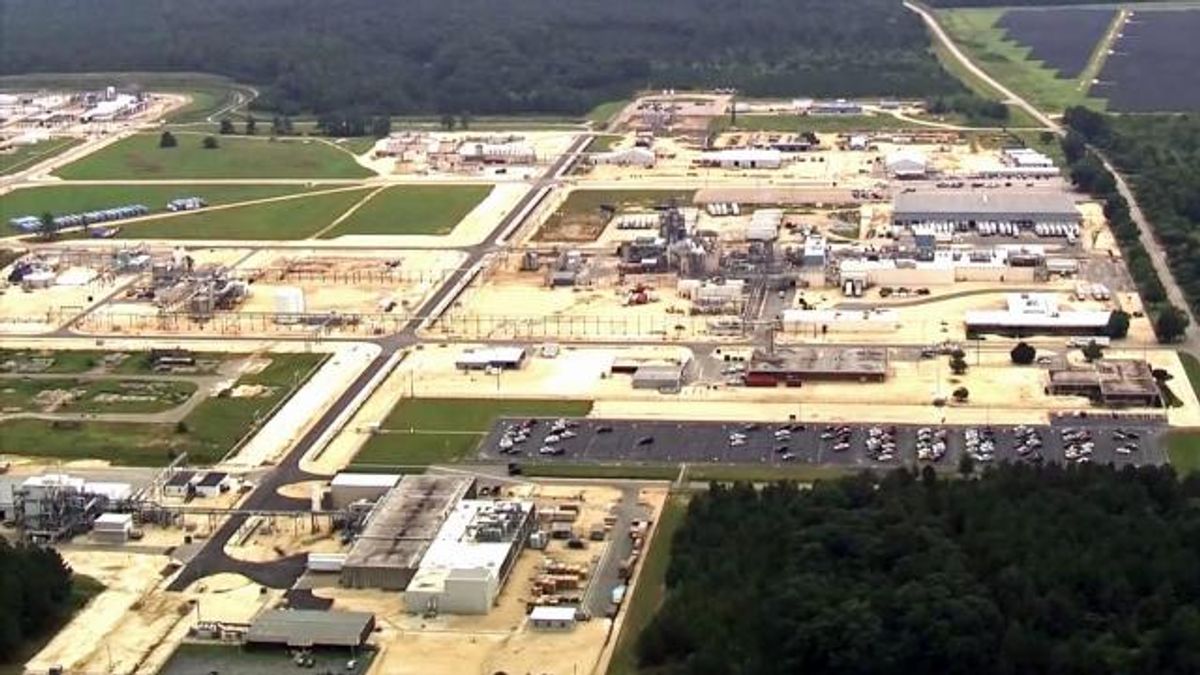
The Chemours Co. told state regulators late last month that it will spend $100 million over the next two years to upgrade its Bladen County facility and stop the airborne release of unregulated contaminants with uncertain health effects.
But the chemical company at the same time pushed back against threats by the state Department of Environmental Quality to impose tighter controls on the release of GenX, used in the production of Teflon, fast food wrappers and other products, calling such actions "improper and illegal."
Other WRAL Top Stories
In a letter to DEQ dated April 27, the Delaware-based firm said new technology will cut the release of GenX by 99 percent once the equipment is installed within 18 to 24 months. The company said it's taking steps now to reduce GenX air emissions by 70 percent by October. Chemours' plan came in response to efforts by state regulators in April to tighten restrictions on the chemical company's air quality permit and amid an investigation into groundwater contamination near the plant.
A spokesperson for Chemours has not yet responded to a request for comment. But in a press release Wednesday, Paul Kirsch, president of the company's fluoroproducts business unit, said the company is committed to "being a good neighbor" on environmental issues.
"This means going beyond our legal and regulatory requirements to meet local community expectations now and in the future," Kirsch said in the release.
Southern Environmental Law Center attorney Geoff Gisler said the move toward reducing pollution is a step in the right direction. But the company's plan will still allow it to release GenX in some quantities until 2020, he said.
"When they do get to eliminating 99 percent of the pollution coming out, that will be a good thing," Gisler, who heads the center's clean water program, said. "Until then, they cannot be allowed to keep going."
The SELC and the Cape Fear River Watch called on the state this week to end all emissions now, even if it means a shutdown. The groups have also threatened Chemours with federal lawsuits.
In their letter to regulators, lawyers for Chemours hammered on their efforts to go beyond the letter of the law, accusing DEQ of imposing an unnecessary zero-emission standard for GenX. They emphasized the "enormous expense" of the upgrades, which include an incinerator and other equipment to break down unregulated perfluorinated compounds before they're released into the air.
"Singling out Chemours for different treatment would be arbitrary and capricious, especially in view of all the measures Chemours is taking and in the absence of any health emergency," lawyers wrote.
DEQ spokeswoman Megan Thorpe said in an emailed statement that "the lengthy response from Chemours and related attachments are still under review at DEQ."
State regulators have issued several notices of violation against the company since the StarNews of Wilmington alerted the public last June to the presence of GenX in the Cape Fear River. The health impacts of the compound, which has been released from the Fayetteville Works plant as a byproduct since the 1980s, aren't well studied. But the chemical was developed to replace a related perfluorinated compound called C8 that has been linked to cancer and is the subject of hundreds of millions of dollars in legal settlement to users of contaminated water in West Virginia.
Although Chemours stopped the release of GenX into the Cape Fear River following direction from DEQ, tests have continued to show the compound in nearby private wells at levels much higher than the state's conservative health advisory goal of 140 parts per trillion. Scientists and regulators say air emissions from the plant are contaminating the groundwater through rainfall.
The SELC argues that ongoing contamination presents an "imminent danger to the health and safety of the public."
Chemours argued in its letter to regulators that there is no public health emergency and said any requirement to completely eliminate the release of GenX "is completely divorced from standard risk assessment procedures." They're now pushing the state to set a drinking water standard for the compound of 70,000 parts per trillion, backed by research from North Carolina State University professor and toxicologist Damian Shea.
The state's Science Advisory Board, an expert panel formed last year to study unregulated compounds, is considering whether revisions to the state's 140 parts per trillion standard are necessary.
Gisler said he's not surprised the company is arguing for a more lenient standard. He points out that GenX is just one of several perfluorinated compounds the plant is emitting – all of them with unclear impacts on human health
"The burden should be on the company to show that it's safe," Gisler said. "In the meantime, it's appropriate for the state to be cautious."