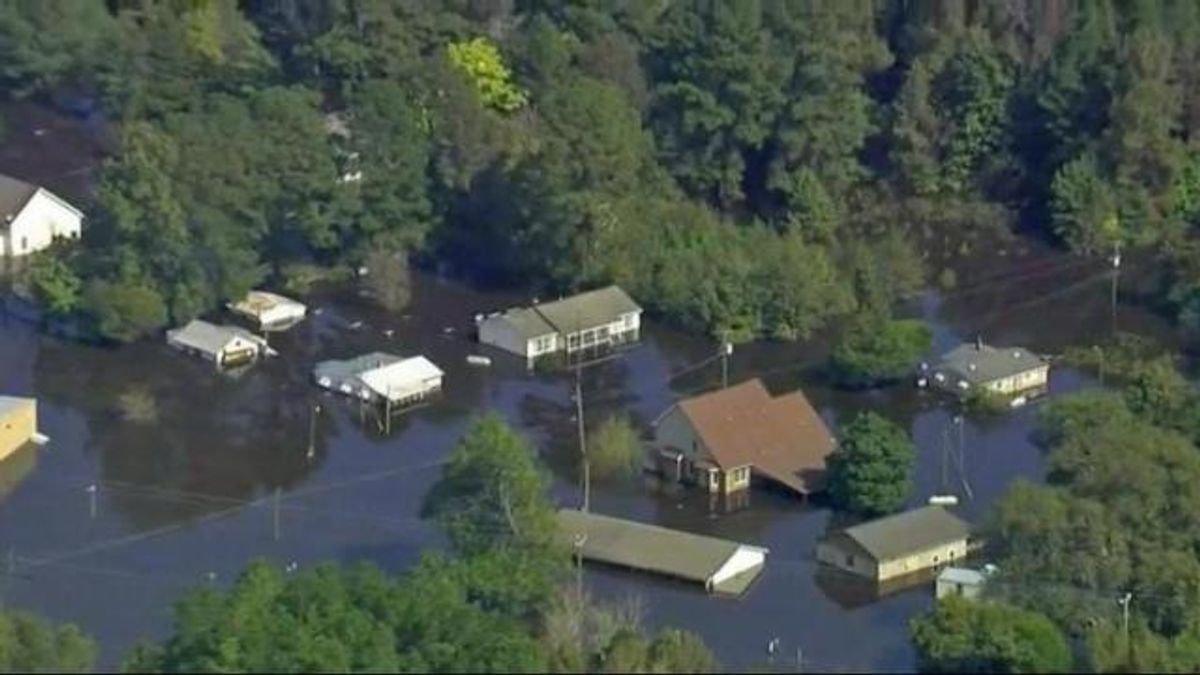
When Hurricane Matthew left Smithfield under 6 feet of water in October 2016, it left Brian Barefoot and his wife, Tanya, drowning in debt.
Their 40-person factory maintenance contracting business had more than $1 million in damage, and their insurance didn't cover it. Barefoot said they did everything he could to keep the doors open, including taking out a disaster loan from the federal government. He said he was told other disaster funds would help him repay it.
Other WRAL Top Stories
"Our understanding from FEMA, from the Department of Commerce and from emergency management was to take what we could get. The state has buckets of money," Barefoot told state lawmakers Monday.
But those buckets of money still haven't shown up, and the loans start coming due in May. Barefoot said there's no way he can cover them without help.
"Now we're in danger of losing our home," he said. "Eighteen months later, my wife and I and our kids that have worked so hard are in jeopardy of losing what we have."
North Carolina has received about $400 million in federal community development grants for Hurricane Matthew relief, but only about $40,000 has been passed on to storm survivors. The rest is still tied up in red tape.
Irritated lawmakers demanded answers from state Division of Emergency Manager Director Mike Sprayberry.
Damaged homes still haunt eastern North Carolina counties, they said, and homeowners are saddled with both mortgage and rent because they still can't live in their homes. Some families are living in hotels in other counties because their homes haven't been or cannot be repaired.
Rep. Brenden Jones, R-Columbus, recalled watching constituents walk along the train tracks to higher ground, carrying whatever possessions they could.
"It's like a third-world country, something that I never thought that I would see," Jones said. "All they had was what they could put in a trash bag, and we have failed remotely to try to make these people whole, and it's just not right."
Sprayberry told the House committee the federal relief process is excruciatingly slow, but his agency and the state Department of Commerce are doing their best to speed it up.
"We know that we've got some work to do. We know that we want to streamline the process. We want to make it a better process," he said.
More than $500 million has already gone out to hurricane survivors and communities in eastern North Carolina, Sprayberry said.
But lawmakers said it's clear there's still a lot more need out there.
"People are getting relief each and every day, sir. I can tell you that," Sprayberry said.
Rep. John Bell, R-Wayne, said he's frustrated that so many families and businesses are still waiting for help after all this time.
"I'm mad, I'm upset, and we can do better," Bell said.
It's likely the upcoming state budget will include some additional recovery money.