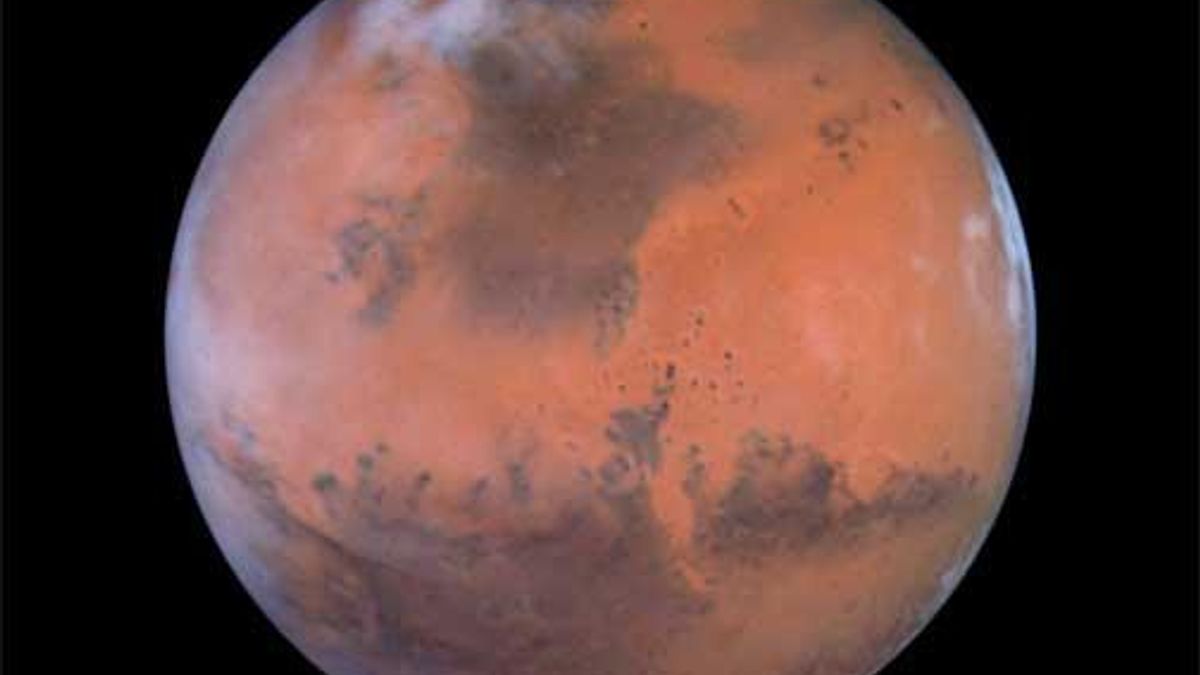
Every two years, Mars reaches a point on its orbit called opposition – when the planet lies directly opposite the sun and Earth.
With skies clearing late Tuesday, Triangle stargazers should be able to see Mars in most areas without a telescope.
Other WRAL Top Stories
Mars will rise Tuesday evening just a few minutes before sunset (7:43 p.m.), remain visible all night and set just a few minutes after sunrise (Wednesday, 6:50 a.m.).
Mars will appear bigger during the next opposition in May 2016 and even bigger on July 27, 2018. The brightness varies because the orbits vary and are not perfect circles.
Despite its visibility, Mars still remains 0.62 AU (57.74 million miles) from Earth, so stargazers won't be able to make out features of the red planet.
Tony Rice, a volunteer in the NASA/JPL Solar System Ambassador program and software engineer at Cisco Systems, contributed to this blogpost. You can follow him on Twitter @rtphokie.