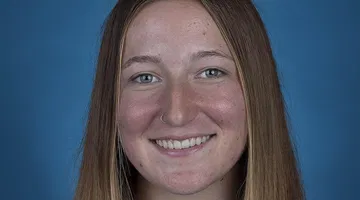
Athletes in all sports will be able to accept prize money before they enroll in college under the terms of a proposed settlement of a class action lawsuit brought by North Carolina women’s tennis star Reese Brantmeier against the NCAA.
The NCAA agreed to pay $2.02 million in damages, which includes a $10,000 special award for Brantmeier and former Texas tennis player Maya Joint, the two named plaintiffs in the suit. The NCAA is also paying more than $2 million in attorneys’ fees, administrative costs and other costs.
Other WRAL Top Stories
Though the class included only tennis players, the NCAA is lifting its prize money restrictions for all athletes, according to the proposed settlement agreed to by the plaintiffs and the NCAA. A judge must give final approval.
“The proposed settlement is an extraordinary outcome for the Classes and the injunctive relief obtained will positively impact future generations of student-athletes,” the plaintiffs wrote in a brief in support of approval.
Jason Miller, a Raleigh-based attorney for Brantmeier, applauded the efforts of Brantmeier and Joint, who is currently ranked inside the Top 30 for professional women's tennis players.
"Reese and Maya deserve a lot credit for taking this thing on, doing it for themselves but also for future student-athletes and not just in tennis but for all sports," Miller said. "It's a pretty remarkable accomplishment."
Brantmeier first filed her complaint against the NCAA in March 2024 over the NCAA’s restrictions on all individual athletes — in sports such as tennis, golf, swimming, track and field, wrestling, gymnastics, bowling, equestrian, skiing and rifle — keeping prize money won in outside competitions.
“The NCAA’s rules related to prize money restrictions for student-athletes in non-revenue, individual sports are completely arbitrary — particularly when viewed in the context of other rules, restrictions, exceptions, and enforcement in the overall present landscape of college athletics,” her original complaint said.
She amended the complaint in November 2024 limited to just Division I tennis players. In July 2025, the judge certified an injunctive relief class and a damages class to include all NCAA Division I tennis players who were ineligible to compete due to the prize money rules or who forfeited money due the rules. In February, the sides announced they had reached a settlement.
NCAA rules prohibited tennis players from accepting more than $10,000 per calendar year in cash awards, bonuses or other prize money for performance in non-NCAA competition such as the U.S. Open. After enrollment, they are limited to actual and necessary expenses under current NCAA rules.
The settlement comes as the NCAA has allowed athletes to profit off their name, image and likeness in 2021 and then allowed schools to share revenue directly with athletes in 2025.
Brantmeier earned about $50,000 competing in the 2021 U.S. Open as a high school junior, but she was only allowed to keep $10,000 plus some expenses. Brantmeier, a senior at UNC, was the 2025 ACC Player of the Year and earned All-America honors in singles and doubles in the spring season. She helped UNC to the 2023 national championship. She was ineligible to play during the fall semester of her freshman season as the NCAA investigated her eligibility.
Brantmeier and others will be eligible to apply for her forfeited prize money out of the settlement.