This article was written for our sponsor, UNC School of Social Work
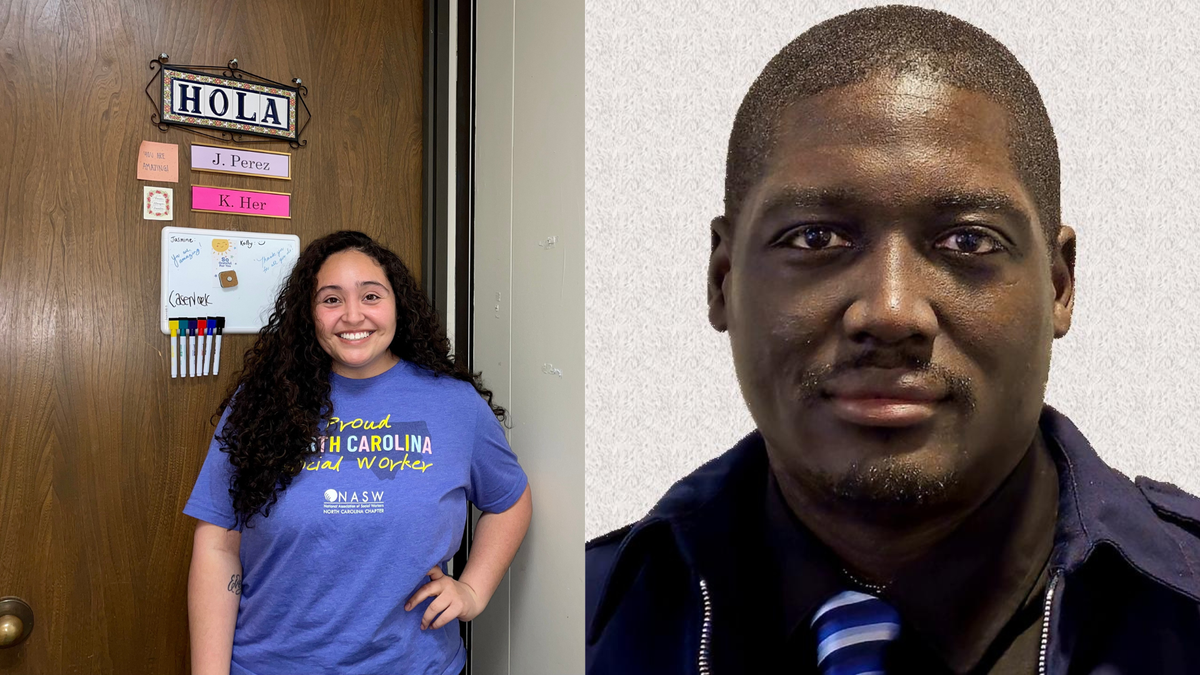
Patrick Irvine and Jasmine Rodriguez Perez, two students in UNC's online MSW program, are pursuing their dreams of helping others. Irvine, a former military member, aims to guide young Black men towards a positive path, while Perez, a bilingual therapist, seeks to improve mental health equity in her community. Both students are part of a collaborative cohort that feels more like a supportive community, enhancing their educational journey.
The University of North Carolina-Chapel Hill is a world-class university, nationally renowned for both its graduate and undergraduate programs. Rated the No. 4 public school in the country in U.S. News & World Report's 2024 Best Colleges rankings, UNC-Chapel Hill is home to a number of professional schools which are nationally recognized for their teaching, research and dedication to public service. .
The #7-ranked UNC School of Social Work (UNC SSW) master's degree is one of those programs and now, students can achieve their Master of Social Work (MSW) through an accessible online approach.
Patrick Irvine and Jasmine Rodriguez Perez, both students in the first UNC-Chapel Hill MSW online class, are two aspiring changemakers who are taking advantage of this opportunity.
Fulfilling a lifelong dream to help others
Irvine wanted to be a clinical psychologist for as long as he can remember. But his life took an unexpected turn, and he spent his young adulthood in the military. After serving his country, he worked in the private sector. He found success financially but felt unfulfilled.
He still felt called to help others but thought the dream of being a therapist was out of reach. He enrolled in his local Veteran Readiness & Employment program and, when he expressed his desire, his counselor asked if he had considered social work.
He admits now that he didn't know much about social work and what he knew, wasn't especially positive. Little did he know that his therapist, whom he respected greatly, was a social worker.
"As I looked through the program, I realized graduates with an MSW have a plethora of options, they can kind of do everything — from HR to program manager to therapist to nonprofit. That's very appealing to me because I like options and flexibility. I can't think of a single way that I would want to help somebody that I wouldn't be able to help them as an MSW graduate."
Growing up in Florida, Irvine cheered for the Tar Heel blue of Chapel Hill sports. When he initially looked into a graduate degree program, Chapel Hill was a natural fit. But a traditional on-campus program wasn't an option considering the fact that he lived and worked in Charlotte. When the online option became available, he jumped. In addition to providing the flexibility traditionally associated with online programs, the UNC-CH MSW program boasts the same inspiring professors and training that is offered in their top-tiered "on ground" program.
"The instructors are all very, very good. They are brilliant and encouraging. They've managed to create an atmosphere where I feel safe sharing all my thoughts and being stretched," Irvine said.
One of Irvine's goals upon graduation is to help kids who were like him. He said, "For young Black men, the ages of 17 to 24 are arguably the most dangerous period of their lives here in America. I'm interested in helping them figure out what type of man they want to be and how they''re going to get on that path."
Finding community on her mission to improve mental health equity
Similarly, Perez was drawn to the field of social work because of a desire to help those in her community. Her dream of becoming a bilingual therapist started when she saw the difficulty her mom had in finding the help she sought.
"My mom, along with many other Spanish-speaking people, when they try to seek therapy, it's hard to find. There's not a lot of Spanish-speaking therapists around here," she said. Perez also noted that though she speaks fluent English, she'd prefer to speak Spanish in a therapy setting. "It just provides that comfort," she explained.
Originally, Perez pursued nursing but found nursing school was not a fit. "I prayed about my vocation a lot," she said. And, while still an undergraduate, she said it was an impactful reading at church that guided her. "The Book of Isaiah, in chapter 58, talks about helping those who are facing injustice, are oppressed, and are hungry."
At around the same time as being impacted by that verse, one of Perez''s teachers invited a social worker to come speak. When Perez learned all the opportunities that were available to social work professionals, she said she knew. ""I just fell in love with it [social work]."
However, to afford a program and to gain experience, Perez needed to continue working full time.
A North Carolina resident, living in Conover and working in Morganton as a foster care and social worker with the Department of Social Services (DSS), Perez appreciates that the program was not only online but has a variety of synchronous and asynchronous opportunities.
And, she said, "It doesn't feel 'online.' You are truly connecting with your professors. When they give you feedback, they send you voice messages, so you feel like you're right there, in person."
In addition to feeling connected to her professors, she noted the cohort of 44 students has become a collaborative community. "We have multiple chances to connect as a group. Honestly, it feels like I know them on a personal level."
Taking the leap creates a path to discovery
Both Irvine and Perez admit they didn't expect the ways they would be personally impacted. "They expanded my understanding of privilege. I'm seeing various things that, even as a Black man, I've never noticed before. So, it puts me in a better place to be an ally in the world," Irvine said.
Perez agreed, "I came face-to-face with a lot of my own assumptions. I felt like I've had my eyes opened a lot."
The UNC School of Social Work has a stated mission to advance equity, transform systems, and improve lives. The online MSW program was created as a direct response to changemakers who hoped for a way for driven professionals to advance their career while still working and making an impact in their community.
That mission becomes clear in how students for cohorts are selected. Unlike many graduate programs, the GRE is not a barrier as it isn''t required for this program. Instead, applicants are asked about the volunteer work and background they bring to the table. Applicants are asked to consider their 'why' so they can take their personal driving force, combine it with a world-class education and move the needle for their corner of the world.
And in this, the School's first online cohort, there are many reasons to believe those goals will be met.
Both Perez and Irvine had a passion to help people in their communities, but neither could take the leap without the online opportunity provided by this program. It's an opportunity which has not only changed their lives, but will, they hope, continue to make positive ripples of change throughout North Carolina and beyond.
For people who are determining whether they want to take the leap to be part of the program, Irvine sent this message: "You can't go wrong with an MSW. It's like a master key that unlocks so many ways to help people. So, for people on the fence, wondering whether they should click the 'apply' button. I say, 'Do you want to help people? If helping people is what you want to do, push that button."
This article was written for our sponsor, UNC School of Social Work