This article was written for our sponsor, East Carolina University
When you visit a doctor or dentist in North Carolina, there is a very good chance your provider is a graduate of East Carolina University. That’s because ECU is acknowledged as one of the state’s leading producers of medical professionals, as well as a driver in the expansion of healthcare coverage to those most in need.
It achieves this through a range of distinctive medical and dental programs that benefit both students and patients by providing essential, real-world experience under the guidance of instructors and administrators.
“ECU and ECU Health were built to produce physicians for the state of North Carolina, especially rural areas and those with underserved populations,” observes Dr. Michael Waldrum, dean of the Brody School of Medicine at ECU and CEO of ECU Health. “From a percentage perspective, we produce more physicians that stay in North Carolina than any other school in the state, and have systematically built our education programs to be the highest yield and highest value.”
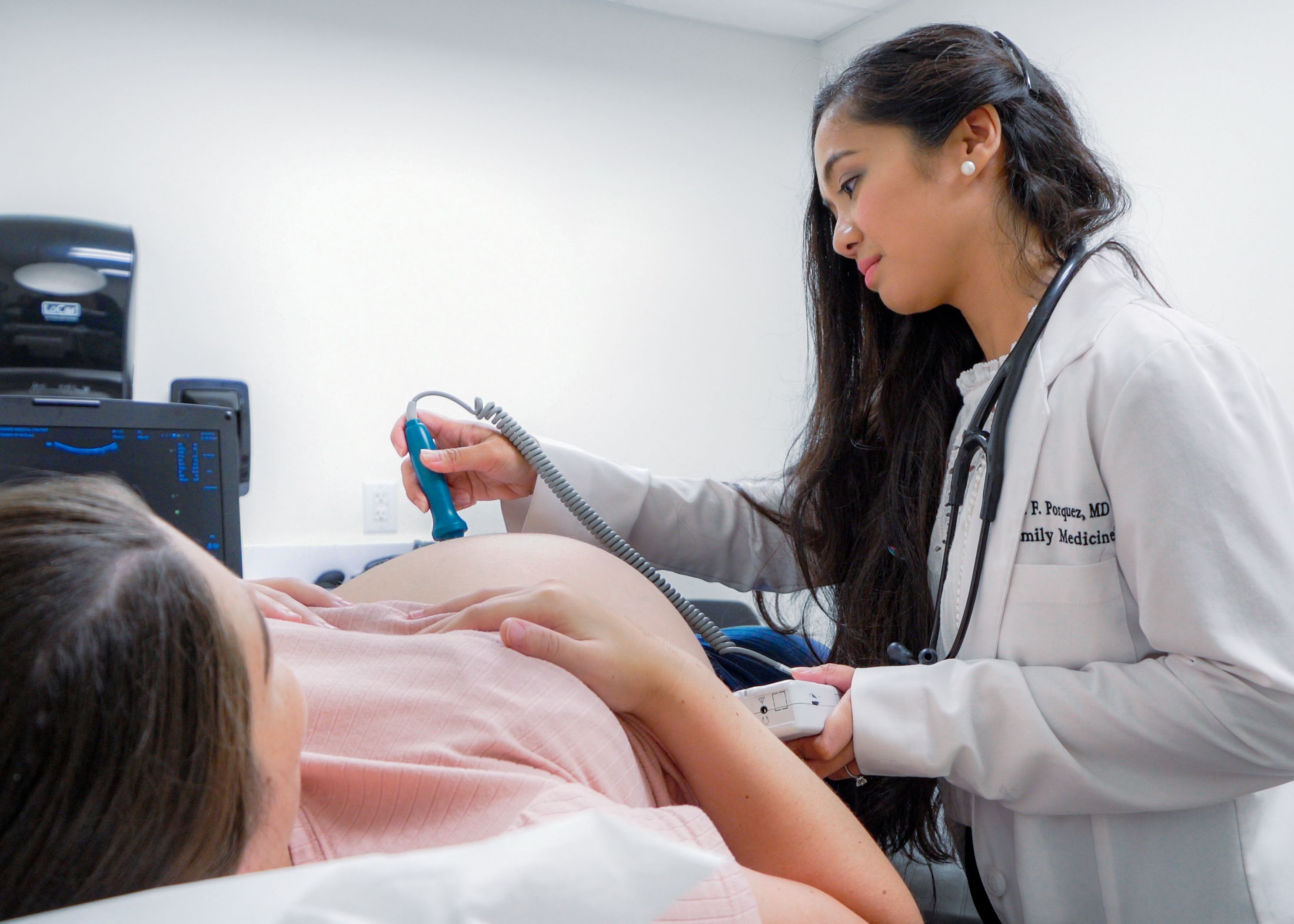
One of the university’s top initiatives to improve access to care is the Rural Family Medicine Residency program. Launched in 2021 by the Brody School of Medicine and ECU Health, it provides medical students with specialized training in the care of patients in underserved rural communities.
“North Carolina has the second largest rural population in the country, after Texas,” reports Dr. Waldrum. “Almost a third of North Carolinians live in rural areas, so we talked with community leaders and others about creating physicians to improve the health and well-being of those communities.”
The Rural Family Medicine Residency program is open to medical students nationwide who want to pursue family medicine training in a rural environment. Those who express interest in the Rural Family Medicine Residency Program are interviewed, and ECU makes an offer to those who are most qualified.
“We look for students who have a deep passion for rural environments, a commitment to community engagement, and will stay in and serve rural North Carolina,” notes Dr. Waldrum. “We have criteria that help with that selection process.”
The residency is three years, and starts in Greenville, where medical students get the volume of exposure they need to really learn, Dr. Waldrum says. From there, they move on to one of three rural communities: Ahoskie, Kenansville, or Roanoke Rapids.
Working in underserved communities can be eye-opening for doctors in training. “One of the biggest issues in rural communities is limited access to care, especially preventive and maternal care,” says Dr. Waldrum. “Patients in rural communities also tend to be older, have more chronic diseases, and experience higher poverty. As a result, they tend to seek care later, and come in with more advanced problems.”
Through such exposure, students learn good decision-making skills, autonomy, and how to care for people in resource-constrained environments. “You don’t have a colleague across the street that you can send your patients to, so the geography really matters,” Dr. Waldrum says. “One of our objectives is to extend support via telehealth and teleconsulting, so other professionals can be brought in to support local care.”
It’s too early to determine health outcomes from the Rural Family Medicine Residency Program, but anecdotal reports confirm better access. In addition, community members have expressed excitement about having doctors in training in their communities, Dr. Waldrum notes.
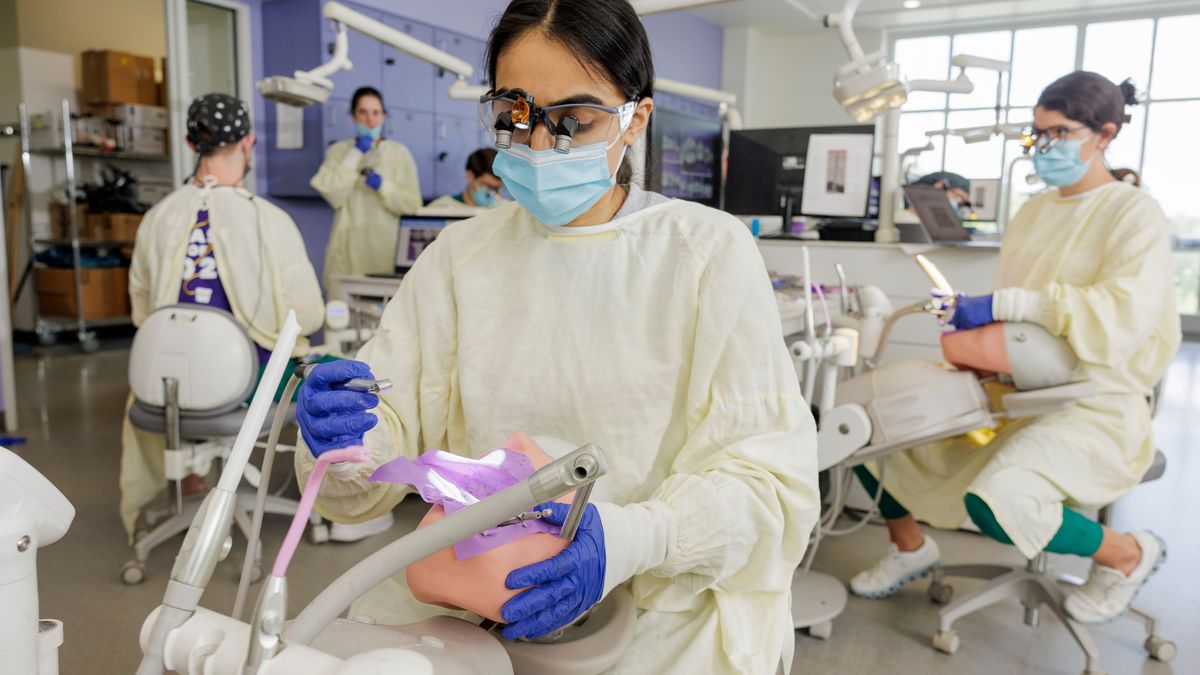
Community outreach, especially in underserved areas, is also vitally important to ECU’s School of Dental Medicine. Aiding in that endeavor is the Community Service Learning Center program, which is designed to provide dental care to rural and underserved regions throughout North Carolina. ECU operates eight CSLCs from the mountains to the coast, and fourth-year dental students are required complete three nine-week rotations at three different CSLCs, for a total of 27 weeks of clinical experience, in addition to rotations at Ross Hall, the School of Dental Medicine’s facility on the Health Sciences Campus.
An important goal of the program, notes Margaret Wilson, DDS, MBA, vice dean and clinical professor in the School of Dental Medicine, is to encourage dental students to consider setting up practice in underserved rural areas after graduation.
“Todd Watkins, the first faculty member hired for the new dental school, designed a curriculum that would prepare our students to have a very robust general dentistry basis of information,” Dr. Wilson observes. “We wanted to include all aspects of general dentistry, from cleanings to extractions to implants, to ensure that our graduating students have the skills in those areas.”
A little more than 550 dental students and 111,000 patients have passed through the CSLC program since its start in 2014. “In the majority of cases,” Dr. Wilson notes, “patients have not had a regular dental home in the past, a place where they could get regular care and have their questions answered.” Patient fees are about 50 percent less than those charged by most general practitioners, and ECU has established a philanthropic fund to help patients in dire financial need.
“The CSLC program has been life changing for many patients,” Dr. Wilson reports. “There is also a positive economic impact in the towns where the centers are located, which has been estimated at $1.5 million per site per year.”
Another important community dental program is ECU Smiles for Veterans, which started in 2018 at the CSLC in Sylva and quickly expanded to seven of the eight CSLCs, providing care for more than 400 veterans since its inception. On December 7, 2024, in Ross Hall, 26 veterans received free dental care ranging from routine cleanings to root canals – services valued at $12,000. The event was sponsored by the Service League of Greenville.
The School of Dental Medicine also serves the Hispanic community via its annual Sonríe Clinic, named after the Spanish word for smile. The 2025 Sonríe Clinic event took place February 15, with 47 members of the eastern North Carolina Hispanic community receiving dental care from dental students, residents and faculty, assisted by student translators and community volunteers.
“It’s an honor to care for this community,” third-year dental student Krystal Jaimes said in an ECU release. “This was my first opportunity to provide direct care to patients. In previous years, I had volunteered as an assistant and interpreter. Transitioning from explaining treatments to actually doing them has been incredibly special and rewarding.”
This article was written for our sponsor, East Carolina University